Online bodybuilding coaching: £300 a month for a text?
Is Ryan Mackins right?
By Gary Chappell
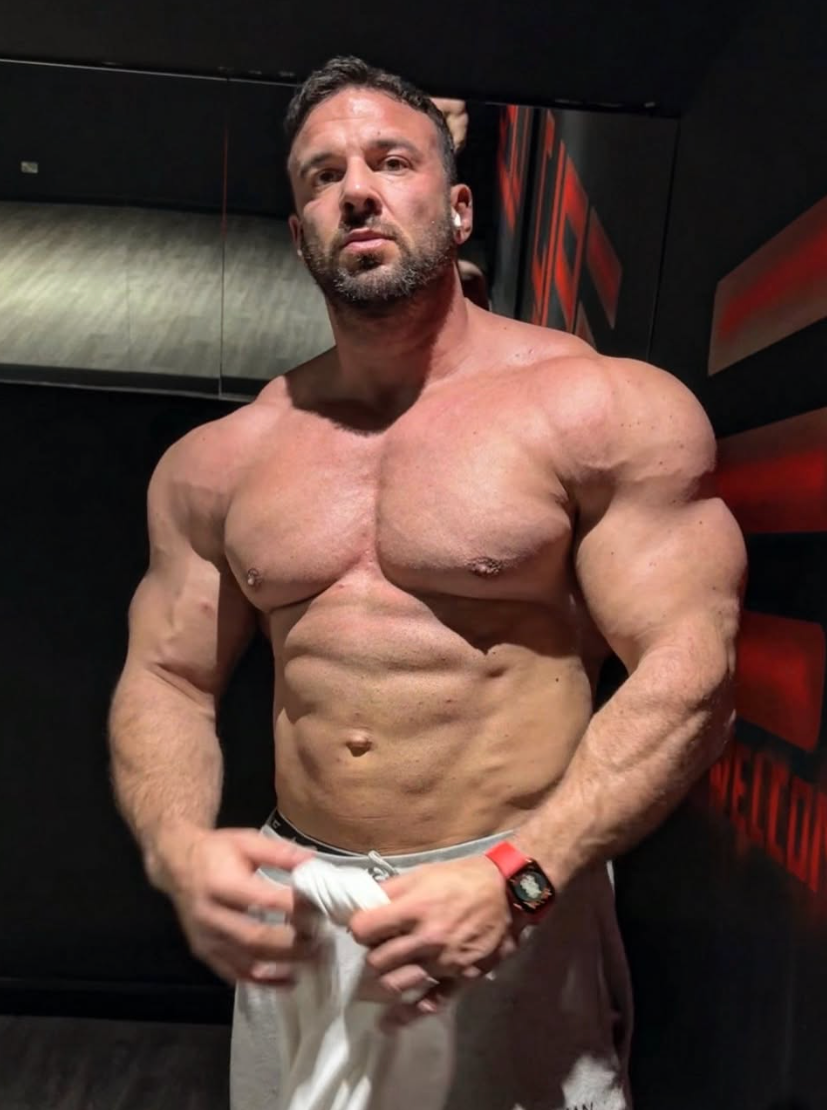
THE debate around online bodybuilding coaching prices has been simmering for years – but this week bodybuilder and coach Ryan Mackins said the quiet part out loud.
In a series of Instagram stories, Mackins questioned whether athletes are being asked to pay £200–£300 per month for what amounts to “a couple (at most) messages a week” to coaches who juggle 120–150 clients at a time.
“Crazy to me that people pay £250-300 for a couple (at most) messages a week and to a coach with 120-150 clients. You’re funding their lavish lifestyle is all. Personal touch matters.”
Those words were blunt. But he went further, suggesting that peak week, the most critical stage of any contest prep, is sometimes being mishandled because coaches apply the same protocol to everyone.

“A lot of coaches that charge this are also f***ing up the peak because they apply the same protocol for everyone,” he said.
Mackins claimed he has experienced it himself. He says he knows others who have too. Indeed, frontdouble.com was told by one top-level bodybuilder at a competition last season that "none of these coaches are worth the money'. In fact, some coaches in the USA costing 'top dollar' will leave you waiting for days for an answer to emails and check-ins.
So the question is: Are rising online bodybuilding coaching prices justified, or has the industry drifted into volume-based business models?
The economics few want to talk about
Let’s look at numbers. If a coach has 120 clients paying £300 per month, that’s £36,000 in monthly income. At 150 clients, that rises to £45,000 per month.
Over a year? That’s £432,000 to £540,000 annually before tax. We are no longer talking about “side-hustle” money. We are now talking about serious money. Half a million pounds a year is not small-scale coaching. It is a substantial business operation.
Scalability is where the conversation about online bodybuilding coaching prices becomes uncomfortable. Online prep used to mean intense oversight. Daily communication during peak week [in some cases, that still applies]. Adjustments based on digestion, stress, sodium retention, sleep and psychological state.
Now? In other cases, it resembles a subscription model; upload photos, receive macros, weekly message, repeat. That does not automatically mean it is poor coaching. But it does raise a question: Can true individualisation exist at high volume?
You see, peak week is not a template exercise. As we know, carb loading response varies wildly, sodium manipulation can flatten or spill a physique, water handling differs athlete to athlete and stress response alone can alter appearance hour to hour.
If one protocol is applied across dozens – or hundreds – of competitors, statistically some will miss.
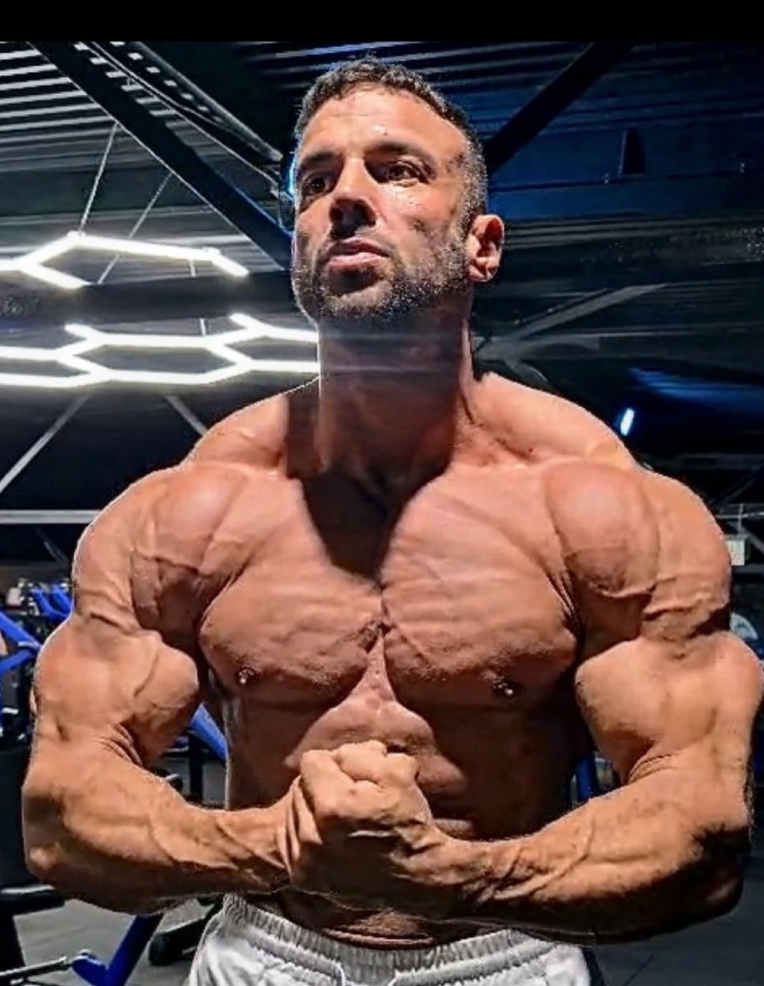
Mackins’ allegation is that some coaches are prioritising scale over precision. And that is where this debate becomes uncomfortable. Because bodybuilding is judged on millimetres; Fullness. Dryness. Timing. If an athlete peaks incorrectly, they do not get that day back.
The business coach effect
Another point Mackins made was more pointed: “Coaching now for some reason people been doing it a year or two and think that £200–£250 a month is what they’re worth (I blame business coaches).”
This is not a random dig. Over the last five years, online coaching has almost been corporatised, with business coaches actively targeting online coaches with promises of expanding their businesses to six-figure sums.
Charging more is not inherently wrong. In fact, experienced coaches with a proven track record should command premium rates. But the question remains: Is price now being set by marketing psychology rather than coaching quality? And if so, are athletes paying for prestige rather than performance?
It would be disingenuous not to acknowledge the other side, however. There are coaches charging £250–£300 per month who answer daily, provide video analysis or are available in person, customise every phase, travel to shows and deliver consistent results.
High volume does not automatically equal low care. Some systems are efficient and some coaches – despite the level of the athlete – really do have a sharp eye and can instill calm. But others will enjoy success because the level of their client/athlete is already high; few, if any, are turning water into wine, they are literally hand-holding someone who cannot manage their own diet. Is that worth £300 a month?
Transparency is key. If you are one of 150 clients, do you know it? Do you feel it? If your peak protocol matches 10 others, are you aware?
Mackins’ core argument is not about price. It is about personal touch.
The bodybuilding industry is no longer underground. Coaches now build brands before they build athletes. And that is not inherently negative, until it starts affecting outcome.
When the focus becomes client acquisition over client execution, quality inevitably strains. Athletes need to ask themselves one simple question: Are you paying for access, or are you paying for attention? And really, do you actually need the 'service' you are getting?
So: Is Ryan Mackins right?
He may not be right about everyone, but he is right about something. Online coaching has scaled rapidly, prices have risen sharply and some athletes are quietly disappointed with what they receive.
That does not mean the entire industry is broken, but it does mean scrutiny is overdue. And that is because bodybuilding is not Netflix. It is not a subscription service and it is not passive consumption.

It is preparation for a stage where mistakes are magnified under lights. So if you are paying £300 per month, you should not be wondering whether your coach remembers your digestion patterns. You should know.
In the end, results settle the argument. Not follower count. Placings. Conditioning. Consistency. That is the only scoreboard that matters.
And if Mackins’ comments spark athletes to question value versus volume, perhaps the industry needed the shake.
- Is bodybuilding too drug obsessed?
- Samson Dauda turns 40: the rise of a champion
- PCA Masters Championships: Pro Cards not limited to overall winners
- Bodybuilding kidney health
- How modern blood-pressure targets are creating anxiety

Leave a Reply