Online hate in female bodybuilding: What drives the stigma?

Female bodybuilding has grown significantly in recent years, with more women stepping on stage across multiple divisions. But despite that progress,Female bodybuilders continue to face criticism online and much of that stems from a deeper female bodybuilder stigma that still exists within and outside the sport.

The Louise Plumb Column

WE LIVE in an era that preaches body positivity. We're told to celebrate diversity, to embrace different shapes and sizes, to "be kind" and not to judge others for how they look. It is no longer OK for someone to be bashed for being too fat, or too thin for that matter – and rightly so. But that message seems to stop short at women with muscles. For female bodybuilders, the rules are different. We’re met not with support but with scorn.

“You look like a man.”
“That’s disgusting.”
“Put down the steroids.”

Despite all the progress in how society views women's bodies, it still seems entirely acceptable to hate on muscular women.
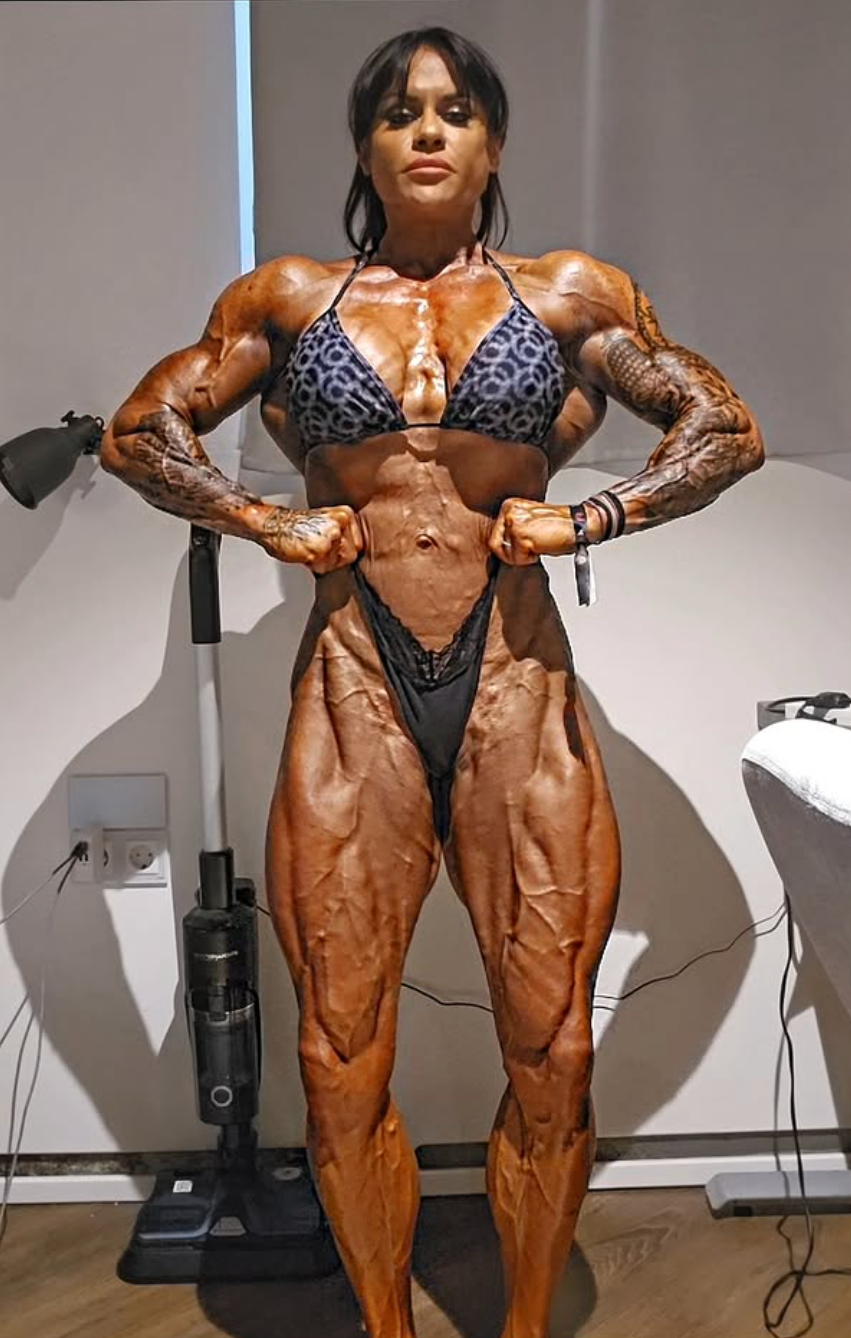
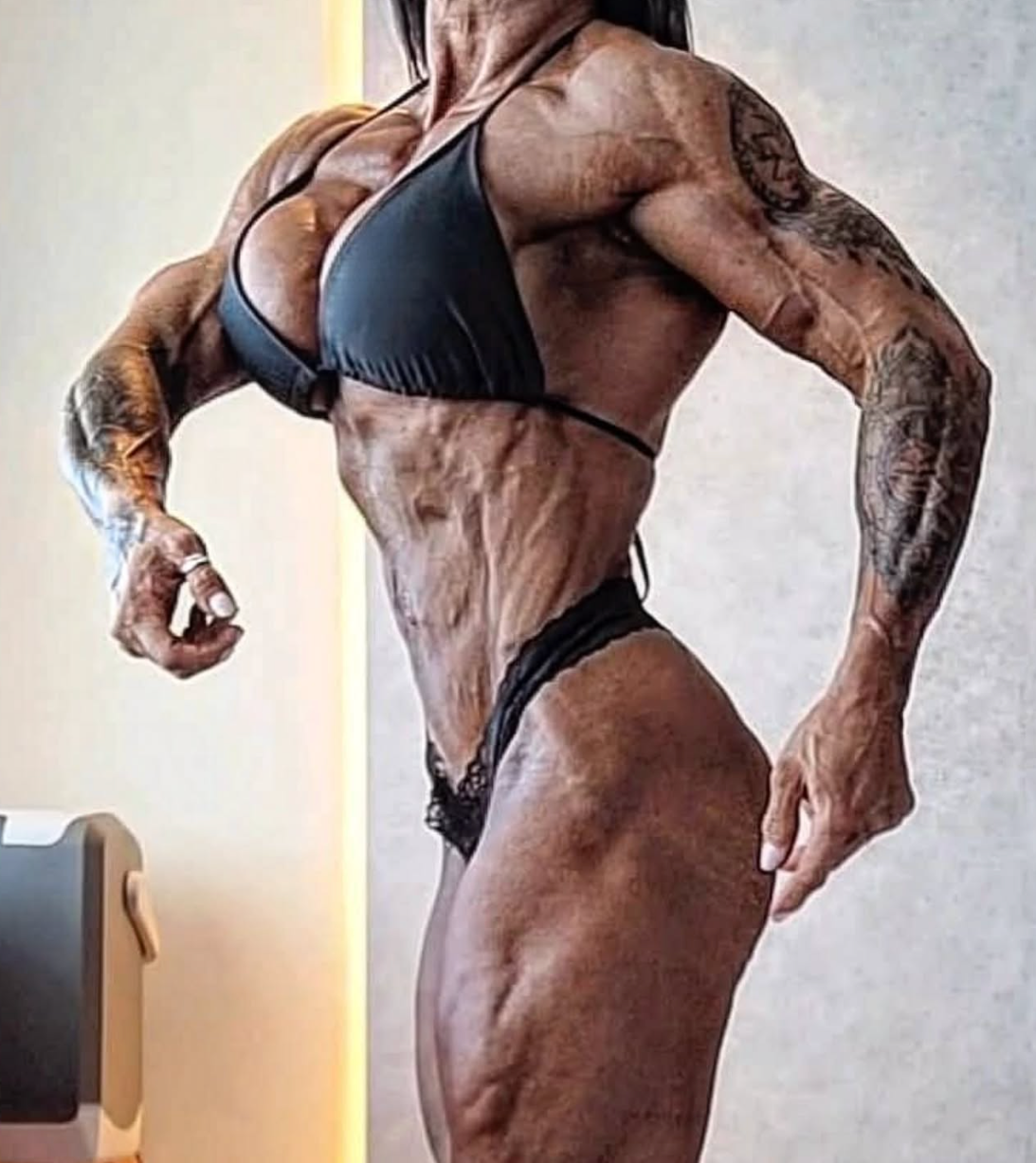
The moment a woman begins to visibly build muscle, the comments and the female bodybuilder stigma starts. Strangers online, often hiding behind anonymous profiles, feel entitled to tear us down. We're called "manly," accused of being on steroids, or told we're "ruining" our femininity. And it’s not just passive disapproval – it’s aggressive, mocking and sometimes deeply personal. Somehow, muscular women have become fair game in a culture that claims to be anti-judgment and pro-body autonomy.

The irony is that these same people would never dare fat shame someone publicly. They wouldn't mock someone for being too thin or too curvy, at least not without consequences. But a woman with visible abs, capped shoulders and quads she worked years to build? Suddenly, all bets are off.

Over the years, I have given this topic a lot of thought. In my opinion, part of this female bodybuilder stigma stems from discomfort. Female muscle challenges long-standing gender norms. We’re not dainty, delicate, or decorative. We are powerful. And that power unsettles people. Strength in a man is expected, however strength in a woman is often seen as unnatural, even threatening.

We’re told we’ve gone “too far,” that we’re “trying to be men”. But building muscle doesn’t erase femininity, it redefines it. The real issue isn’t with our bodies, it’s with outdated beliefs about what women are supposed to look like.
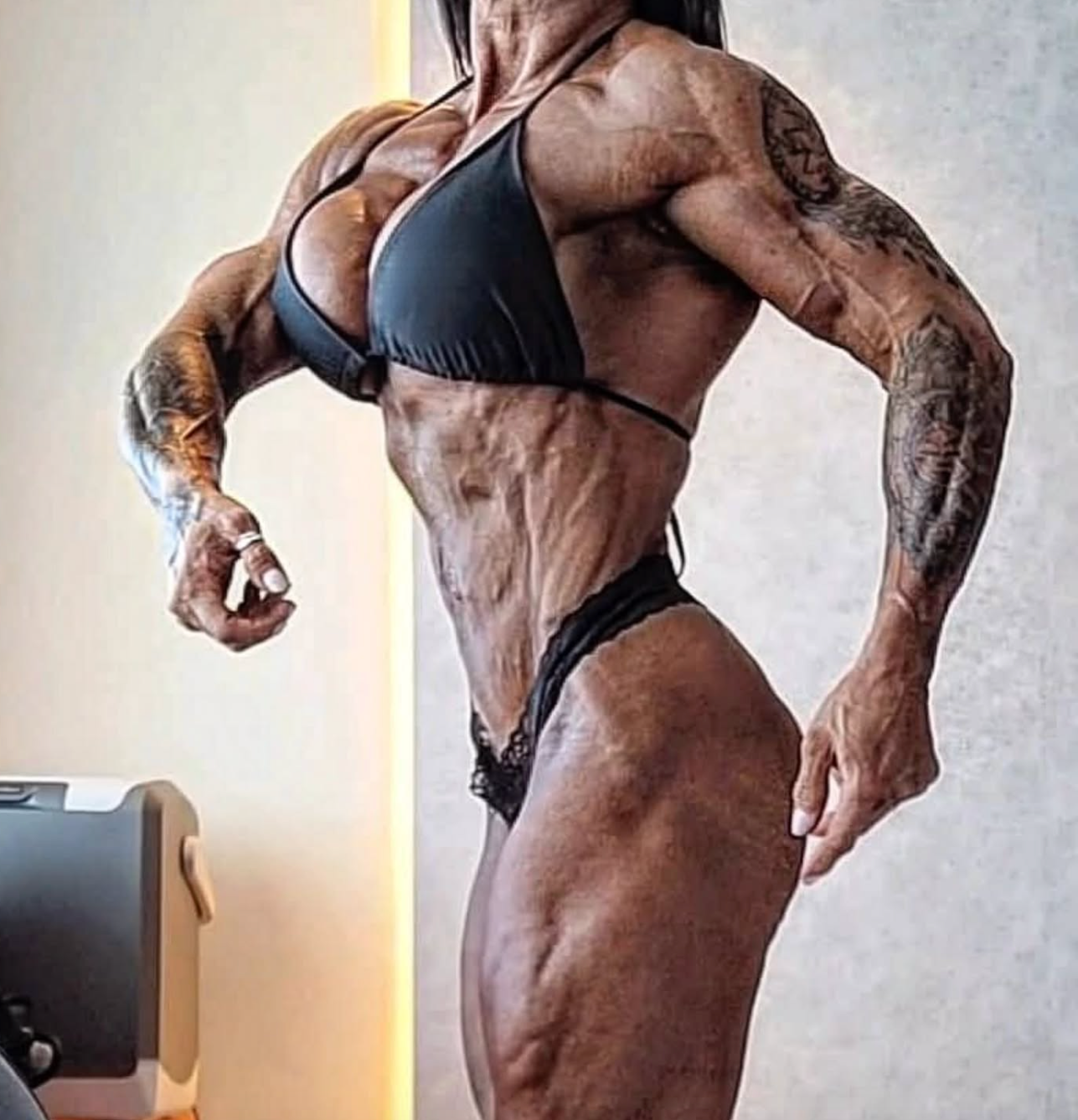
What’s especially frustrating is the glaring double standard. Male bodybuilders (no matter how extreme) are worshipped. Their discipline is praised, their physiques admired. But when a woman achieves the same muscularity, she’s “gross” and "masculine." Social media platforms celebrate shredded men but quietly suppress muscular women. Algorithms often penalise female bodybuilders, shadow banning content or removing posts under vague community guidelines – usually because our physiques are wrongly sexualised or labelled “offensive”.

This online hostility isn’t harmless. It wears you down. Even the most confident athletes can feel the sting of constant judgment. It creates self-doubt, anxiety and a sense of isolation. Some women stop posting progress pictures altogether. Others retreat from online spaces they once used for motivation and connection.

For those of us who love bodybuilding, it’s heartbreaking. We work hard, sacrifice and strive to better ourselves, not to be told we’re “too much” or that we’ve “ruined our bodies”.

Still, we’re not going anywhere. Female bodybuilders continue to rise, build and post with pride. We speak up, we educate and we connect with others who understand the struggle. We won't shrink ourselves to fit others’ comfort zones. And we show what’s possible when women own their strength unapologetically.
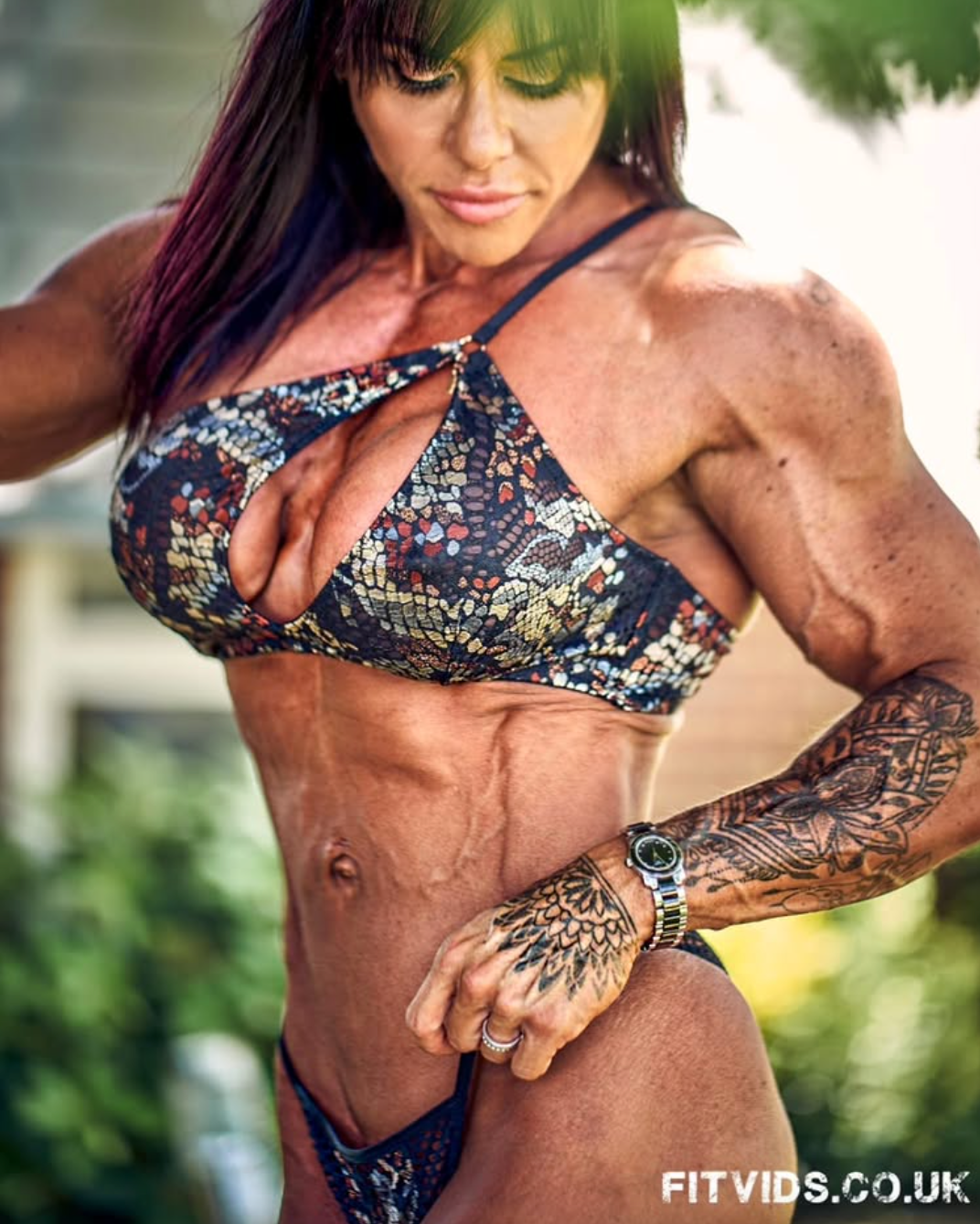
This isn’t just about muscles – it’s about respect. It’s about broadening the definition of beauty to include all bodies, even the ones society still finds uncomfortable.

To those who claim to support body positivity, here’s a challenge: Mean it. That means supporting all women, even the ones with biceps and six-packs. Muscles don’t make us less feminine. They don’t make us less human. What they do make us is strong and that shouldn’t be controversial.

If you truly believe in empowerment, then you should celebrate all expressions of it. And for many of us, that expression just happens to be made of muscle.

To the ones who get it

Amid all the online noise, it's moments of real-life kindness that stick with me most. Like the woman at the kebab van one night, someone I didn’t know well at all, who came right up to me, smiled and said: “You look incredible. I can’t imagine how much work it takes to look like that.”

She didn’t flinch at the muscle. She didn’t mock or question. Instead, she praised the strength, the dedication, the power it takes to build and maintain this kind of physique. It was so unexpected – and so genuine. May I just add, I was getting food for my teenagers who ADORE a chicken shish wrap. To people like her, who see past the stereotypes and celebrate what we do... thank you. Your words stay with us longer than the hate ever could. You remind us that there are people out there who truly respect female muscle, who understand what it represents and who cheer us on without condition.

And that means everything.

*Read more from Louise Plumb here.

BODYBUILDING RESULTS

ATHLETE PROFILES

HEALTH AND EDUCATION HUB

Leave a Reply

Your email address will not be published. Required fields are marked *

Why is gym clothing so revealing now?

Time to get a grip and put an end to crazy gym fashion

Walk into almost any gym now and it’s immediately noticeable: gym clothing is more revealing than it used to be. From minimal shorts to fitted crop tops, the shift is obvious. But the reasons behind it are more complex than simply “fashion” – involving performance, social media and changing attitudes towards body image.

The Louise Plumb Column

I BEGAN going to the gym in 2010. At that time, weight training among women was relatively uncommon, with typically only one or two women in the weight section (maximum), while most used the cardio equipment.

Over the past 15 years, there has been an increase in the number of women who have discovered weight training. This is a marvellous thing. I’m thrilled ladies are cottoning on to the fact that there are many health benefits of strength training. This includes improved fitness, stronger and leaner muscle tissue, prevention of osteoporosis, enhanced heart health and relief from depression and anxiety, among other advantages.

The gym is now a totally different environment

Back then, the gym ‘fashion’ for women training was crazy-patterned, loud leggings, with a T-shirt or vest. Think black leggings with neon stars all over, or patterned with Christmas trees/Halloween skulls/flowers/multi-coloured zebra prints etc. Us girls were happy to show a little flare, but still covered up, as the gym was a serious environment. And to be honest, we were happy to quietly get on with our training, then go home. To this day, while I may not wear the mad leggings any more, my ethos is to get in the gym, train, then leave.

Let’s fast forward to today. The gym is now a totally different environment. The number of women training has increased dramatically and I’m here for it. Some reports suggest that, in 2010, roughly 17 per cent of women lifted weights. In 2025 it is estimated that about 25 per cent of women are pumping iron.

The meteoritic rise of social media now sees ‘influencers’ posting their daily workouts, their latest booty gains and whatever supplement or discount code they are flogging. This has led to a kind of competition to see who can gain the most followers, clicks and controversy.

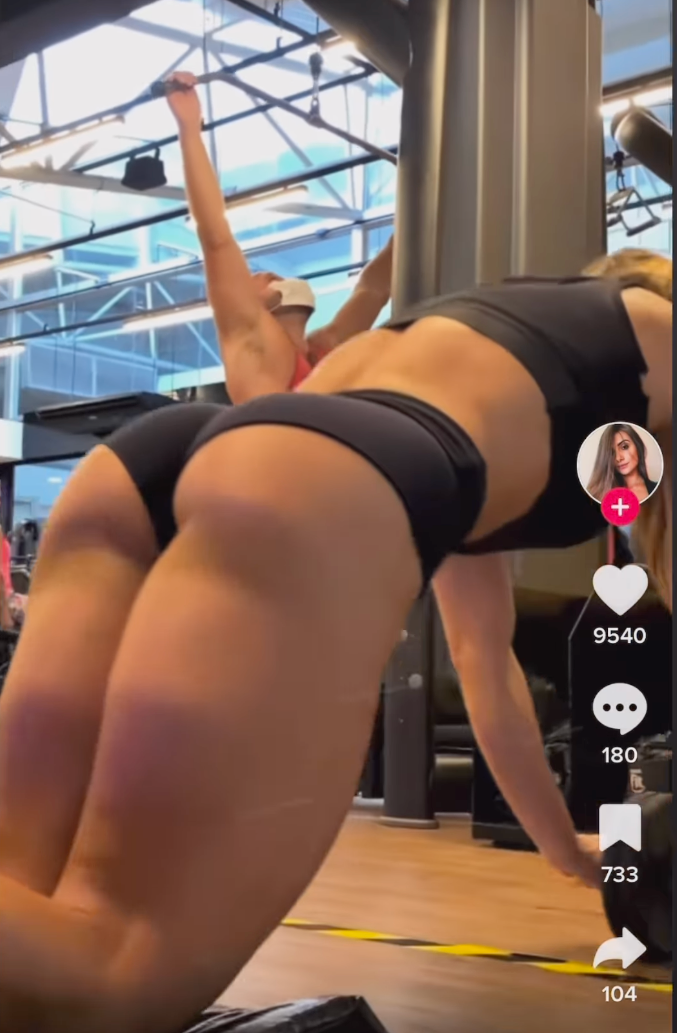
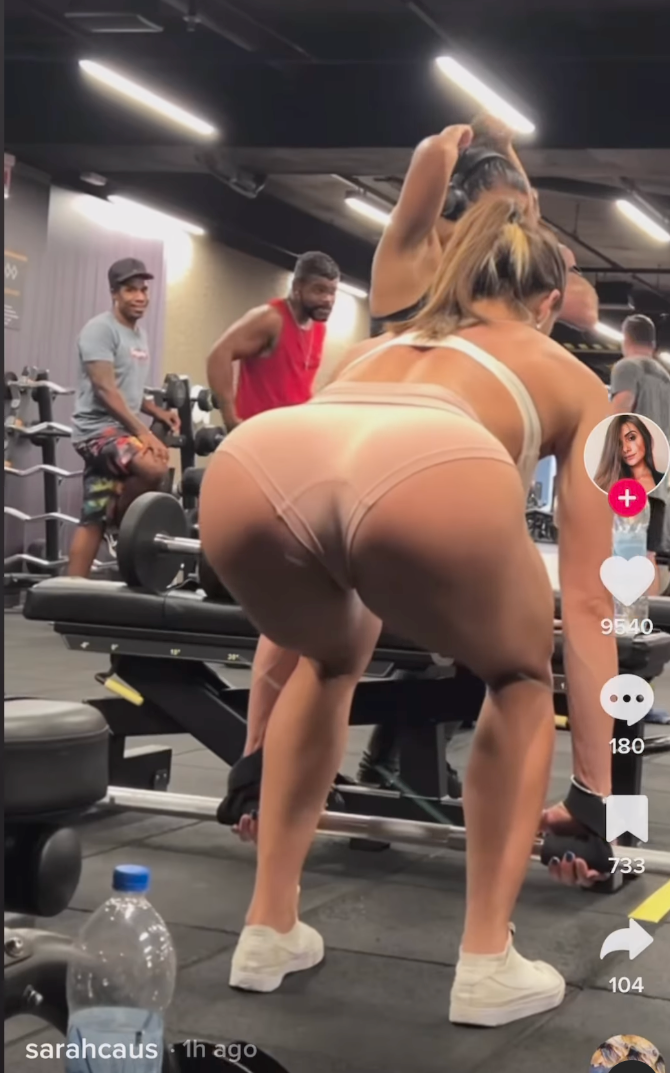
These girls have started wearing less and less during their workouts. Now we could argue that these girls are filming for content and it may well be the way they earn their living. But full workouts are being done in a 'gym fashion' that can only be described as photoshoot attire. Tiny shorts that ride up their bottoms and the smallest of sports bras that are very pretty, but don’t offer anything with regards to support or modesty.

What they are wearing is glorified underwear

As with everything, what is popular on social media has trickled down into popular culture. More and more women are copying the trend of training in next to nothing. It is now seen as normal or the new gym fashion. Gym apparel companies are jumping on the band wagon by selling scrunch bum leggings/shorts and the tiniest of bra tops. They are basically glorified underwear. And as such, a whole new genre of gym fashion, etiquette and potential hurdles has arisen.

Let’s unpack this carefully. In the wake of the explosion of social media and everyone wanting to be an influencer, loads of women are now wearing what I can only describe as inappropriate gym wear. Some are bordering on outright thirsty clothing. This is an obvious attempt at attention seeking and it works! It is nigh on impossible NOT to look at that girl working out in very skimpy clothes, especially in an environment where we are packed close together. And there are mirrors everywhere. I’d argue it’s really hard not to look at a girl working out in next to nothing. They want attention – and they get it. Here’s the kicker though, the same girls who work out in their underwear will be the first to complain if a guy stares. 

Why are we so acutely aware of this phenomenon? To make an observation, some individuals arrive at the gym with their tripods, phones and sometimes microphones to record their training sessions for social media content. This has led to instances where innocent gym-goers are accused of staring or being ‘creepy,’ making these individuals feel vulnerable and upset.

The rise of creators such as Joey Swoll shows that the majority of men are not leering but may glance over at women who are exercising while filming. And who wouldn’t when their shorts are so far up their behinds you can see what they had for breakfast?! And they have a whole production set up to film their set). Joey Swoll’s page highlights such situations, bringing much-needed attention for fairness and understanding in these contexts. These individuals often record, zoom in and show those they perceive as ‘predators’. All in the name of views, likes and comments. Pretty disgusting behaviour, if you ask me.

It's not gym fashion when you see a guy's lunchbox...

I don’t want to bash women, well… those who think it’s OK to train with all their bits hanging out, maybe. But let’s not forget the fellas. I have seen men train in the tightest leggings and shorts that leave nothing to the imagination. It's borderline indecent. What the hell is wrong with the current gym culture that this is deemed as OK? No one comes to the gym hoping to see a very definite outline of a guy’s lunchbox. It is really off-putting. Like rubbernecking a car crash, it’s basically impossible not to look. But, ugh, I really don’t want to see that. Thanks, but no thanks.

And we haven’t even touched on the health and safety aspect. Just like guys who train without a top on, women who train in tiny shorts and bras are pretty unhygienic. Sweat will have no barrier to drip everywhere. And if I’m honest, I rarely see them wiping their stations down after they have trained.

And don’t get me started on scrunch bum leggings. These truly have to be the most unflattering item of clothing ever invented. Even if you have the most perfect set of glutes or a pert peach, at best it looks tacky and desperately thirsty. And at worst it looks downright ugly. It’s a terrible look in my opinion. How these girls ever expect to be taken seriously is beyond me.

Have I worn them in the past? Unfortunately, yes but, in my defence, it was because I had been sent them and was asked to wear them. But you better believe I only wore them a couple of times. I felt incredibly self-conscious the whole time, then they were relegated to the bottom of the pile. And I just couldn't bring myself to wear them and degrade myself. I have too much self-respect.

So, here's what I've noticed. This new gym fashion trend just doesn't seem to have much class or respect, for themselves or others. Sure, you should wear whatever's comfy for your workout, as long as it fits your gym's dress code. If you're not into all the attention that revealing clothes bring, maybe go for something a bit more appropriate. Let's be real and tackle this issue in a sensible way.

And for all the thirsty girls out there… get a grip and just put it away. We don’t want to see it all hanging out. Signed, every right-minded gym goer.

*Read more from Louise Plumb here.

BODYBUILDING RESULTS

ATHLETE PROFILES

HEALTH AND EDUCATION HUB

Leave a Reply

Your email address will not be published. Required fields are marked *

Is bodybuilding a sport?

...and why do some people class darts players as athletes and not us?

Is bodybuilding a sport is a question that has divided opinion for decades. On the surface, it clearly involves competition, discipline and physical effort. But unlike traditional sports, bodybuilding is judged on appearance rather than performance, which is where the debate begins.

The Louise Plumb Column

WE have done it! We've made it through the 352 days of January. Phew, it’s been a long, cold and rather skint month for us all.

With Christmas almost a distant memory, I'm sat here reflecting on the rather wonderful time I had celebrating with friends and family. Christmas Day was a particular highlight for me as it was spent with my kids, my partner and my parents. We went out for a slap-up traditional Christmas dinner at a local restaurant.

During the festivities, among a piles of brussels sprouts, pigs in blankets and FAR too many Quality Street, the conversation at the table turned to sport. My stepdad (henceforth known as SD) is an avid sports fan and I truly mean that. Cut him and he would bleed blue and white (he's a fully fledgedTottenham Hotspur fan). He and my mother even have two separate lounges, one where my mum will watch her soaps and docusoaps and the other where my SD will watch wall-to-wall sport. I think this is what has kept their marriage a happy one...

In between mouthfuls of turkey and stuffing, I asked him if he considered bodybuilding a sport. The answer was a resounding no. I'll admit to being slightly taken aback. This man is a HUGE sports fan. He watched pretty much every discipline during the Olympics, from boxing to badminton, archery to athletics. Ask him about practically any sport and would be able to hold a well-educated conversation about it. This is why I value his opinion and asked him in the first place.

When I probed further, his reasoning is that 'it's a glorified beauty pageant, one which is based on personal opinion'. He argued that not all weight lifting sports are pageants. He is a fan of strongman and power lifting as they are quantifiable, with regards to how they are judged.

You consider a darts player an athlete and not me?

We then got to talking about what makes an athlete. I asked him, 'would you consider me an athlete if you don't consider bodybuilding a sport'? Again, the answer surprised me. No, he does not consider me an athlete.

Just for a bit of context, I am an IFBB Pro women's bodybuilder. I have competed for roughly 10 years (have been bodybuilding for 16 years). I have competed in 21 bodybuilding competitions and my medal tally is; 16 1st places, three 2nd places and one 3rd place. The rest were top five.

Totally perplexed by this revelation, I asked him to define an athlete. In his words, he told me it was a person who competes in a competitive sport. As he does not consider competitive bodybuilding a sport I, based on that metric, cannot be an athlete.

Let’s consider this for a moment. The BBC's Sports Personality of the Year had only been broadcast a few days before our conversation. The runner up of the title for 2025 was Luke Littler, above, the 18-year-old who is now the reigning PDC world champion after winning the 2025 World Championship. An incredible achievement, especially given his young age. I asked SD if Luke was an athlete, he answered yes. More of an athlete than me? SD pondered this, obviously seeing where I was going with it. But ultimately he agreed that Littler was more of an athlete as he considers darts a sport – by virtue of the fact it was included in the BBC's Sports Personality contest.

Now, I have to say I disagree with all his opinions. Let’s dissect this. If we are to define a sport purely on the fact it has a place in the Olympics, then figure skating, synchronised swimming, break dancing and dressage are also sports. These are individually judged competitions that are awarded points due to hitting the criteria of that practice. How is bodybuilding different from that?

We can argue that bodybuilders are athletes

And if a darts player who, I would suggest, has little to no basic athleticism can be considered an athlete, where serious and pro bodybuilders who live and breathe correct training, nutrition and sleep regardless of whether they are on or off season cannot, how are we to accurately define an athlete?

Webster's definition of an athlete is: "A person who is trained or skilled in exercises, sports, or games requiring physical strength, agility or stamina". By that definition alone we could argue bodybuilders are athletes as they train at least four to five times a week. They are well trained in exercises, they require physical strength to create muscle and aesthetics and a lot of stamina is needed to actually perform the mandatory poses on stage as part of the criteria of their class.


The following video was put together by Mark Taylor, the partner of Louise Plumb, and is further evidence of just why she is undoubtedly an athlete.


Let’s go back to Webster's dictionary. Their definition of a sport is "a physical activity that is done for enjoyment". So by that definition alone, bodybuilding is a sport.

A quick survey of my 'civilian' friends showed that most thought bodybuilding is a pageant of sorts and NOT a sport. What I could gather from this was that they are very unaware of the criteria that is expected in competitions. The amount of effort, physical and mental strength that is needed to compete at any level, let alone the pro level. And lastly, the criteria to which they are judged.

I had the privilege of being a head judge for a federation for a good number of years and as such I have judged many bodybuilding shows, from regional qualifiers to British Finals. Let me tell you this, bodybuilding is judged (when judged fairly) on a very strict set of criteria that differs depending on the category you are competing in. So the point scoring is very different for a bikini athlete than a female bodybuilder. Every marker the athlete hits is a point awarded. Every mandatory pose is scrutinised and compared between the guys/girls on stage. We take our time ensuring the winner of each class is the one that represents the criteria as closely as possible. Personal tastes or relationships are (and should absolutely) not a part of the judging. 

Boxing has a similar scoring system to bodybuilding

I pondered on all these points as I mopped up some gravy with a roast potato. It could also be argued that one of SD's favourite sports has a similar scoring system to bodybuilding. Boxing is a wildly popular sport.  But unless there is a knockout, or the fight is stopped by the referee, the decision lies with the judges. They do not always align, so a degree of personal opinion also comes into play. And yet that is never held as a reason as to why boxing shouldn't be considered a sport.

Let’s also argue that dressage or break dancing are very subjective sports to judge and score. Personal opinion and seeing the small details others can’t is what makes the judging so hard. But ultimately no one argues that they are sports.

So what makes bodybuilding a sport, unequivocally (in my opinion)?

1. The training is intense and physically/mentally extremely difficult. I could write an entire article about how it’s one of the toughest (if not THE toughest) sport to compete in.

2. There is very little riding on natural talent. The more work you put in (practicing, refining), the better you are at competing. This covers all aspects, not just the size and shape of you, but your posing, your routine etc. Yes, we can argue that some people are naturally gifted with their physique, but they are few and far between. The vast majority must work very hard for a good number of years to bring up lacking areas.

3. The judging system. The scores are based on the criteria of the specific class you are competing in. Bikini/Men's Physique is largely based on stage presence and overall marketable aesthetic (as well as poise, shape and muscle tone). You have figure, classic and bodybuilding, where marketability does not enter the judging and you are judged based on size, proportions, symmetry and leanness. Most classes have different poses that need to be mastered and each class is judged accordingly.

To quote Adrian Kind in his research article 'Journal of the Philosophy of Sport' on tandfonline.com: "Since its inception, bodybuilding required not only similar training dedication as other weightlifting disciplines but also a focus on skillful posing to highlight muscular features. While originating from a sport, whether bodybuilding is a sport or art form is controversial."

It may be controversial to some, but to this bodybuilder the answer is simple. Bodybuilding not only IS a sport, but it’s one of the toughest ones out there. Oh and we are also 100 per cent athletes.

Read more from Louise Plumb HERE.

BODYBUILDING RESULTS

ATHLETE PROFILES

HEALTH AND EDUCATION HUB
Leave a Reply

Your email address will not be published. Required fields are marked *