Decorated Masters Bikini Pro Sibel Osman joins FrontDouble.com to give Masters bodybuilding the spotlight it has long deserved
SIBEL OSMAN, a decorated Masters Bikini Pro and passionate advocate for the often-overlooked Masters division, brings her 30 plus years of hard-earned experience to FrontDouble.com.
A British champion, French champion, ACP UK President and multiple-time top placer on the European stage, Sibel is the perfect voice to spotlight this dynamic area of the sport.
For too long, Masters athletes – both amateur and pro – have received limited coverage and recognition. Sibel is changing that.
In this new Masters Series for FrontDouble – the UK's leading independent bodybuilding platform – she shines a light on the realities of competing later in life, tackling common misconceptions head-on with hard facts, personal insights and no-nonsense truths.
From training and posing across federations, to mindset, judging criteria, staying in your lane and overcoming obstacles, these segments deliver eye-opening value for athletes, coaches and fans alike.
This is just the beginning. Watch Episode 1 of the Masters Series below. More big topics, truths and recognition for Masters bodybuilding coming soon.
Bodybuilding judging criteria: Has the focus on shredded glutes gone too far?
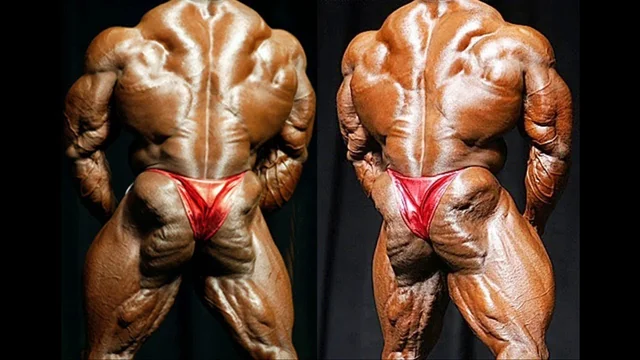
As judging criteria shifts towards extreme conditioning, Strom owner Richard Foster questions whether shredded glutes now outweigh overall physique
BODYBUILDING is a funny old game. Once upon a time it was seemingly simple – the biggest guy wins, assuming he is lean enough. And in the 80’s lean enough was having a full set of abs, separation in your quads, a Christmas tree in your back and a juicy chest split.
The trunks were big and the ass was not a thing anyone gave a flying fuck about – it was about the most impressive and aesthetically pleasing physique. Then, as time went on and the sport progressed, things like feathered quads and striations in triceps became more normal.
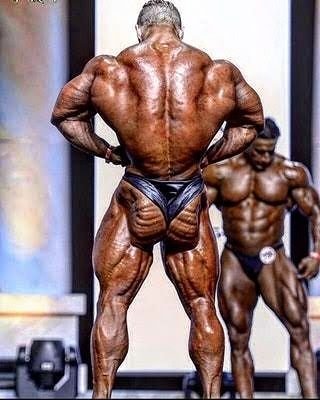
At some point in the later 2000’s or early 2010’s, at a high level, it became entirely normal for everyone to be utterly peeled and the yardstick for who was the leanest became the arse, because the rest of the body was functionally at the limit of leanness.
This in itself I have no issue with; at a high level, when everyone is very excellent, it’s a normal progression for the margins separating athletes to become incredibly small.
So Rick – what are you moaning about?
My issue is the way this has translated to the amateur ranks. It’s becoming common for class winners to have shredded glutes and be outsized and out-conditioned in every other body part by their competitors in second and third. I don’t blame the athletes, that’s just the game, but I do question if shredded glutes is the best representation of the sport and if it’s what we, as fans and enthusiasts, should really value.
I also (shockingly) don’t fully blame the judges or federations. Any time someone is awarded a win who doesn’t have fully shredded glutes, despite clearly winning on every other measurable parameter, social media is aghast with cries of “but he has soggy glutes”, apparently overlooking all the parts of bodybuilding anyone outside of our particular niche gives any kind of crap about.
The general public are often the most confused by this state of affairs: “but that guy is massive, why didn’t he win?” The response of “oh, but look at the lines in his glutes” does little to reassure the casual observer that the correct decision has been made and risks pushing an already very odd space further into obscurity.
So what is the solution as a competitor? Well, the obvious and undeniable solution is to be both the biggest, most balanced and leanest physique and to ensure your glutes are peeled. However, this is 1) sometimes easier said than done, and 2) I think missing the wood for the trees. I would argue a good set of calves to be just as important, but they are apparently all but irrelevant (I suspect because some people just can’t grow them).
And where does that leave us as a ‘sport’? Probably stuck in a slightly stupid place where one very specific thing has quietly been allowed to outweigh almost everything else. Not because it’s actually the most important, but because it’s easy to point at, easy to circle in a screenshot and easy to scream about online.
If, at amateur level, the deciding factor has become whether someone’s arse is crispy, then we’re not really refining the sport, we’re just dumbing it down. We’re rewarding people for winning one very specific battle, while ignoring the bigger picture of what actually looks impressive.
And if the bloke in the crowd can’t work out why the biggest, best-looking body on stage didn’t win, that’s not because he’s an idiot who “doesn’t get bodybuilding”. It’s because we’ve drifted so far up our own arses that even we are struggling to explain it.
Richard Foster is the owner of Strom and long-time bodybuilding enthusiast. He owns Strom, is a shareholder in Beast Pharm and is a director of Combat Fuel. He has competed in powerlifting, bodybuilding and strongman and is a former promoter of Wales’ Strongest Man. He has previously judged bodybuilding shows as well as MC’ing more than 30 amateur bodybuilding shows. He can be reached on richard@stromsports.com
First-Time bodybuilding: Is the judging standard clear enough for beginners?
For anyone entering their first bodybuilding competition, one of the biggest unknowns is judging. While federations outline criteria such as symmetry, muscularity and conditioning, the reality on stage can feel far less clear, especially for first-time competitors.
COMMENTBy Gary Chappell
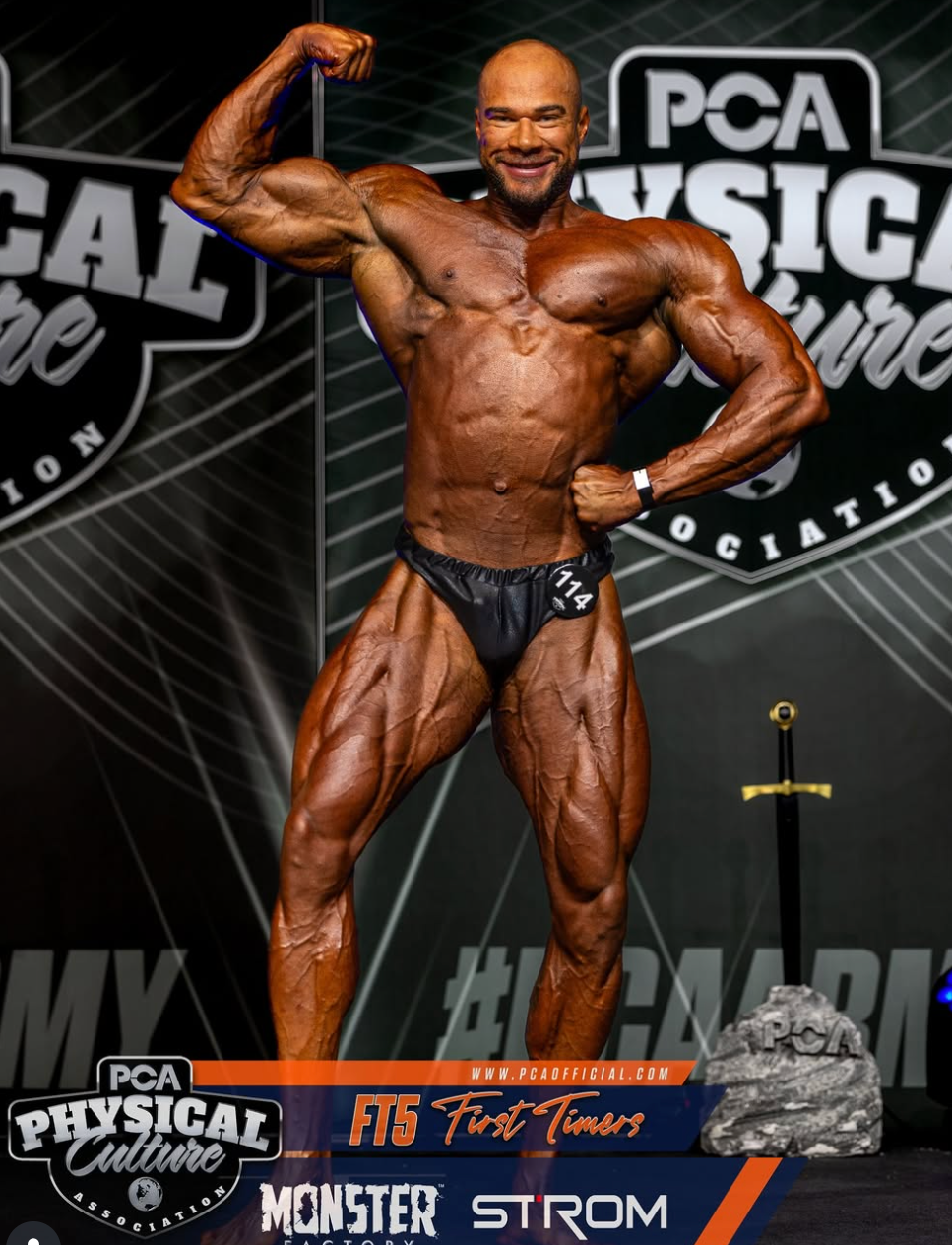
ARGUABLY the biggest show on the British amateur circuit in terms of sheer competitor numbers is the PCA First Timers. It’s enormously popular: well run, slick and carries an electric atmosphere. But in some of the so-called “bodybuilding” classes, the physiques being rewarded don’t actually look like bodybuilding physiques. Instead of dense muscle, maturity and mass, it’s the slimmer, more aesthetic look taking the top spots.
That raises an awkward but unavoidable question. What exactly are some of the first-timer categories supposed to be about? If they are bodybuilding classes, then muscle and condition should be king. If they more about symmetry and flow, then call them Classic. At the moment, competitors are chasing one ideal while the judges often seem to reward another.
For athletes and coaches, that inconsistency matters. Months of prep, dieting and posing can be undone by judging that doesn't appear to be aligned with the category title.
CHAMPION: Alan Costa delivered an incredible package but was arguably more bodybuilder than Classic
A First Timers show of incredible standard
Take the recent PCA First Timers Five, which took place on Sunday, September 21 in Telford.
The quality and standard of the competitors was incredible. These did not look like first timers – they were polished. The 450 entrants tell their own story of just how popular the PCA First Timers has become. There is no criticism here. The PCA has its way, does its own thing and clearly does it well.
Take the overall winner, for example – Alan Costa. A very deserving champion. He brought a superb physique, dense muscle and the kind of bodybuilding look that would stand out in any line-up.
But to reach that overall title he came through Classic Tall. With the greatest respect to Costa, there was very little that could be described as “classic” about him. He looked every inch the bodybuilder. It raises the question: if a physique like Costa’s – clearly bodybuilding in nature – is winning Classic and classic-looking physiques are winning 'bodybuilding' categories, how are competitors supposed to know what look to aim for?
MATT FINISH: Ford was awarded fourth place in Junior Bodybuilding Tall
Size not always rewarded
Then look at the Junior Bodybuilding class, an enormous category that had to be split into height classes due to the sheer numbers. Even then, the Junior Bodybuilding Tall class had 14 athletes.
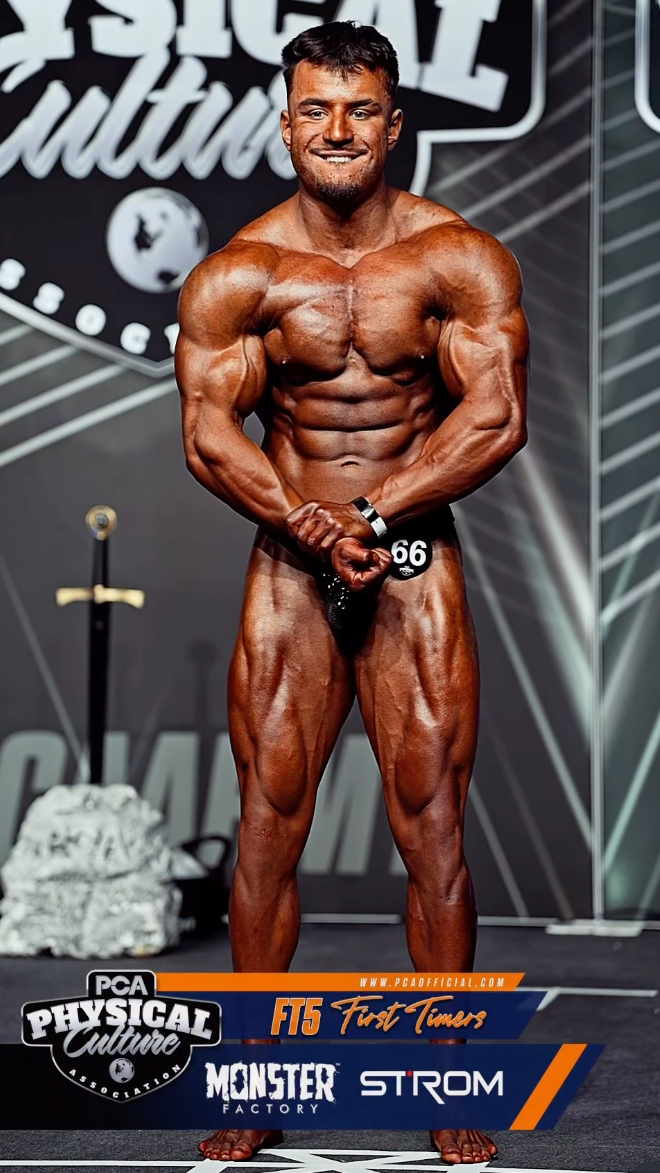
As they took their positions on stage, one stood out. Matthew Ford was considerably bigger than any of his 13 rivals. He had incredible mass and good condition — enough, you would think, to win a bodybuilding class. But he was awarded fourth place.
The three men given the nod ahead of him all had good physiques, but not nearly as much muscle. And remember, this was Junior Bodybuilding, not Junior Classic.
It is this inconsistency that confuses. Think of it like trying to hit a moving target while riding the world’s fastest rollercoaster. Bodybuilding will always be subjective, but when results don’t match the class criteria, competitors paying their fees are entitled to question it.
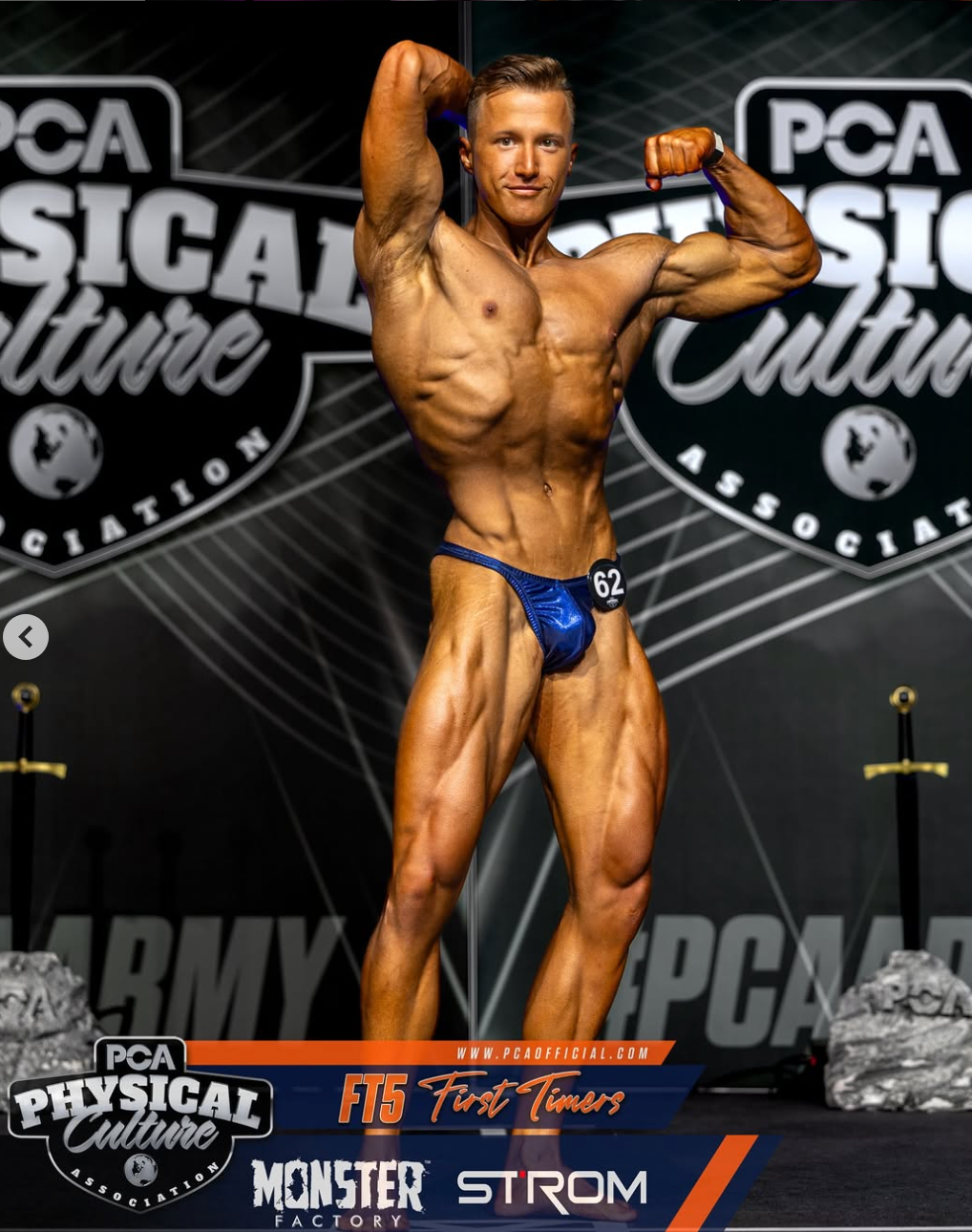
TALL ORDER: Michael Wallaberger's classic lines were given the nod in Junior Bodybuilding Tall
Another example came in Bodybuilding Medium. Luke Blake displayed pro-level muscle and will surely earn his IFBB Pro card at some point. He had more than enough size to dominate his class. Yet the victory went to a much smaller competitor.
Blake’s midsection wasn’t as sharp as it could have been – his condition likely cost him. But when someone carries that much muscle, to overlook them almost feels like an active avoidance of rewarding the bodybuilding look.
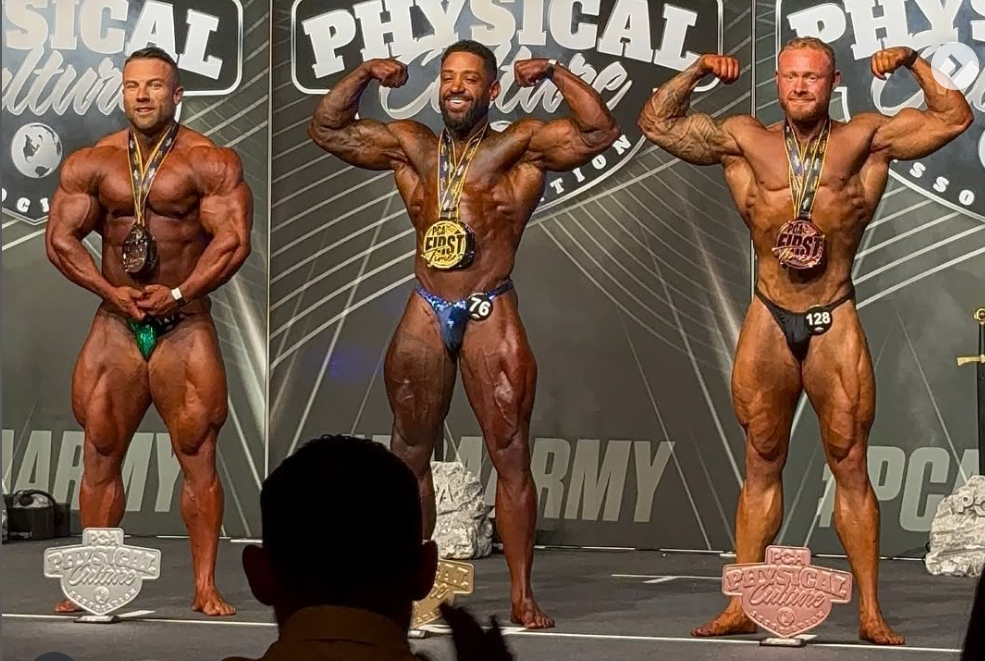
TIGHT AT THE TOP: The mass of Luke Blake (far left) was not enough to beat Bodybuilding Medium winner Stephen Eley
Has the PCA drifted from bodybuilding?
You do have to wonder whether the PCA is moving away from bodybuilding per se and leaning toward a “prettier” look in their winners.
Because as good as Costa was — and he was outstanding — if his look was “Classic,” then how did he manage to beat Bodybuilding Tall winner Josh Davis for the overall? Davis was peeled, with full striations across his glutes, carrying both size and condition. Yet he wasn’t considered good enough for that overall sword.
So the question remains: is the judging criteria at these First-Timer shows clear enough?
Either way, the competitors — the lifeblood of the sport — deserve clarity.
...and why do some people class darts players as athletes and not us?
Is bodybuilding a sport is a question that has divided opinion for decades. On the surface, it clearly involves competition, discipline and physical effort. But unlike traditional sports, bodybuilding is judged on appearance rather than performance, which is where the debate begins.
The Louise Plumb Column
WE have done it! We've made it through the 352 days of January. Phew, it’s been a long, cold and rather skint month for us all.
With Christmas almost a distant memory, I'm sat here reflecting on the rather wonderful time I had celebrating with friends and family. Christmas Day was a particular highlight for me as it was spent with my kids, my partner and my parents. We went out for a slap-up traditional Christmas dinner at a local restaurant.
During the festivities, among a piles of brussels sprouts, pigs in blankets and FAR too many Quality Street, the conversation at the table turned to sport. My stepdad (henceforth known as SD) is an avid sports fan and I truly mean that. Cut him and he would bleed blue and white (he's a fully fledgedTottenham Hotspur fan). He and my mother even have two separate lounges, one where my mum will watch her soaps and docusoaps and the other where my SD will watch wall-to-wall sport. I think this is what has kept their marriage a happy one...
In between mouthfuls of turkey and stuffing, I asked him if he considered bodybuilding a sport. The answer was a resounding no. I'll admit to being slightly taken aback. This man is a HUGE sports fan. He watched pretty much every discipline during the Olympics, from boxing to badminton, archery to athletics. Ask him about practically any sport and would be able to hold a well-educated conversation about it. This is why I value his opinion and asked him in the first place.
When I probed further, his reasoning is that 'it's a glorified beauty pageant, one which is based on personal opinion'. He argued that not all weight lifting sports are pageants. He is a fan of strongman and power lifting as they are quantifiable, with regards to how they are judged.
You consider a darts player an athlete and not me?
We then got to talking about what makes an athlete. I asked him, 'would you consider me an athlete if you don't consider bodybuilding a sport'? Again, the answer surprised me. No, he does not consider me an athlete.
Just for a bit of context, I am an IFBB Pro women's bodybuilder. I have competed for roughly 10 years (have been bodybuilding for 16 years). I have competed in 21 bodybuilding competitions and my medal tally is; 16 1st places, three 2nd places and one 3rd place. The rest were top five.
Totally perplexed by this revelation, I asked him to define an athlete. In his words, he told me it was a person who competes in a competitive sport. As he does not consider competitive bodybuilding a sport I, based on that metric, cannot be an athlete.
Let’s consider this for a moment. The BBC's Sports Personality of the Year had only been broadcast a few days before our conversation. The runner up of the title for 2025 was Luke Littler, above, the 18-year-old who is now the reigning PDC world champion after winning the 2025 World Championship. An incredible achievement, especially given his young age. I asked SD if Luke was an athlete, he answered yes. More of an athlete than me? SD pondered this, obviously seeing where I was going with it. But ultimately he agreed that Littler was more of an athlete as he considers darts a sport – by virtue of the fact it was included in the BBC's Sports Personality contest.
Now, I have to say I disagree with all his opinions. Let’s dissect this. If we are to define a sport purely on the fact it has a place in the Olympics, then figure skating, synchronised swimming, break dancing and dressage are also sports. These are individually judged competitions that are awarded points due to hitting the criteria of that practice. How is bodybuilding different from that?
We can argue that bodybuilders are athletes
And if a darts player who, I would suggest, has little to no basic athleticism can be considered an athlete, where serious and pro bodybuilders who live and breathe correct training, nutrition and sleep regardless of whether they are on or off season cannot, how are we to accurately define an athlete?
Webster's definition of an athlete is: "A person who is trained or skilled in exercises, sports, or games requiring physical strength, agility or stamina". By that definition alone we could argue bodybuilders are athletes as they train at least four to five times a week. They are well trained in exercises, they require physical strength to create muscle and aesthetics and a lot of stamina is needed to actually perform the mandatory poses on stage as part of the criteria of their class.
The following video was put together by Mark Taylor, the partner of Louise Plumb, and is further evidence of just why she is undoubtedly an athlete.
Let’s go back to Webster's dictionary. Their definition of a sport is "a physical activity that is done for enjoyment". So by that definition alone, bodybuilding is a sport.
A quick survey of my 'civilian' friends showed that most thought bodybuilding is a pageant of sorts and NOT a sport. What I could gather from this was that they are very unaware of the criteria that is expected in competitions. The amount of effort, physical and mental strength that is needed to compete at any level, let alone the pro level. And lastly, the criteria to which they are judged.
I had the privilege of being a head judge for a federation for a good number of years and as such I have judged many bodybuilding shows, from regional qualifiers to British Finals. Let me tell you this, bodybuilding is judged (when judged fairly) on a very strict set of criteria that differs depending on the category you are competing in. So the point scoring is very different for a bikini athlete than a female bodybuilder. Every marker the athlete hits is a point awarded. Every mandatory pose is scrutinised and compared between the guys/girls on stage. We take our time ensuring the winner of each class is the one that represents the criteria as closely as possible. Personal tastes or relationships are (and should absolutely) not a part of the judging.
Boxing has a similar scoring system to bodybuilding
I pondered on all these points as I mopped up some gravy with a roast potato. It could also be argued that one of SD's favourite sports has a similar scoring system to bodybuilding. Boxing is a wildly popular sport. But unless there is a knockout, or the fight is stopped by the referee, the decision lies with the judges. They do not always align, so a degree of personal opinion also comes into play. And yet that is never held as a reason as to why boxing shouldn't be considered a sport.
Let’s also argue that dressage or break dancing are very subjective sports to judge and score. Personal opinion and seeing the small details others can’t is what makes the judging so hard. But ultimately no one argues that they are sports.
So what makes bodybuilding a sport, unequivocally (in my opinion)?
1. The training is intense and physically/mentally extremely difficult. I could write an entire article about how it’s one of the toughest (if not THE toughest) sport to compete in.
2. There is very little riding on natural talent. The more work you put in (practicing, refining), the better you are at competing. This covers all aspects, not just the size and shape of you, but your posing, your routine etc. Yes, we can argue that some people are naturally gifted with their physique, but they are few and far between. The vast majority must work very hard for a good number of years to bring up lacking areas.
3. The judging system. The scores are based on the criteria of the specific class you are competing in. Bikini/Men's Physique is largely based on stage presence and overall marketable aesthetic (as well as poise, shape and muscle tone). You have figure, classic and bodybuilding, where marketability does not enter the judging and you are judged based on size, proportions, symmetry and leanness. Most classes have different poses that need to be mastered and each class is judged accordingly.
To quote Adrian Kind in his research article 'Journal of the Philosophy of Sport' on tandfonline.com: "Since its inception, bodybuilding required not only similar training dedication as other weightlifting disciplines but also a focus on skillful posing to highlight muscular features. While originating from a sport, whether bodybuilding is a sport or art form is controversial."
It may be controversial to some, but to this bodybuilder the answer is simple. Bodybuilding not only IS a sport, but it’s one of the toughest ones out there. Oh and we are also 100 per cent athletes.
Bodybuilding Judging Tips: What Judges Really Look For
Bodybuilding judge STEVE JOHNSON has revealed the simple mistakes that can ruin a competitor’s chances on stage, highlighting what judges are really looking for.
YOU have spent the best part of 16 weeks preparing for this one moment. The hard work is done. Or so you believe. Actually, some competitors can win or lose a show based on their stage presence. Don’t fall into that trap. Here are my tips for adding that final gloss:
What judges are actually looking for
SMILE
First and foremost, you only get one chance to make a first impression on the judges, so please look like you are enjoying yourself. Nobody wants to watch someone who looks miserable, but a big smile and body demeanour that makes you look like you’re enjoying yourself will always attract the eye of the judges.
POSING
As a judge, I regularly see athletes unintentionally hide their body from the judges and to be fair it’s frustrating at times. It can make a difference to your placing, as the judges can only judge what they can see and not what they can’t. You are judged on the shapes you create on the day and not what your body is really like. For example: if someone has a huge wide back but doesn’t open it on their lat spreads and the guy at side of him does, even though you know he is not as developed, you have to judge with the guy who’s back looks best in front of you. This is why its so important these days to practice posing as much as training and getting a posing coach if necessary. Your aim is to create the illusion you are better than what you are.
Make sure you practice your tan in advance of the show and that it is applied by someone who knows what they are doing. You are trying to avoid streaks and tans that will run onstage under hot lighting. There are many different tans out there as well as many different skin types, so choose appropriate tanning (and glaze) that will enhance your physique/figure. Even on the judging table (close-up view) a physique can fade into the background if too light in colour. Some federations allow instant tans backstage and some don’t, so always check up on this and follow the pre-tanning protocols for skin preparation.
SHAVING
One thing that is off putting to a judge is body hair, so please make sure you remove visible hair as necessary. Guys need to be more on point with this than girls and I have seen many athletes do a partial job and its very distracting to the eye and ruins the professionalism of your overall appearance. I have seen it this year and, although in this case it didn’t affect placing (they won) it is the one thing I will remember him for and not his physique. In this instance it was shaved thighs but unshaven glutes and calves. Also, I have seen underarm hair left which again just ruins the look of the physique. This might sound pedantic but if a judge is trying to find a reason to split two athletes because it’s a close decision, then this could indeed come into their way of thinking (right or wrong).
These are just some very basic tips as there are many other things I see on a regular basis and in particular with posing, which I can cover at another time.
Don’t ruin your chances of success by not nailing these simple areas.




Leave a Reply