Retatrutide in bodybuilding: The triple agonist that could redefine contest prep

How the rules of fat loss are being rewritten

By Gary Chappell

FOR decades bodybuilding prep has been a brutal balancing act between getting stage ready and holding on to every ounce of hard-earned muscle. Traditionally, that has meant manipulating food, cardio and, in many cases, anabolic steroids and fat burners. Now, in this study by frontdouble, a new class of drugs – originally designed for diabetics and the clinically obese – are rewriting the rules of fat loss.

You will likely have heard of semaglutide (Ozempic/Wegovy) and tirzepatide (Mounjaro). Both have been hailed as miracle drugs in the mainstream for their ability to slash appetite and drive huge weight loss, despite some stories of adverse side effects at higher doses. Now, however, there is a new kid on the block: retatrutide.

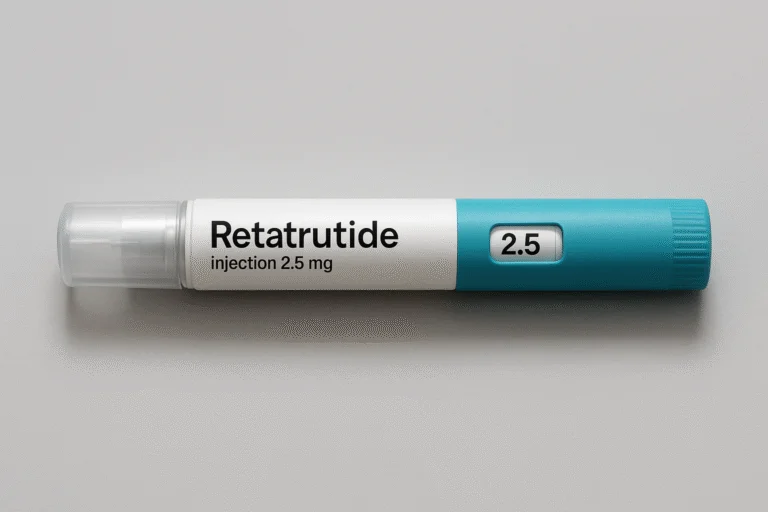
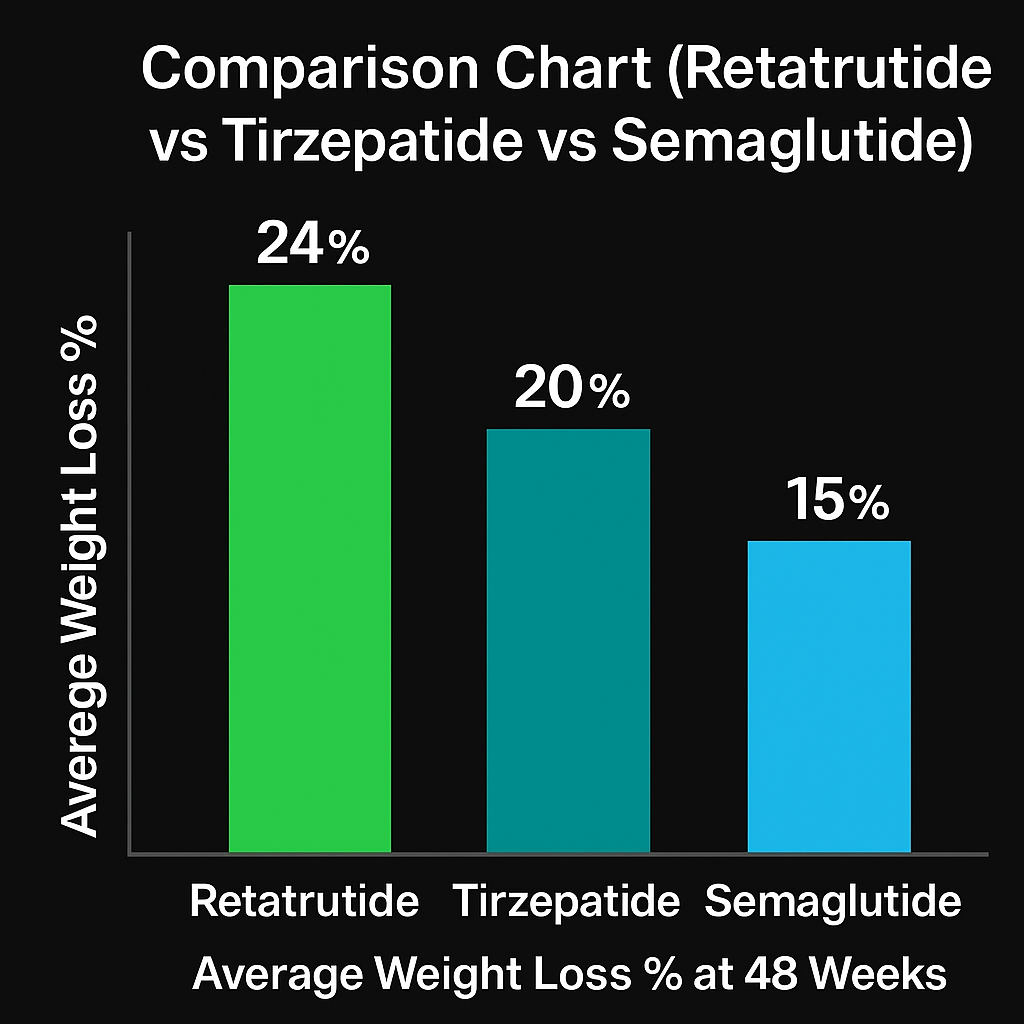
Still in "clinical trials", retatrutide is showing the most dramatic results yet – with patients in phase two studies losing up to 24% of bodyweight in under a year. For competitive bodybuilders, the implications are enormous.
retatrutide fat loss bodybuilding prep conditioning

What exactly is retatrutide?

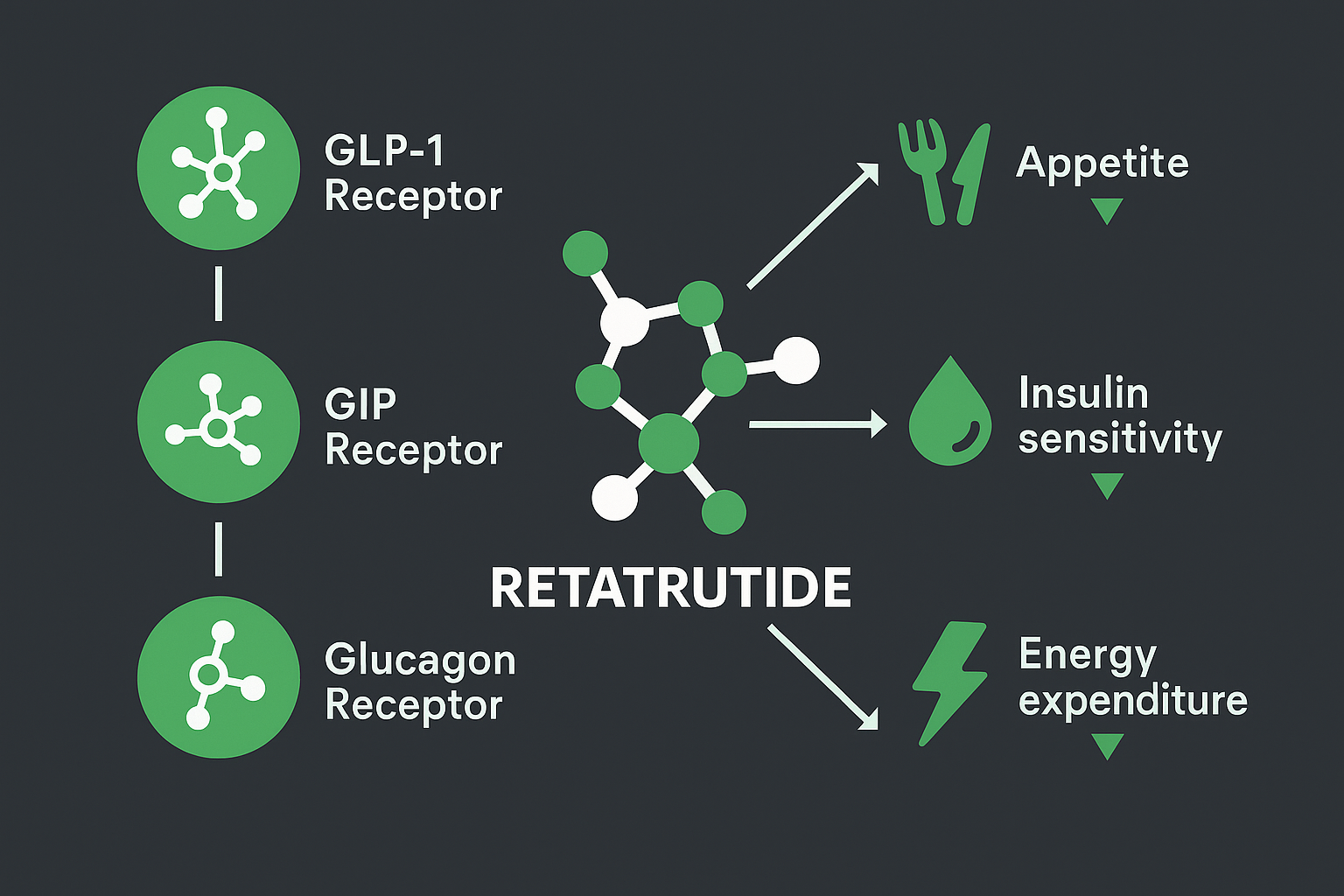
Retatrutide is what is called a triple agonist, meaning it works on three different hormonal pathways, as follows:

  1. GLP-1 agonism: suppresses appetite, slows gastric emptying, improves insulin sensitivity.
  2. GIP agonism: enhances insulin release, improves carb handling, may improve fat metabolism.
  3. Glucagon agonism: increases energy expenditure and fat oxidation.

That third piece – glucagon receptor activation – is what makes retatrutide unique. Whereas semaglutide and tirzepatide mostly just help you eat less, retatrutide may also help you burn more calories at rest. That is a potential game-changer.

Some bodybuilders have no doubt already experimented with semaglutide and tirzepatide and the pros and cons are becoming clearer:

Retatrutide promises even more fat loss power, but that also means these risks are magnified if the drug is not managed correctly.
retatrutide fat loss bodybuilding prep conditioning

How could retatrutide fit into prep?

1. Appetite control

No question: this is the biggest benefit. At six weeks out, hunger can often begin to feel like torture. Retatrutide, much like its predecessors, could make dieting far smoother, leading to fewer binges, fewer slip-ups and more compliance.

2. Metabolic output

The glucagon pathway may help keep energy expenditure higher even as food intake drops. In practice, that could mean less cardio needed to peel off the final fat – or at least less of the “metabolic crash” that leaves athletes flat and tired.

3. Conditioning the stubborn areas

Every competitor knows the last fat to go is glutes, hamstrings, and lower back. Data so far suggests retatrutide strips both visceral and subcutaneous fat efficiently. In theory, it could help achieve that paper-thin look that separates “lean” from “stage-ready".
retatrutide fat loss bodybuilding prep conditioning comparison with tirsepatide and semaglutide

But here are some caveats

Muscle Retention

GLP-1/GIP/glucagon agonists do not target fat specifically, they just reduce energy intake and increase burn. If you do not deliberately program high protein, the body will use muscle tissue as fuel. In prep, where muscle preservation is everything, that is a major concern.

Flatness and carbohydrate handling

Many athletes already struggle to carb load properly on semaglutide or tirzepatide due to slower gastric emptying and suppressed hunger. Retatrutide may amplify this issue. Imagine peak week when you need 600–800g carbs per day to fill – and your client physically cannot stomach it.

Digestive side effects

The nausea, reflux and bloating commonly seen with GLP-1s are more than an inconvenience in bodybuilding. A distended gut or inability to process food quickly enough can wreck your stage look and your pump.

Unknowns in lean athletes

The trials so far have been in obese and type 2 diabetic populations. We do not know yet how retatrutide behaves in a 200lb bodybuilder at five per cent body fat, also running PEDs such as Tren, Mast, and GH. The interactions are uncharted territory.

bodybuilding fat loss drugs prep conditioning physique

Bodybuilders are no strangers to pharmacological “help” in prep. So how does retatrutide stack up?

So retatrutide is not a replacement, but a different kind of weapon: it makes the diet easier to follow and may boost fat burn slightly.

Here’s where it might fit:

The smarter play might be using it in the first half of prep to get an athlete leaner, sooner. Then tapering it off before the final stage run-in.

Retatrutide's profile is hard to ignore. For mainstream patients, it looks like the most powerful fat-loss drug ever tested. For bodybuilders, it could mean:

But it also comes with big risks: flatness, muscle loss, digestive unpredictability and unknown interactions with PEDs. Retatrutide is not about revving the engine, it is about cutting hunger and nudging metabolism. Used wisely, it could smooth the prep journey.

Retatrutide might be the next big tool in the prep coach’s kit but, as always, no drug replaces the work.

This article forms part of FrontDouble’s health and education coverage, focusing on real-world hormone management in bodybuilding. Visit our Health and Education Hub HERE

MORE FROM FRONTDOUBLE:

Growth Hormone doses: Just how much?

Insulin 101 for Bodybuilders: Complete Guide, Protocols & Safety

Bodybuilding off season: The growth phase Explained

Bodybuilding contest prep tips

BODYBUILDING RESULTS

ATHLETE PROFILES

Leave a Reply

Your email address will not be published. Required fields are marked *

Volume vs Intensity: Which builds more muscle?

The debate between volume vs intensity in bodybuilding has been ongoing for decades, with strong arguments on both sides when it comes to building muscle.

DURING anybody's journey through bodybuilding there is likely to be a phrase or two that strikes a chord.

Keep It Simple Stupid [KISS] is one. Another that resonates comes from Lee Priest, never one to mince his words but, in the context of this article, he may have had a point. "Just fucking train," were his wise words.

But countless people in gyms across the country 'just fucking train' and few experience the sort of results that will take them to the stage, let alone win them a competition. So there must be more nuance to training than just those two phrases.

Dante Trudel volume vs intensity bodybuilding training hypertrophy

According to 'the science', volume is king for hypertrophy. But then how does one explain the anecdotal evidence from training routines such as DC Training by Dante Trudel [above] [DC = DoggCrapp, which was his website username at the time]?

DC Training, when it was first released, was met with a mixed reception. Some loved it and hailed it as a revelation, while others ridiculed it. How could muscle growth possibly be stimulated with just one exercise per bodypart – and one set?

But it was hardly a revelation. Dorian Yates had been advocating a similar type of training for years. In fact, he wrote as much in his second book, A Warrior's Story.

Up until he won the EFBB [now UKBFF] British Championships in 1986, Yates was using a standard upper-lower split. He trained three times a week. The main differences between his split and DC Training is that Yates did two to three sets, whereas DC Training advocates counting just one working set and extreme, weighted stretching for up to one minute. The number of rest-pause sets with DC, however, can be as high as two or three. And with a three-second negative, it attempts to squeeze as much intensity out of each rep as possible.

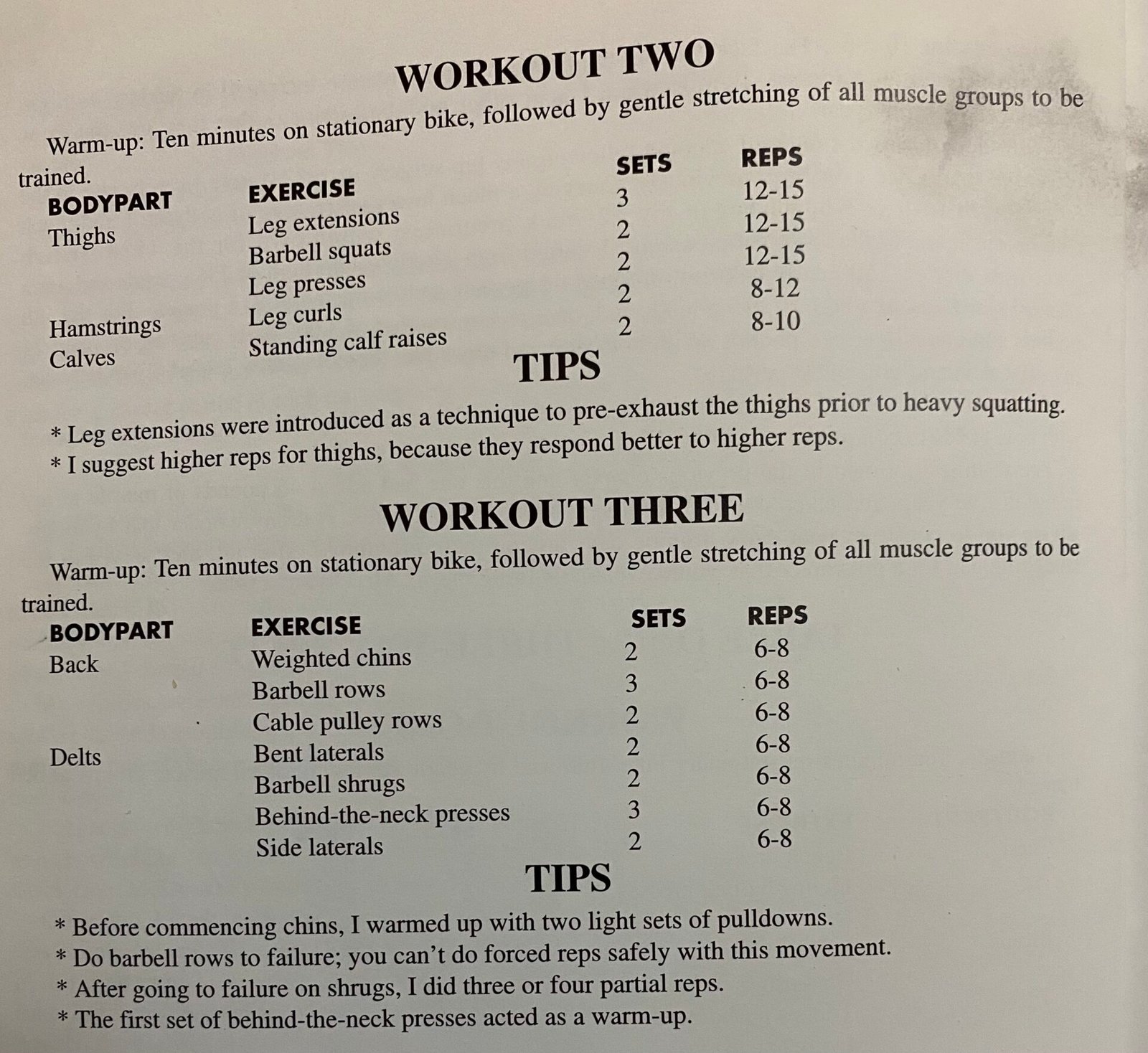
Dorian Yates training split upper body
Dorian Yates training split legs

It was only later in his career that Yates dropped the number of sets he was performing. But even then he would still do more than one exercise per body part. It was here that he moved from three times a week four times [images above].

Volume v Intensity – how does the science compare?

Here’s a comparison of DC Training and high-volume training through the lens of scientific research on hypertrophy:

1. Training Volume and Frequency

Science Insight: While high-volume training aligns more closely with traditional research favouring higher set counts, DC Training’s emphasis on intensity can still produce hypertrophic gains.

volume vs intensity bodybuilding training hypertrophy

2. Intensity and Failure Training

Science Insight: Research shows that training close to failure is effective for hypertrophy but that training to absolute failure every set is not necessary. High-volume training often yields greater cumulative workload without hitting failure as consistently. This aligns with evidence supporting effective hypertrophy without needing maximal fatigue.

3. Frequency and Recovery

Science Insight: Research suggests that higher frequencies (eg two to three times per week) may support better hypertrophic outcomes. It does this by keeping muscles in a more consistent state of stimulus and recovery.

volume vs intensity bodybuilding training hypertrophy

4. Progressive Overload and Periodisation

Science Insight: Research supports progressive overload as essential for hypertrophy, but managing fatigue is crucial for sustainability. High-volume training with periodisation often leads to longer-term adherence and growth compared to constantly hitting failure, as in DC Training.

Which Is More Effective?

In conclusion, while both low volume and high-volume training can lead to gains in muscle size, high-volume training has a broader base of scientific support and might be more universally effective, especially for consistent, long-term hypertrophy. Having said that, what we know for certain is that no one size ever fits all. And, as usual, it is what works best for you, the individual, that will result in the most progress.

At the beginning of this analysis, we spoke about phrases. Often, when something is working and is, therefore, good, many of us look for better. It is in that process where progress can become derailed. So, finally: "If it ain't broke, don't fix it."

MORE FROM FRONTDOUBLE:

BODYBUILDING RESULTS

ATHLETE PROFILES

HEALTH AND EDUCATION HUB

Leave a Reply

Your email address will not be published. Required fields are marked *

Genetics in Bodybuilding: What they really mean

Bodybuilder TIM ROSIEK discusses the key word in the sport and how genetics are more than they seem

THERE is a lot of talk about genetics in bodybuilding but there is perhaps more to the word than you think.

Yes, genetics play an important part in the sport – and this is the reason we all are not all top IFBB professionals. 

But what are they, exactly?

What genetics mean in bodybuilding

Genetics are the reason why some people have great body parts despite barely training them and why some people will train weak body parts seemingly for ever with hardly any results.

You must know someone who has the most amazing calves without ever having trained them, or the most monstrous traps with seemingly any effort.

Genetics will not only be a major part in your ability to grow muscle but also how balanced they are. For example, is your left bicep the same shape and size as your right? Are your abs the perfect shape and evenness creating the perfect six pack? Or are they irregular in appearance, with a large gap down the middle?

Genetics will ultimately be the driver for how your physique will turn out, how balanced you will grow, how fast you will grow, how lean you will be in the off-season and on stage. And this is the case no matter how many performance-enhancing drugs you may choose to take.

Metabolism, appetite and recovery

You have to ask yourself, why are top IFBB pros on the Olympia stage? It’s not that they train any harder than many of us, or they eat better than many of us [although they probably do], or even take more gear than many of us.

Their bodies are just blessed with the ability to grow faster, more even and symmetrical and keep leaner than us.

But that is genetics on the surface. When a fellow gym-goer says something like, ‘he’s just got good genetics’, they are talking about all we have discussed above.

Tim Rosiek genetics in bodybuilding muscle growth physique development

But in truth, genetics run much deeper than that.

Muscle growth and physique structure

How is your appetite, for example? Are you able to force down thousands of calories of good, clean good in the off-season when you are not hungry? Or, having eaten four of five meals already, do you wince at the thought of another meal?

This is genetics.

And what about your metabolism? Do you, as people are fond of saying, ‘put on 10lbs just by looking at a carb’, or can you eat like there is no tomorrow and barely add an ounce of bodyweight?

This is genetics.

How do you respond to gear? Do you suffer from all sorts of side effects using the bare minimum? Or can you tolerate moderate to high doses with relative comfort? What about compounds such as clenbuterol? Can you cope with high doses, or do you shake like a leaf with the bare minimum?

This too is genetics.

And how disciplined are you with your nutrition? Can you accept some suffering during a contest prep, or do you run to the cupboard for a snack each time you fill a twinge of hunger?

You are either genetically predisposed to being extremely disciplined, or you might get close, but never close enough.

All genetics.

Ronnie Coleman genetics in bodybuilding muscle growth physique development

This is something the more mature bodybuilder understands but perhaps not the younger generation. They all want to be professionals in a year or two – you must have heard countless people in the gym saying: “I want to get my pro card”, as if was as easy as going to the shops and buying it.

But you must have at the very least favourable genetics or you will never reach the stage, let alone win a pro card. 

If you look at Lee Priest for example, he won the Mr Australia when he was only 18 years of age. So why isn’t there loads of monstrous 18-year-olds wondering the planet? Because there are certainly more 18-year-olds training than ever before. 

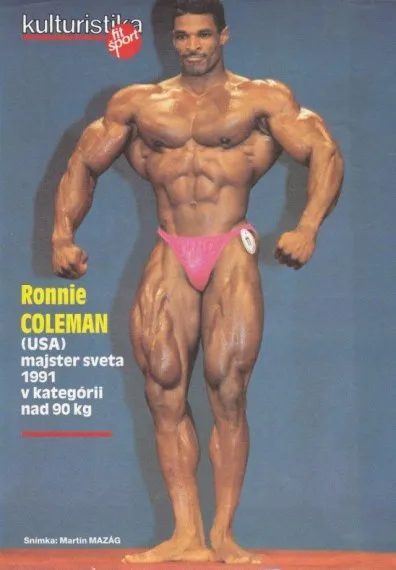
Ronnie Coleman competed natural until he was 30 years of age. Have you ever seen a picture of him on his pro debut in 1992? He was a monster and still natural. This is not the norm but just superior genetics. 

So why do these pros grow better than most of us mere mortals? Well, they have the ability to synthesise protein more rapidly, recover quicker and have naturally higher levels of hormones.

Lee Priest genetics in bodybuilding muscle growth physique development

There is some evidence that some of these top bodybuilders have a gene defect with myostatin. This gene stops you growing past a certain given point. Have you ever seen a Belgium blue cow? They literally just eat grass and the amount of lean muscle mass is ridiculous.

What we are certain of is that better genetics for growing will make you grow faster from training and utilise your food better. Your body will make better use of the drugs so, in theory, you will need less of them to build muscle. All this and the ability to grow your muscles evenly and symmetrical too, appetite, metabolism, discipline etc.

I have seen so many amazing genetically gifted bodybuilders not make the stage because they can’t take dieting or the training is too much. 

The mindset of a champion is genetic too, to a point. It is very possible for an athlete with poorer genetics to beat a genetially gifted bodybuilder because they can train harder, be more consistent, eat better, suffer that little bit more to get leaner than the rest.

Now have a think about yourself. Which genetics are strong for you. And which is your genetic limitation.

MORE FROM FRONTDOUBLE:

BODYBUILDING RESULTS

ATHLETE PROFILES
HEALTH AND EDUCATION HUB

Why You’re Not Building Muscle: 3 Killers of Muscle Growth

Do bodybuilders still use Dianabol?

Leave a Reply

Your email address will not be published. Required fields are marked *