"Both my legs, from the knee down, have no muscle and no nerves. My feet are paralysed. I can't feel them"
After being told she would never train, work as a Personal Trainer or bodybuild again, Rita Trotter has returned to the stage and won multiple overall titles
By Gary Chappell
TWO years ago a surgeon told Rita Trotter she would probably spend the rest of her life on crutches, never work as a Personal Trainer again and never return to bodybuilding.
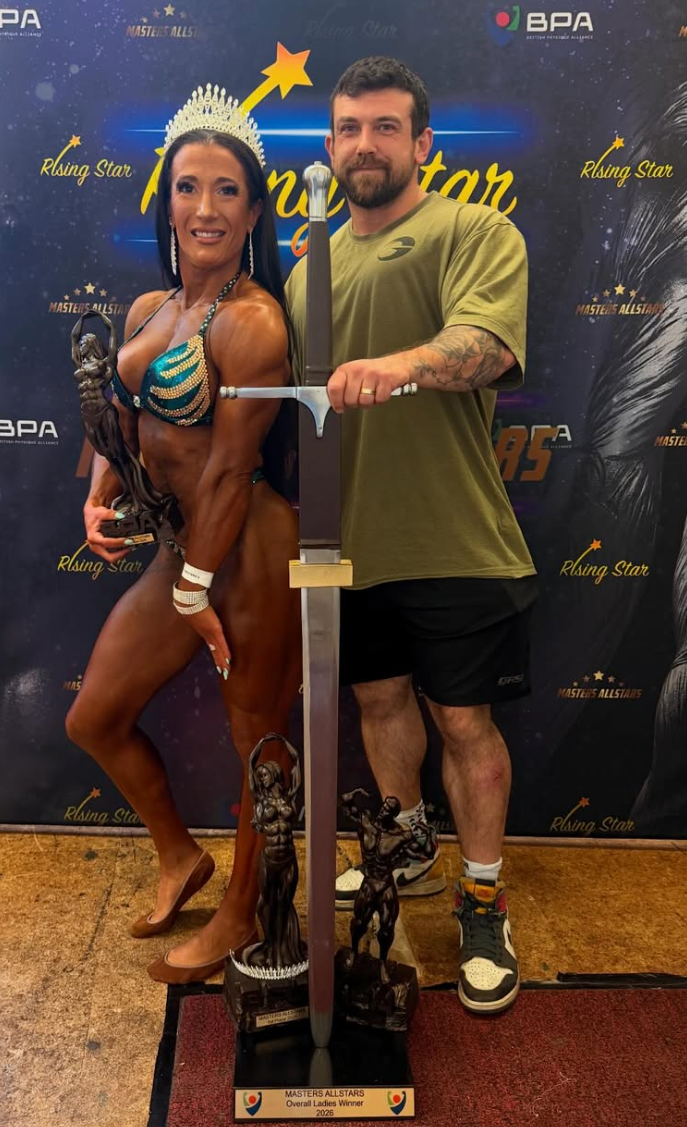
This season she has won her NABBA Pro Card, the PCA Universe qualifier overall and the overall titles at the IBFA Liverpool and BPA Masters AllStars.
But make no mistake, Trotter's achievements have come in the face of serious adversity. That devastating medical ordeal left her with paralysis from the knee down in both legs.
How a routine medical procedure changed everything
"I had cervical cancer about five years ago now," she told FrontDouble. "So I get annual checks just to make sure everything is OK.
"The blood tests came back a bit funny in July 2024, so they did a cervical biopsy. Everything was fine. No cancer. All in remission."
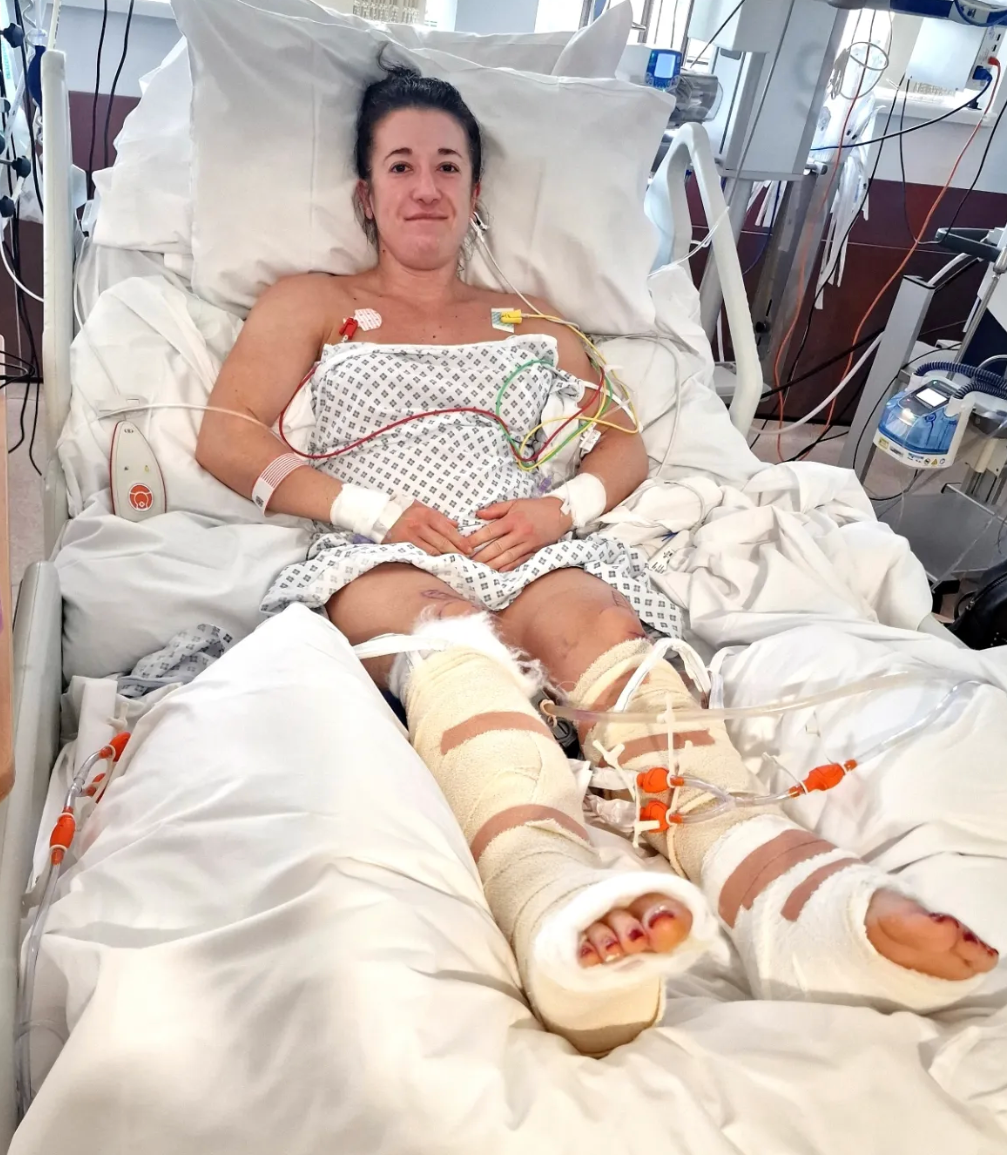
The biopsy itself, however, led to complications.
"The biopsy caused an infection," she said. "The infection spread to my kidneys. The kidneys shut down."
What followed would change her life for ever.
"When the kidneys shut down, your whole body fills with fluid," she said. "My lower legs filled with fluid. It's called compartment syndrome. It crushed all the muscle and nerves. They couldn't save it.
"So both of my legs, from the knee down, have no muscle and no nerves. My feet are paralysed. I can't feel them."
'My feet are paralysed. I can't feel them'
It means every step she takes – both on stage and in everyday life – has to be relearned and carefully managed.
"So I'm only moving and posing by practice," she said. "I can feel knee up. I know what my quads are doing. But I have no idea where my feet are. I'm having to guess because I can't feel the stage."
The injury has forced changes most competitors never have to think about.
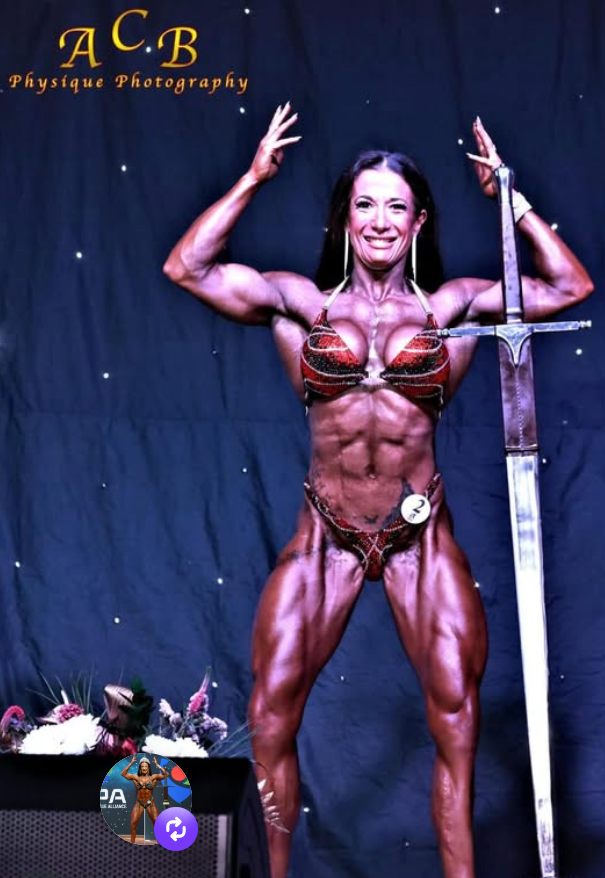
"I can't wear heels anymore at all," she said. "I can't move my feet."
Despite being officially registered disabled, Trotter refuses to allow the label to define her.
"I'm registered disabled now," she said. "But I can beat able-bodied people. It [her disability] doesn't show. Most people don't even notice."
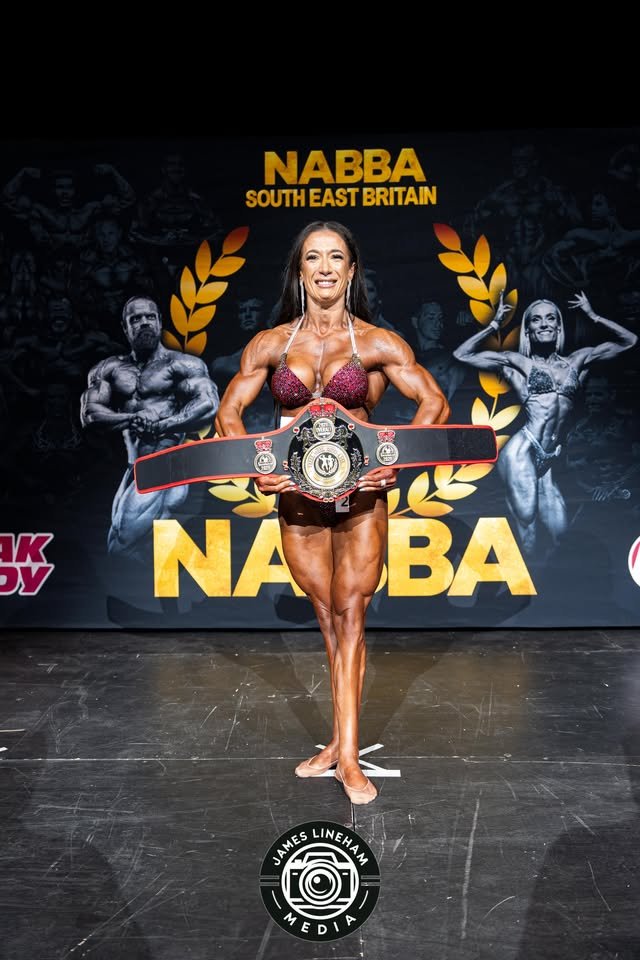
Watching Trotter win the overall title at the NABBA South East last month, FrontDouble was surprised to learn she was registered disabled when the subject came up during an on-stage interview.
The evidence of what happened is visible – but you have to really look for it. Scars run down her lower legs where surgeons removed damaged tissue following the compartment syndrome.
"That's what the big scars are," she said. "That's where they took all the muscle and nerves out. There's nothing down there."
The surgeon said she would never bodybuild again
Yet perhaps the most remarkable part of Trotter's story is not what happened to her, but how she responded.
"The surgeon said, 'You'll never train. You'll never be a PT again. You'll never bodybuild. You'll probably be on crutches for the rest of your life.'
"And I went: 'Screw you. Not having it.'"
That attitude has carried her back on to the bodybuilding stage.
Ironically, one of the biggest dilemmas she faced after returning to competition was whether to compete in disability categories at all.
"When my coaches, Sarah and Jordan Fern of TeamFAF, and I first started discussing my competition season, we looked carefully at both disability and able-bodied categories. It was never a decision taken lightly and we had many conversations about where I would be most appropriately placed.
"My disability presents challenges, but thanks to my splints and the rehabilitation I've gone through, I am still able to train in a way that is much closer to an able-bodied athlete than many competitors in disability divisions.
"There are athletes competing in those categories who face far greater physical limitations than I do and I have enormous respect for every one of them. For me, entering disability classes didn't feel like the right fit. Not because those categories are any less valuable, but because I felt it would be unfair to athletes whose disabilities significantly affect how they can train, perform and compete.
"Together, my coaches and I agreed that the able-bodied route would allow me to challenge myself against the strongest competition available while ensuring I was competing in the most appropriate category."
Rita Trotter's enormous praise for her coaching team
That determination recently led to one of her proudest achievements – beating her posing coach. She said: "I couldn't have reached this point without Sarah and Jordan. They have been with me before, during and after my diagnosis.
"My disability was completely new territory for all of us, yet they embraced every challenge, adapted my training when needed, believed in me when I struggled to believe in myself and guided me through every stage of the journey.
"Their support, knowledge and encouragement have been instrumental in every success I've achieved.
"One of the proudest moments of my competitive career came when I won the NABBA South East overall title. Standing in the overall line-up against my own posing coach, Sarah, was genuinely one of the most intimidating moments I've ever experienced on stage.
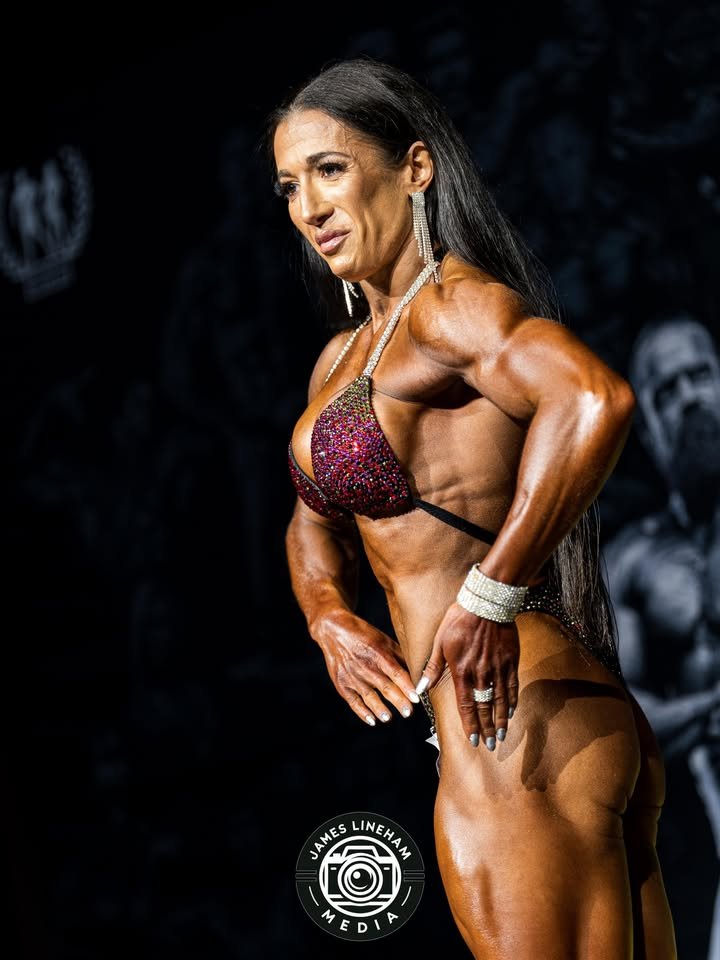
"She is an exceptional athlete and an outstanding poser and I know first hand how much work, skill and dedication she brings to the sport. To stand alongside her was an honour in itself. To narrowly edge out the win was something I never expected and a moment I will always treasure.
"More than anything, it was a reflection of how well she has coached and taught me. Sharing a stage with someone I respect so much, then coming away with the title, remains one of the most meaningful achievements of my bodybuilding journey."
Learning to walk, pose and compete again
Away from the stage, everyday life still requires adaptations. Trotter relies on specialist splints attached to her shoes to walk normally.
"Those plastic things you can see coming out of my shoes are splints," she said. "In normal life, you walk heel-to-toe. I can't do that because I can't move my feet.
"So the splints lift my feet for me and move them as if I was walking normally."
Yet throughout the interview, there is little self-pity. Instead, there is acceptance. And perhaps more importantly, perspective.
"The thing I've told people is I'm no longer trying to be the old me," she said. "I'm just trying to be the best version of the new me. And whatever I do now, I try to see it as a positive.
"How can I use this to show people that disability doesn't mean you stop doing stuff?"
For many athletes, losing the ability to feel both feet would have marked the end of a bodybuilding career.
For Rita Trotter, it became the start of a different one.
MORE FROM FRONTDOUBLE:
NABBA South East 2026 Report: Georgiou dominates but federation still needs wake-up call
"I had to save myself”: Former Olympia competitor, 52, shares full prep and comeback from mental health crisis
BODYBUILDING RESULTS
ATHLETE PROFILES
HEALTH AND EDUCATION HUB
Mental Health in Bodybuilding
Jay Howlett: From anxiety to success at IBFA South East show

Leave a Reply