IFBB Pro Yinka Majolagbe: The fear of waking up and not being like this any more

212 Olympia competitor on VHS tapes, resilience born from boarding school and what drives his bodybuilding ambitions

By Gary Chappell

AS Yinka Majolagbe hones in on the 2026 212 Olympia he has revealed the one thought that drives him on relentlessly: "The fear of waking up one morning and not being like this any more."

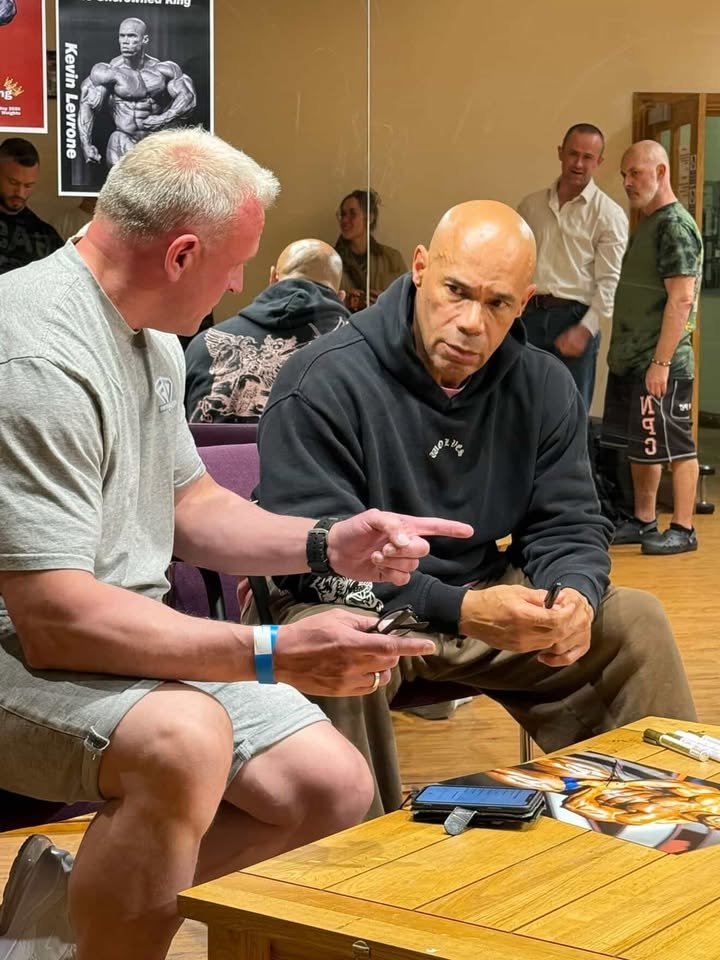
"People always ask me what gets me through that mental state and I always say the same thing – you have to be a little bit crazy to do bodybuilding," said Yinka, invited by Kevin Levrone to speak at one of his seminars.

"A normal person doesn't wake up every day for 16 weeks eating fish, broccoli and rice. You have to enjoy it. And I do. I enjoy the suffering.

"My biggest fear is waking up one morning and not being like this anymore, because bodybuilding gave me purpose.

"Whether I win a show or lose a show isn't really the point. The point is seeing myself through the process. The real achievement is surviving a contest prep."

A childhood built on VHS tapes and Arnold Schwarzenegger

That mentality was built through a library of VHS cassettes, portraying all-action heroes.

You see, long before he became an IFBB Pro or an Olympia competitor, he was a young boy growing up in Nigeria watching Arnold Schwarzenegger, Sylvester Stallone and Jean-Claude Van Damme films his father had recorded in the UK and shipped home.

"I came here when I was 13 years old," said Yinka. "My dad used to tape a lot of the movies from here [UK] – the Arnold movies, the Sylvester Stallone movies, Van Damme – and ship them home [to Nigeria]. So those were my TV programs.
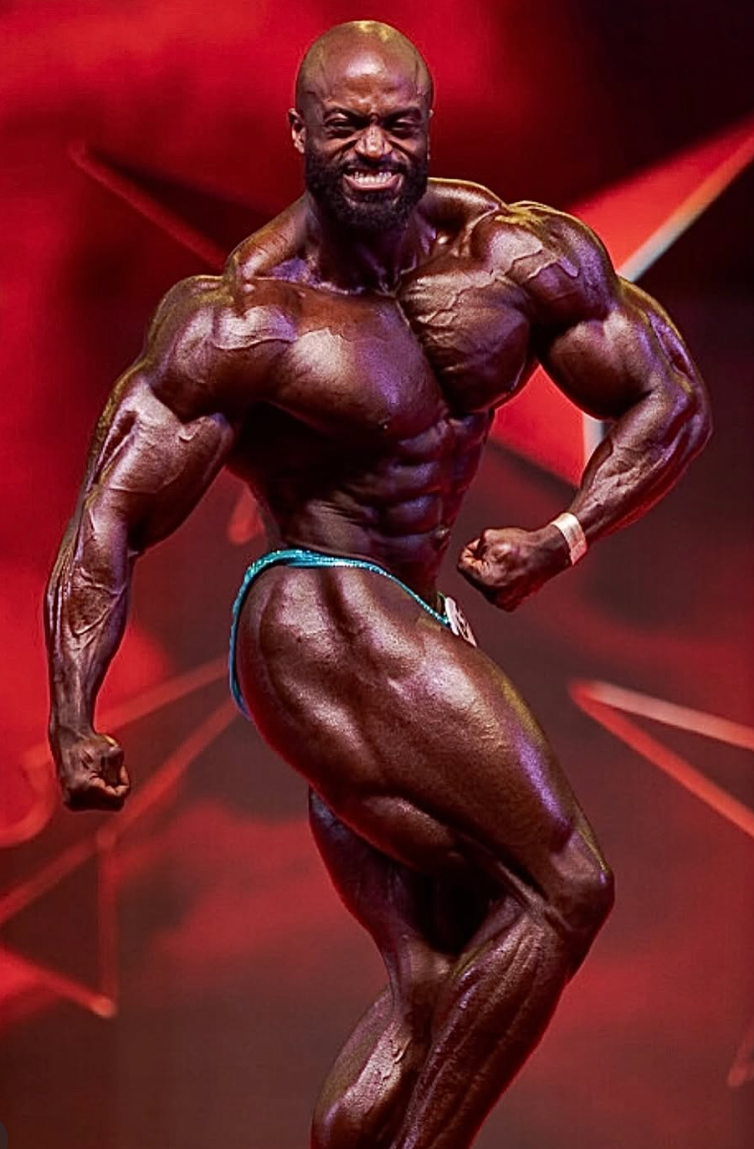
IFBB Pro Yinka Majolagbe

"Not knowing it at the time, he [my dad] was fuelling me with seeing these guys with muscles. A lot of my toys were guys with muscles as well."

From basketball to the gym – the obsession begins

Like so many children, Yinka wanted to be like the heroes he watched on screen. Unlike most, that fascination never disappeared.

"When I came here [UK] I played basketball for a couple of years," he said. "Then I thought, 'You know what? Let me try and work out,' because I still remembered wanting to look like Arnold and people like that.

"I was very obsessed about being able to work out my biceps."

That obsession led him into the gym in 2011, but stepping on to a bodybuilding stage was not part of the plan. And it took some convincing from friends before he would even consider competing.
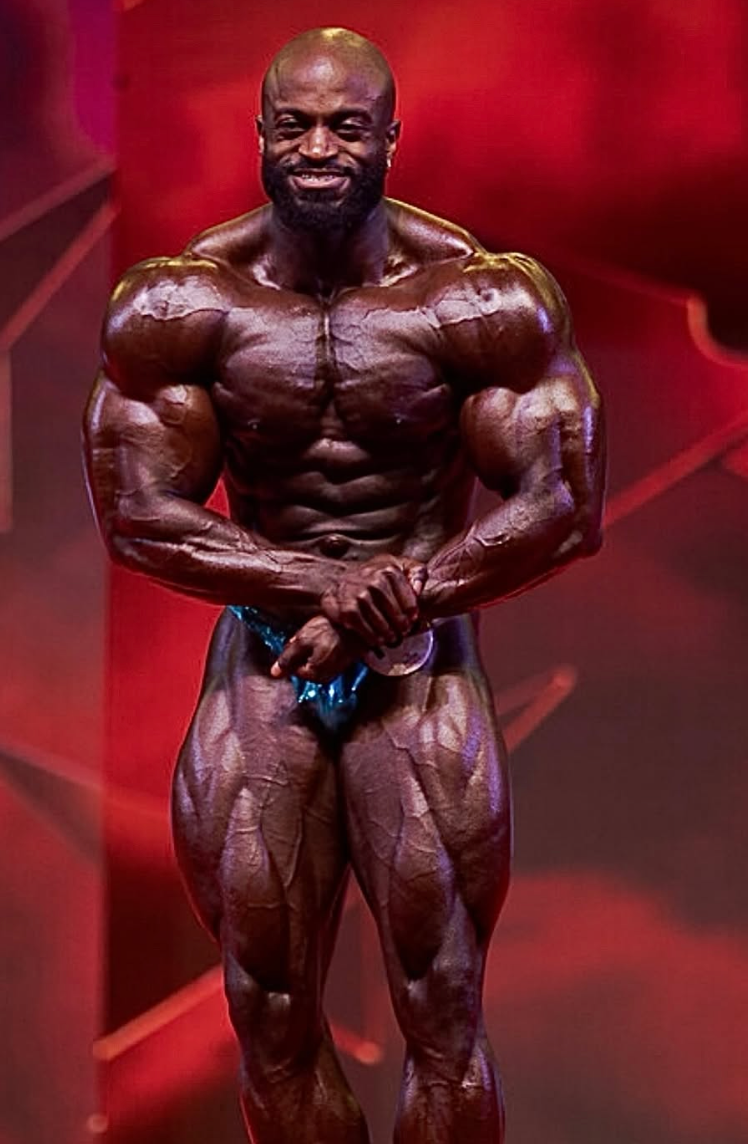
IFBB Pro Yinka on stage most muscular

"They kept telling me, 'Man, you should give competing a shot'. And I was just like, 'Hell no. I'm not wearing those f***ing posing trunks'."

Eventually, curiosity won. And, like countless bodybuilders before him, he decided to give it a try.

Fortunately, Men's Physique had only recently emerged, making the transition feel a little less daunting.

"At the time Men's Physique had just come onto the scene," he said. "It felt a bit safer."

Ironically, it did not take long before people thought he was already too muscular for the division.

"I remember doing a Men's Physique show in 2018 and someone backstage said to me, 'You're too big for Men's Physique'. I was just like, 'What'? But looking back at those photos now... I was a big guy."

Boarding school and the making of a survivor's mindset

Yet the mindset that would eventually carry him to the Olympia was not forged in the gym, it began much earlier.
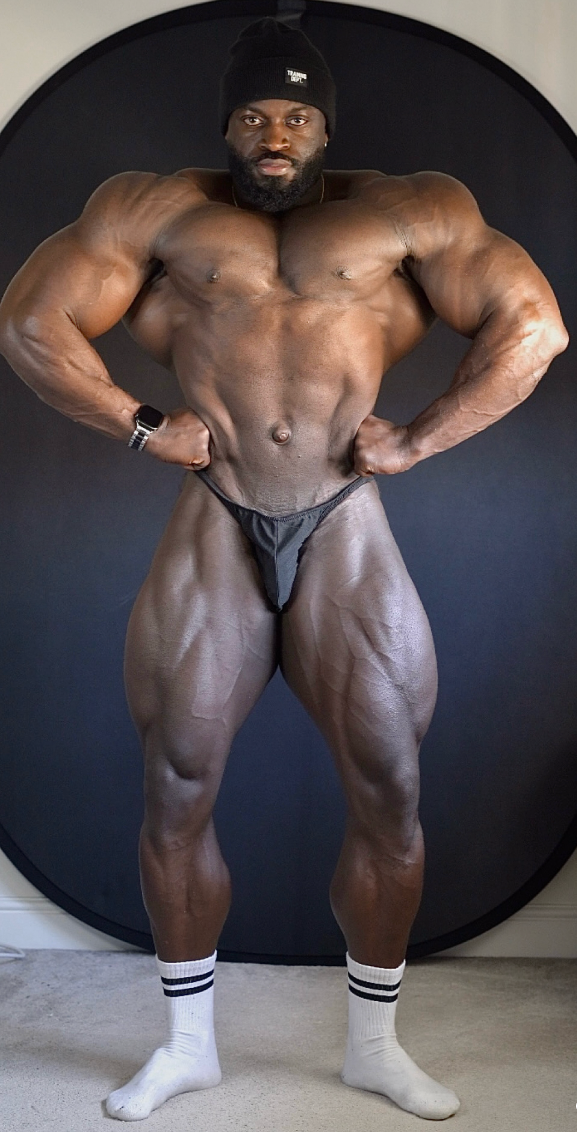
IFBB Pro Yinka nine weeks out from Olympia

Yinka spent much of his childhood in boarding school in Nigeria, where independence was not encouraged – it was expected.

"I was in boarding school from about seven until I was 11," he said. "You had to grow up fast. Every morning they'd inspect your nails. If they weren't clean, you'd get punished. You'd come back from school and someone might have broken into your locker and taken your food. You just learned to survive."

His father was not around for much of his upbringing, leaving him to develop a fierce sense of self-reliance.

"I didn't really have my dad in the house until I was about 18, so I kind of learned everything for myself," he said

Looking back, he believes those experiences created the mentality bodybuilding demands. That mentality extends beyond bodybuilding.

"I'm a guy that has many talents," he said. "I was a keyboard player in a band. I've toured around the world."

Music remains a passion today and his ability behind a piano still surprises people.

"I play by ear, so I can pretty much play anything I hear."

When it's suggested that many people probably don't know that about him, he laughs.

"Maybe one day I'll show it online."
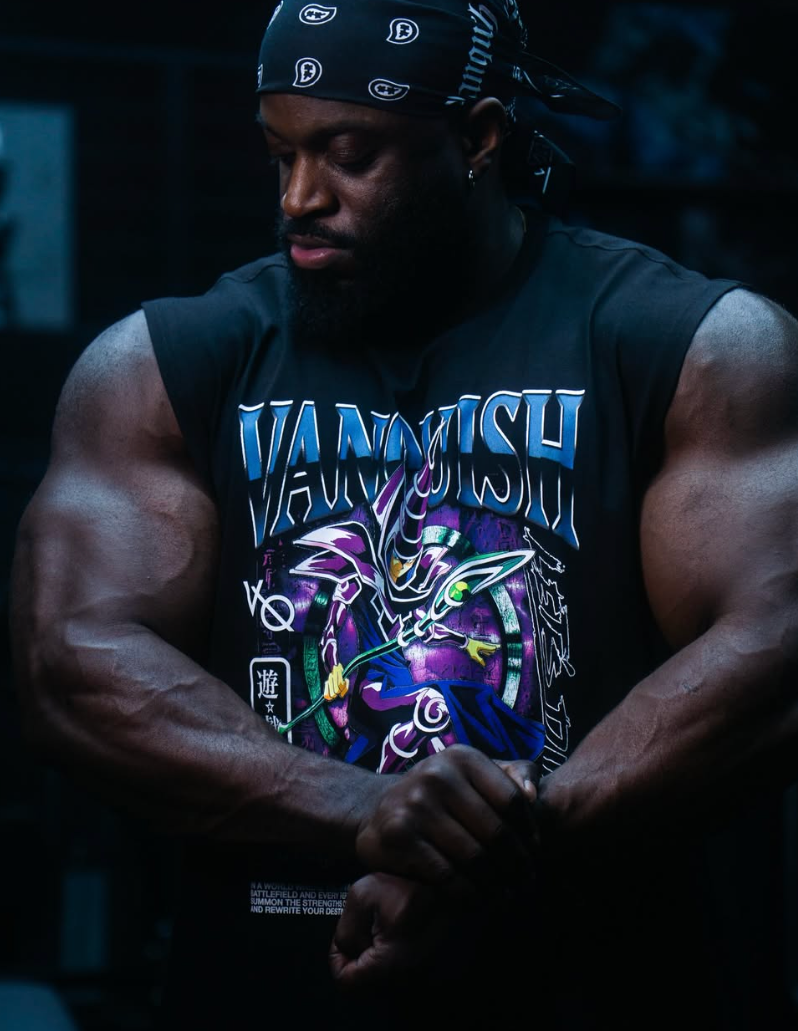
Yinka Majolagbe

And his creativity did not stop there. "I used to style guys for weddings," he said. "I wanted them to look good. Somebody has to pop."

Looking back, he admits none of those ventures fulfilled him in quite the same way.

"I had so many talents, but none of them ever really got to the top level."

So, in 2020, he made a decision.

"I said, 'You know what? I'm going to go all in'. And within three years I turned pro. Then in 2025 I qualified for the Olympia. It's crazy."

Considering where it all began, perhaps it is. From a young boy in Nigeria inspired by taped Schwarzenegger films, to standing among the world's best physique athletes, Yinka's story is about far more than building muscle. It is about purpose, resilience and discovering that the same hardships which once forced him to grow up became the very qualities that allowed him to chase bodybuilding's biggest stage.

MORE FROM FRONTDOUBLE:

Rita Trotter wins IFBB Pro Card: "Olympia, I'm coming for you"

“No UK bodybuilding channel promoted me… I’m a legend, I’m the GOAT”

Neil Andrews: From heart surgery to IFBB Pro in three Years

BODYBUILDING RESULTS

ATHLETE PROFILES

HEALTH AND EDUCATION HUB

Leave a Reply

Your email address will not be published. Required fields are marked *

Kevin Levrone: “Bodybuilding was more dangerous in my era”

The bodybuilding legend says athletes in the 1990s pushed conditioning to dangerous extremes, with ambulances parked outside venues and oxygen tanks backstage

By Gary Chappell

KEVIN LEVRONE believes bodybuilding in the 1990s was more dangerous than it is today – revealing how competitions saw ambulances parked outside and oxygen tanks on site.

The two-time Arnold Classic champion and one of the greatest bodybuilders never to win the Mr Olympia, opened up on the extreme measures athletes used to take in pursuit of conditioning during his era, revealing competitors would collapse backstage, suffer severe cramping and require medical assistance after stepping off stage.

Levrone was speaking at a seminar appearance at Crayford Weights in Kent as part of his UK Together We Rise tour, when asked by FrontDouble about comments by the gym owner Paul Knights that he could still win the Mr Olympia if he competed today.

“When I hear Paul say that [he could probably win the Mr Olympia now], that’s his opinion,” said Levrone. “But when I hear him say that, my brain can’t even process what it would take to be on stage today compared to the guys now.

Kevin Levrone with FrontDouble editor Gary Chappell during the bodybuilding legend's Together We Rise seminar at Crayford Weights in Kent
BRAWN TO BE WILD: Kevin Levrone with FrontDouble editor Gary Chappell during the bodybuilding legend's Together We Rise seminar at Crayford Weights in Kent

“The sport has progressed. The guys are much bigger now. When I was competing at the Olympia, my heaviest was 243 pounds. Today, the average guy is probably walking on stage at 280.”

Yet while modern bodybuilding is often criticised for its emphasis on sheer mass, Levrone believes competitors of his era frequently pushed conditioning to more dangerous extremes.

“If you look at their physiques, I think I was able to walk out on stage at that weight with maybe 2.7 per cent body fat,” he said. “We had more overall conditioning. My face would look like a skeleton – bones sticking out – because all the water was drained out of my body. I only had enough in me to make it through prejudging.”

'We were collapsing backstage'

The American described a backstage environment far removed from what fans see at modern competitions.

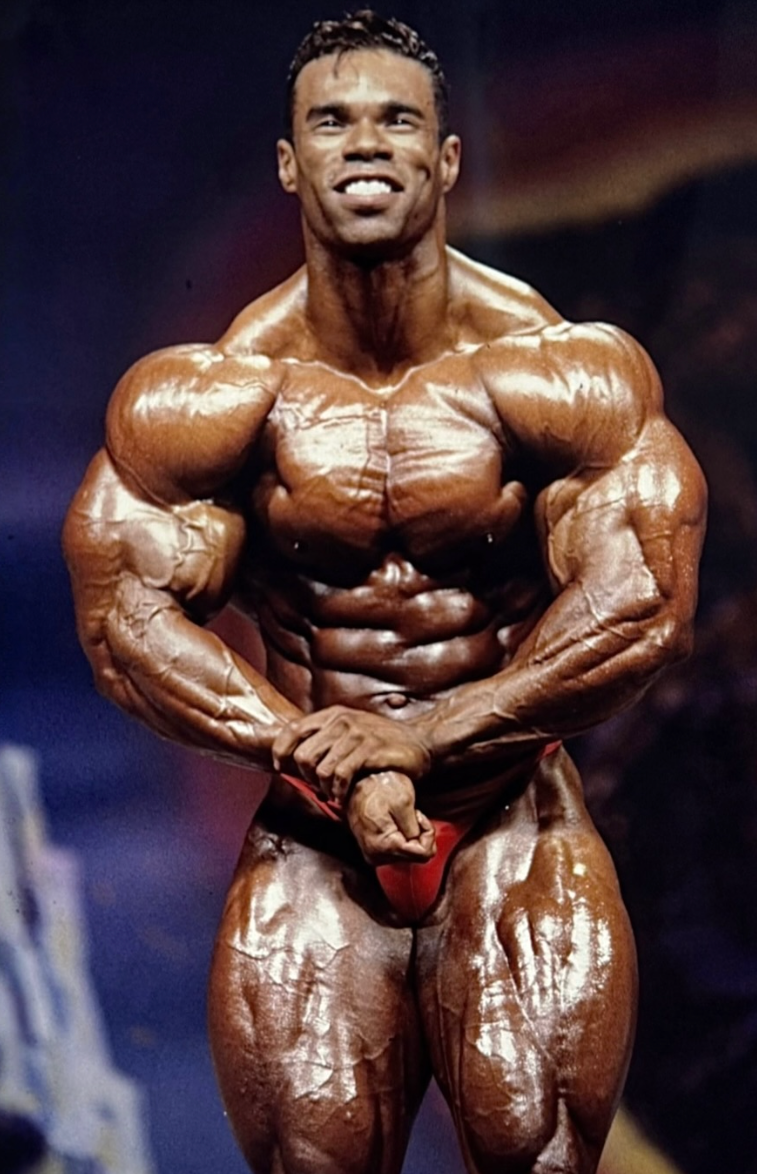
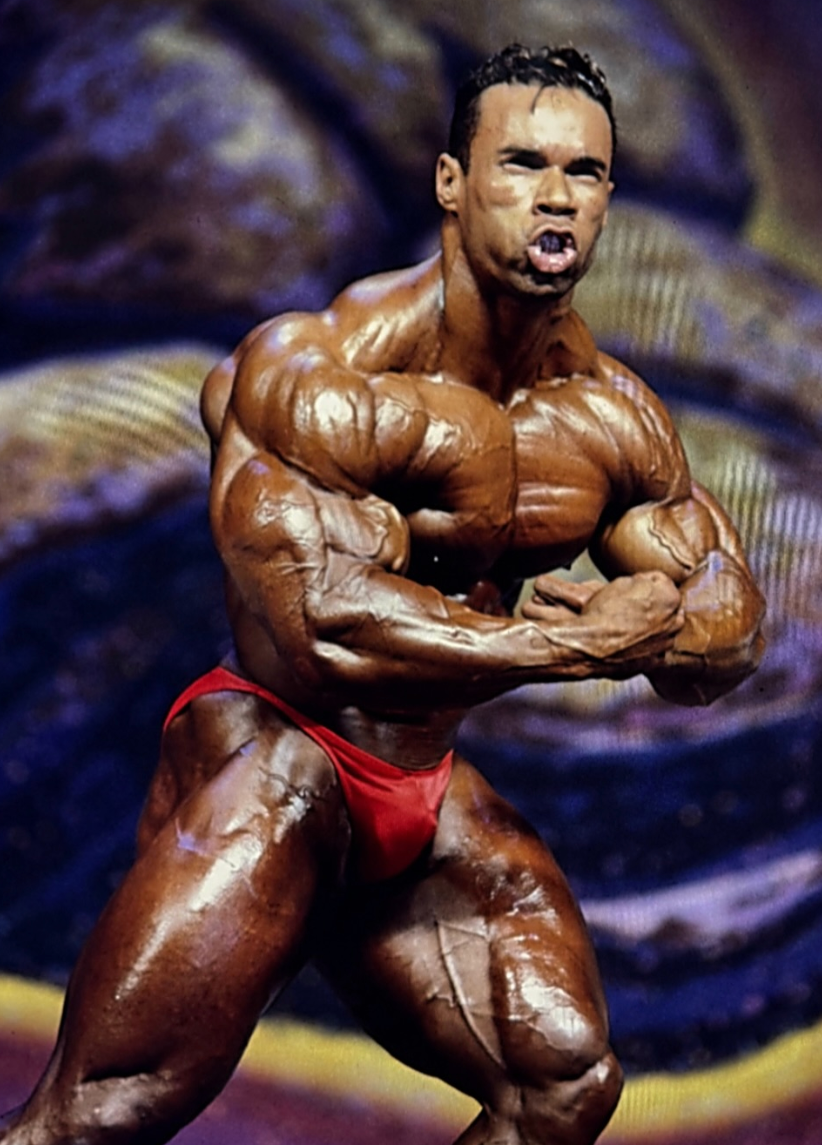
Kevin Levrone on stage in his prime

“It wasn’t just me,” he said. “The majority of us were pushing ourselves to the absolute edge. We were collapsing on stage, cramping up badly or being carried off backstage. It was borderline dangerous.

“I remember we had meetings where the officials told us: ‘You guys can’t keep coming out here completely ripped and shredded like that'.

“There were ambulances parked outside and oxygen tanks backstage. Medical people were there for us.”

Levrone also reflected on the deaths of competitors who pushed dehydration and conditioning to dangerous levels.

“There were guys who died,” he said. “One competitor tried to beat me so badly – he stopped drinking water for a whole week, only ate apples and sat in the sauna every day. He dried out his organs.

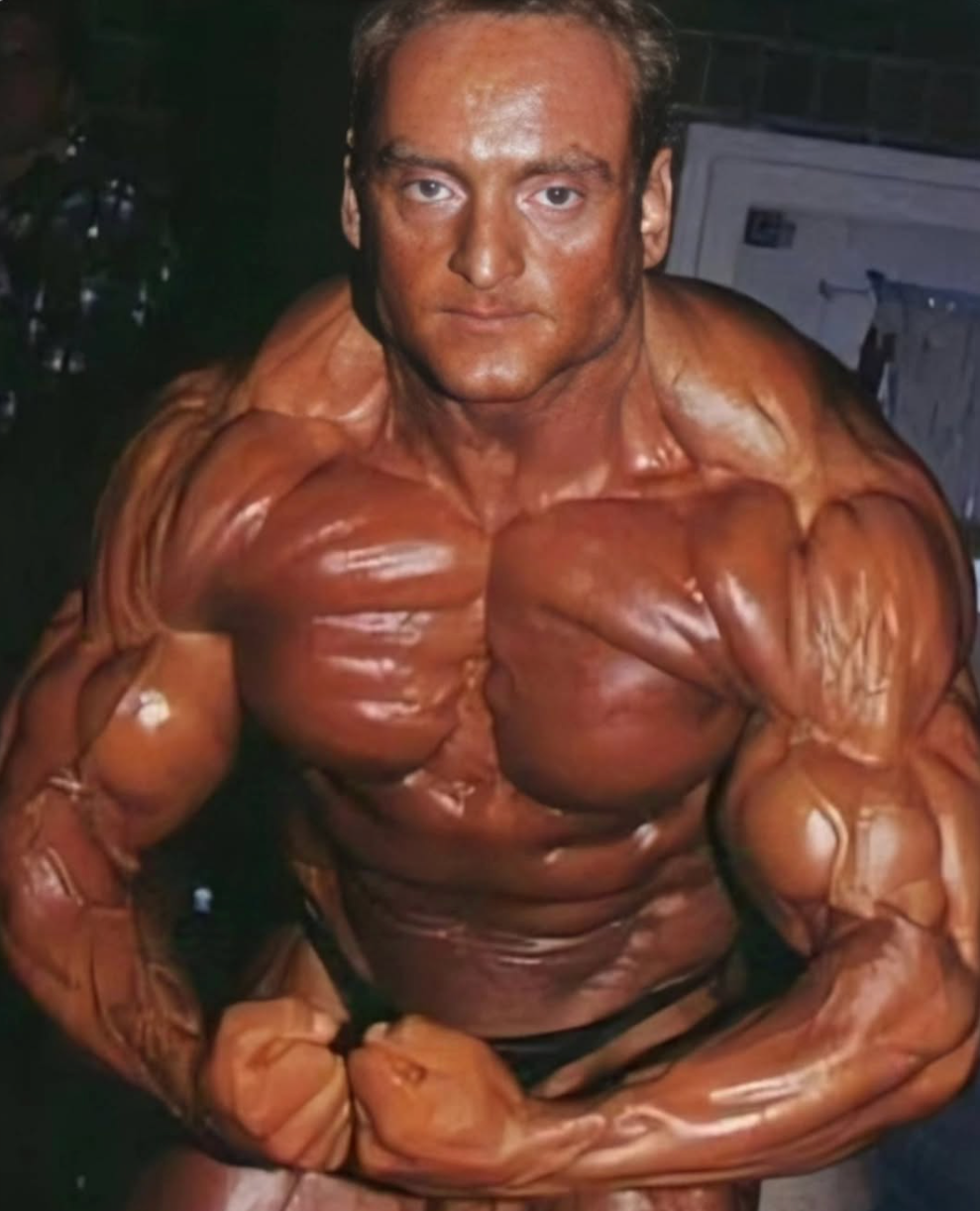
The late Andreas Munzer

“Andreas Munzer [above] was another. He was so shredded after the Arnold Classic.”

Levrone admitted the physical effects of contest preparation could become frightening.

“My body fat was around 2.7 per cent,” he said. “Sometimes people would talk to me backstage and it would take three or four seconds for my brain to even register what they said. That’s how depleted I was.

“If it wasn’t for Robbie Robinson giving me applesauce, sugar and Coca-Cola backstage, I don’t think I would have made it through.”

Why Kevin Levrone believes bodybuilding is safer today

Despite often being nostalgic about the so-called golden eras of bodybuilding, Levrone believes one major improvement in the modern sport is the reduced emphasis on life-threatening conditioning.

“Thank God that’s not happening today,” he said. “You don’t see guys putting their lives at risk just to win a show. It’s not worth it.

Kevin Levrone's iconic pose

“When I walk backstage these days, the guys are healthy. They’re in a good mood, talking to each other. There are no oxygen tanks or people laid out on the floor.”

The 60-year-old said modern competitors should not feel pressured to sacrifice their long-term health in pursuit of trophies.

“Why kill yourself just for a trophy?” he said. “Let’s be healthy, let’s be happy and let’s make it to the next show.”

The brutal diet that got Kevin Levrone stage ready

Levrone also detailed the brutal approach he personally used during contest preparation at the peak of his career.

“To give you an idea of what I did to get in 100 per cent shape: I’d wake up at 4am and do one-and-a-half to two hours of fasted cardio with nothing in my stomach,” he said.

“For months I’d eat only fish and egg whites – no meat, no chicken. Just fish, rice and broccoli.

“I’d drink only water with lemon for three or four months. Nothing else. Two hours of cardio a day. It was insane.”

He admitted he would never willingly put himself through that level of physical stress again.

“If I had to do today what I did back then, there’s no way in hell I would,” he said. “I was young and a little crazy. I had no son, no real responsibilities, so I didn’t care. Now I think about what’s best for me long-term.”

MORE FROM FRONTDOUBLE:

Lee Priest on Samson vs Flex: How do modern physiques compare?

Lee Priest interview: “If you’re on your phone in the gym, you’re not serious”

Jim Georgiou Q&A: “Without routine, I would fall apart”

The complete guide to peptides in bodybuilding

UK bodybuilding results

UK show calendar

Leave a Reply

Your email address will not be published. Required fields are marked *