PCA British Championships 2026 – Day 1, International Centre, Telford
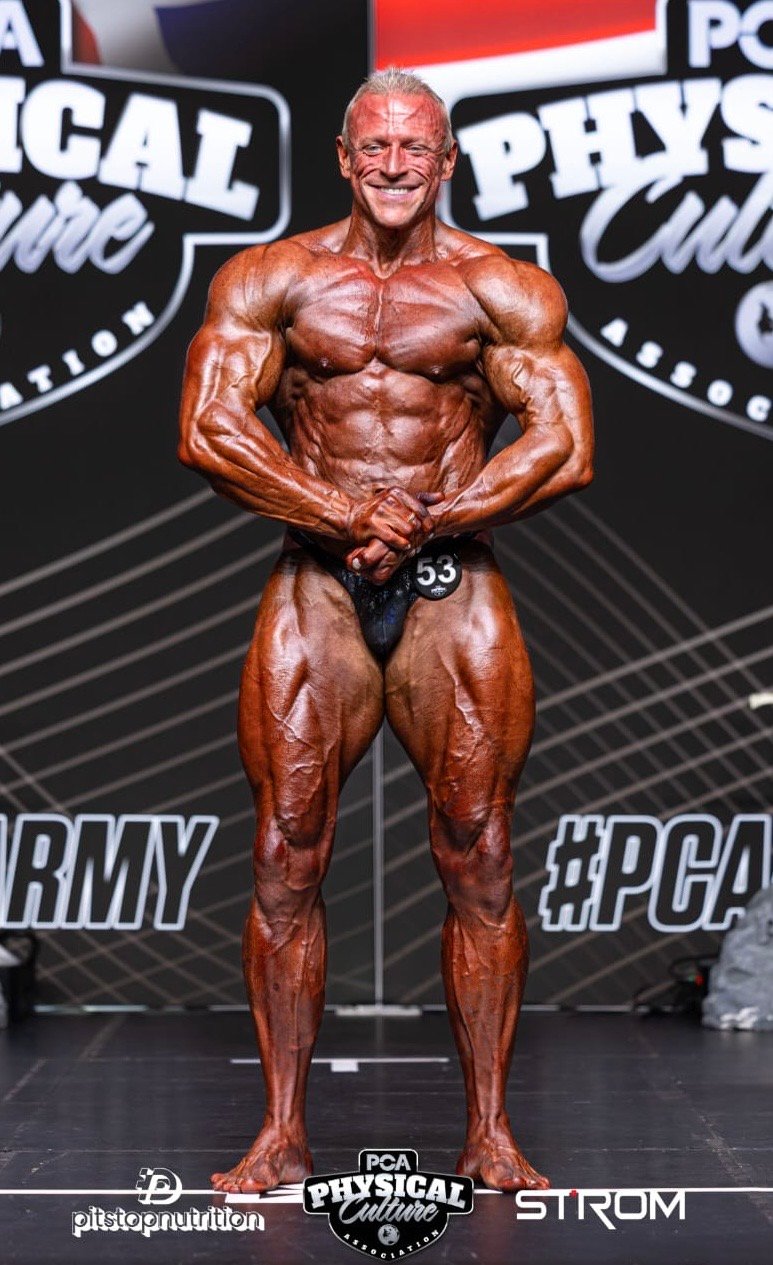
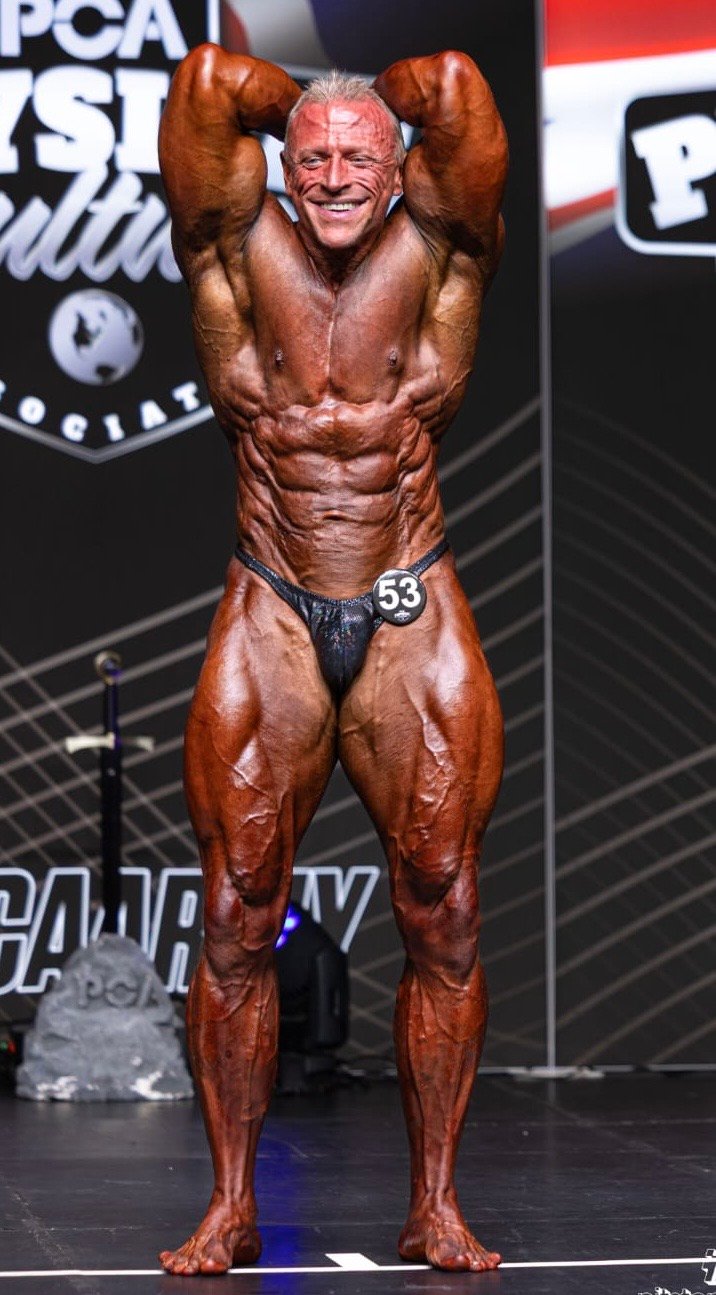
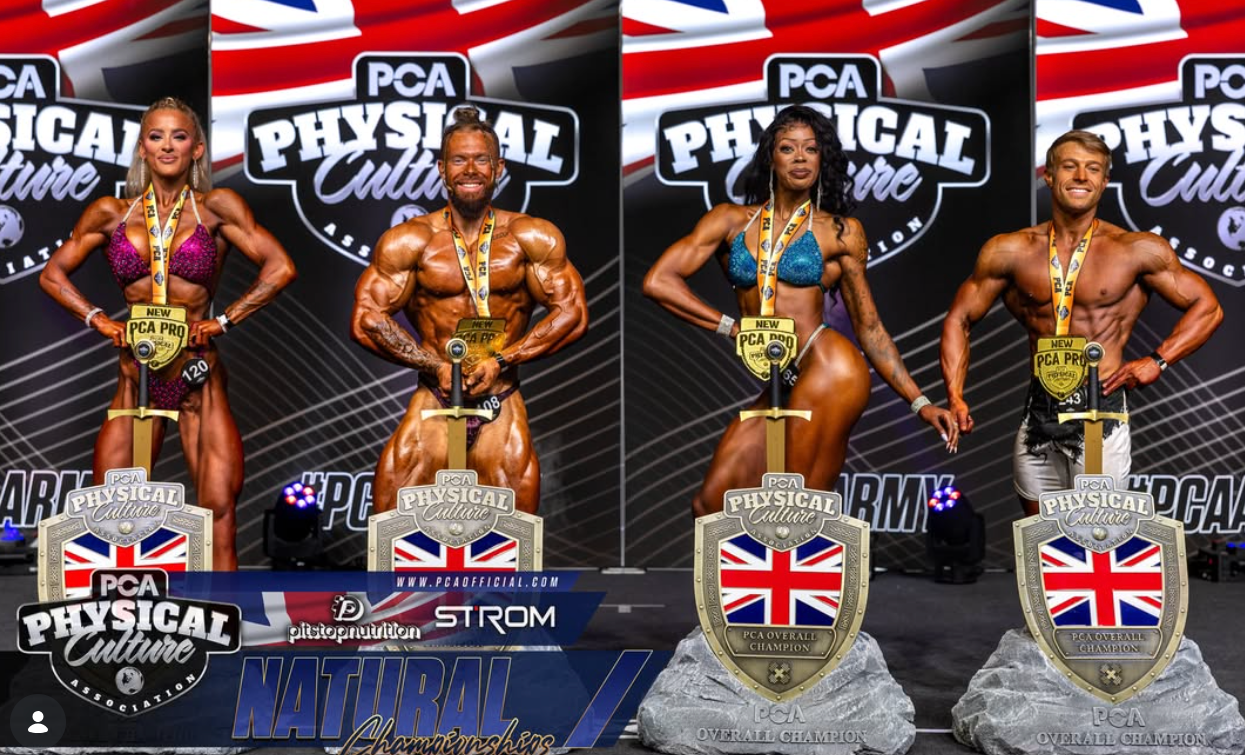
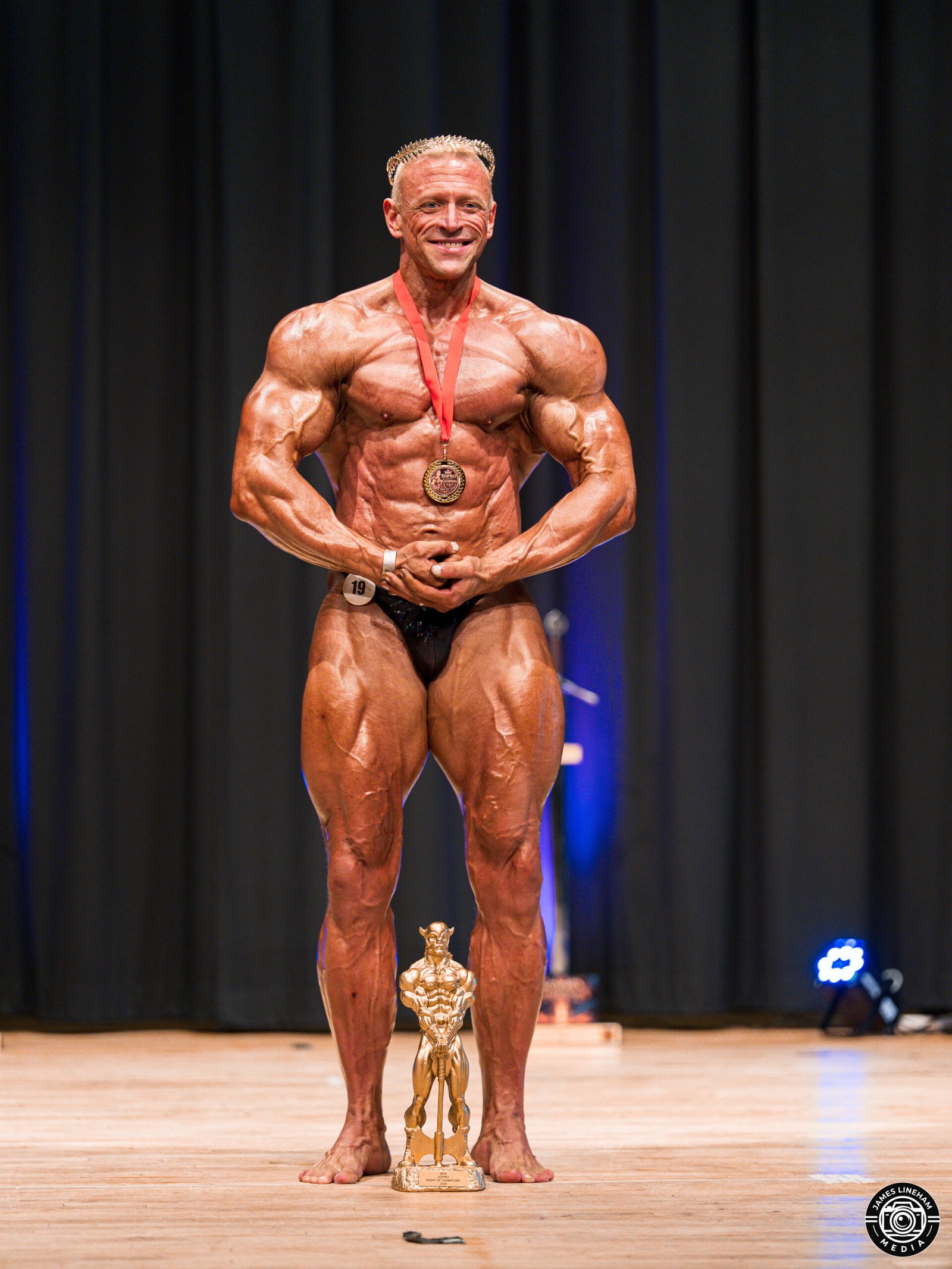
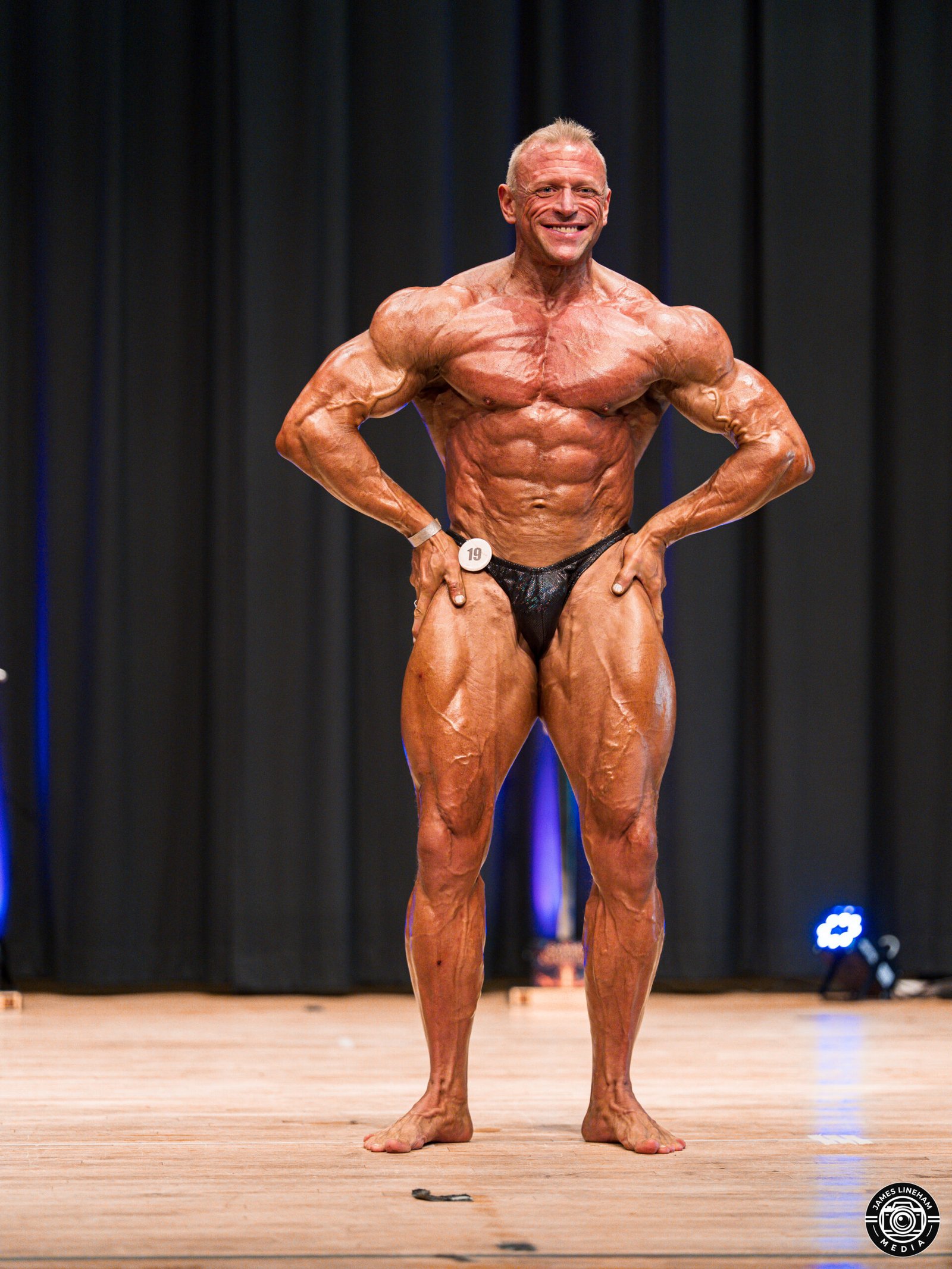
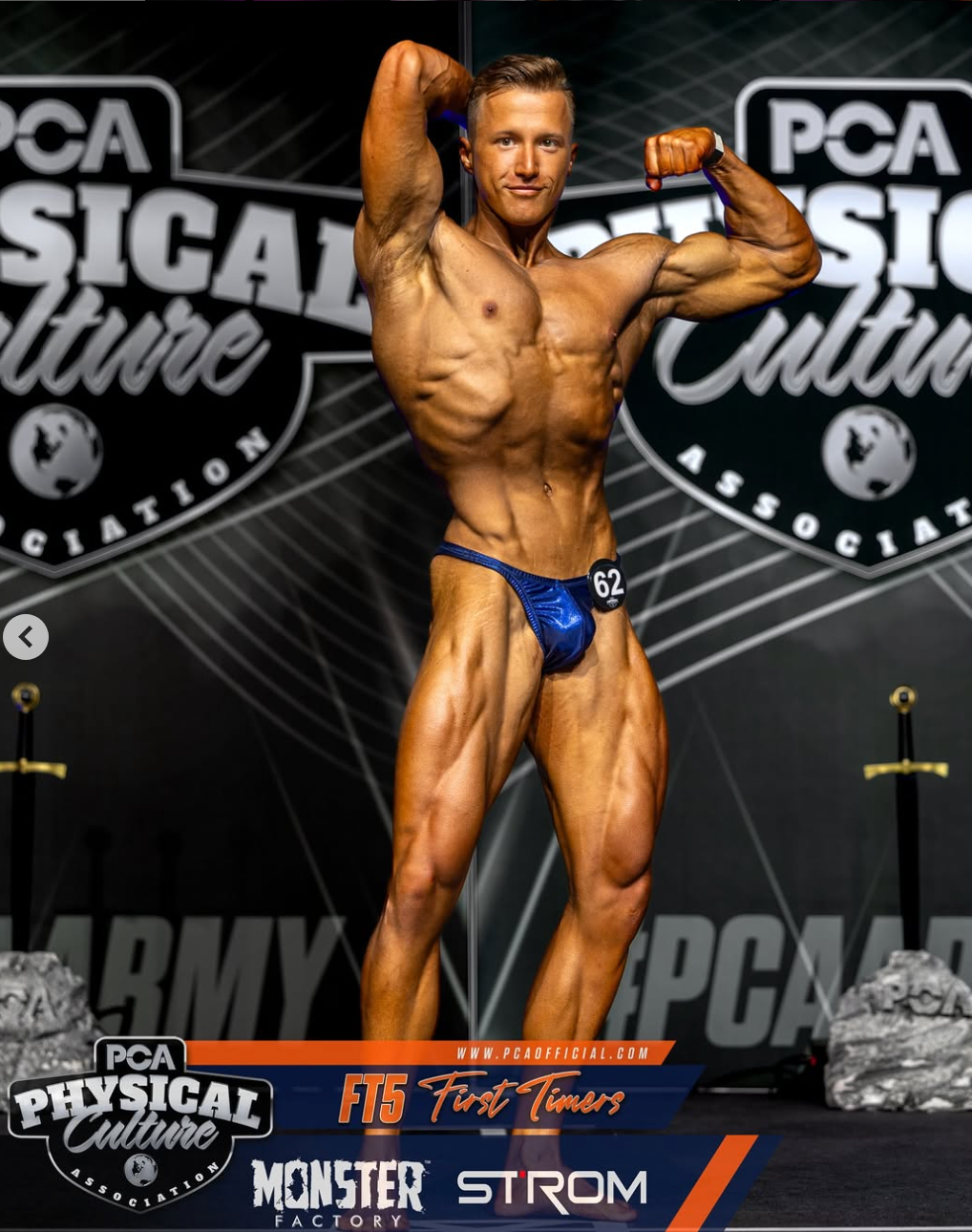
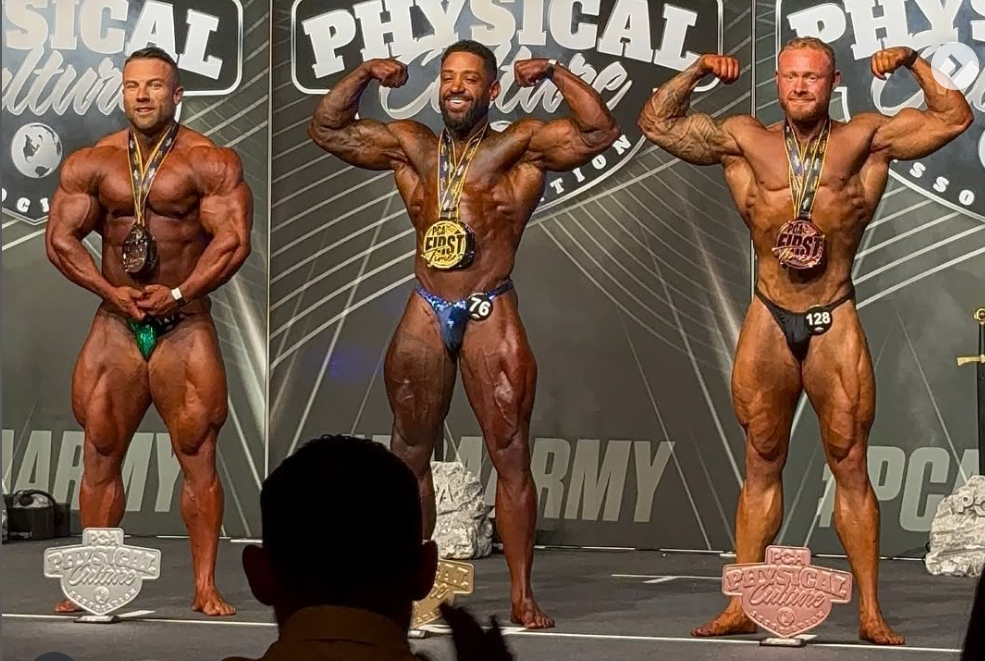
Day 1 of the PCA British Championships 2026 took place at the International Centre in Telford on October 17. JJ Grams won Physique Short before being crowned Overall Physique British champion, while Ike Agho won the Pro Physique and the £2,500 prize. Ben Holden added Junior Physique to his PCA England win, Ant Porter took Masters Physique 40+, Cameron won Physique Tall ahead of Vitor Rocha and Emma Perry won Fit Model. Results so far are below:
Results are being added as they land, so check back for the full placings. Competed today, or spotted a missing or incorrect name? Get in touch at info@frontdouble.com or message us on Instagram @frontdouble1 and we’ll update it.
FrontDouble results are sponsored by Physique Pro Coaching
Mixed Disability 1 Jonathan Griffiths 2 Cali Groombridge 3 Scott McPhillimy 4 Abiodun Daramola 5 Sergio Blasco 6 Luca Williams 7 Matt Elson
Physique Short 1 JJ Grams – New PCA Pro 2 Omkar Singh 3 @__ramin__fit [full name TBC] 4 Iking Ali 5 @richtrains [full name TBC] 6 Connor MacGregor 7 Paul Kamara
Physique Tall 1 Cameron [surname TBC] – New PCA Pro 2 Vitor Rocha 3 @john_efp_coach [full name TBC] 4 Jack Parlett 5 ethan Waterhouse 6 @shaunc10 [full name TBC] 7 Sam Neill
Junior Physique 1 Ben Holden 2 Louis Moger 3 Nasib [surname TBC] 4 Aaron Singh Kanda 5 Jack Kelly 6 Jamel Hartrey
Masters Physique 35+ 1 @andy_asb_coaching [full name TBC] – New PCA Pro 3 Mehmet Aytekin 4 @ruthless_athlete_ [full name TBC] 5 Daniel Wheeler 6 Simon Rigler
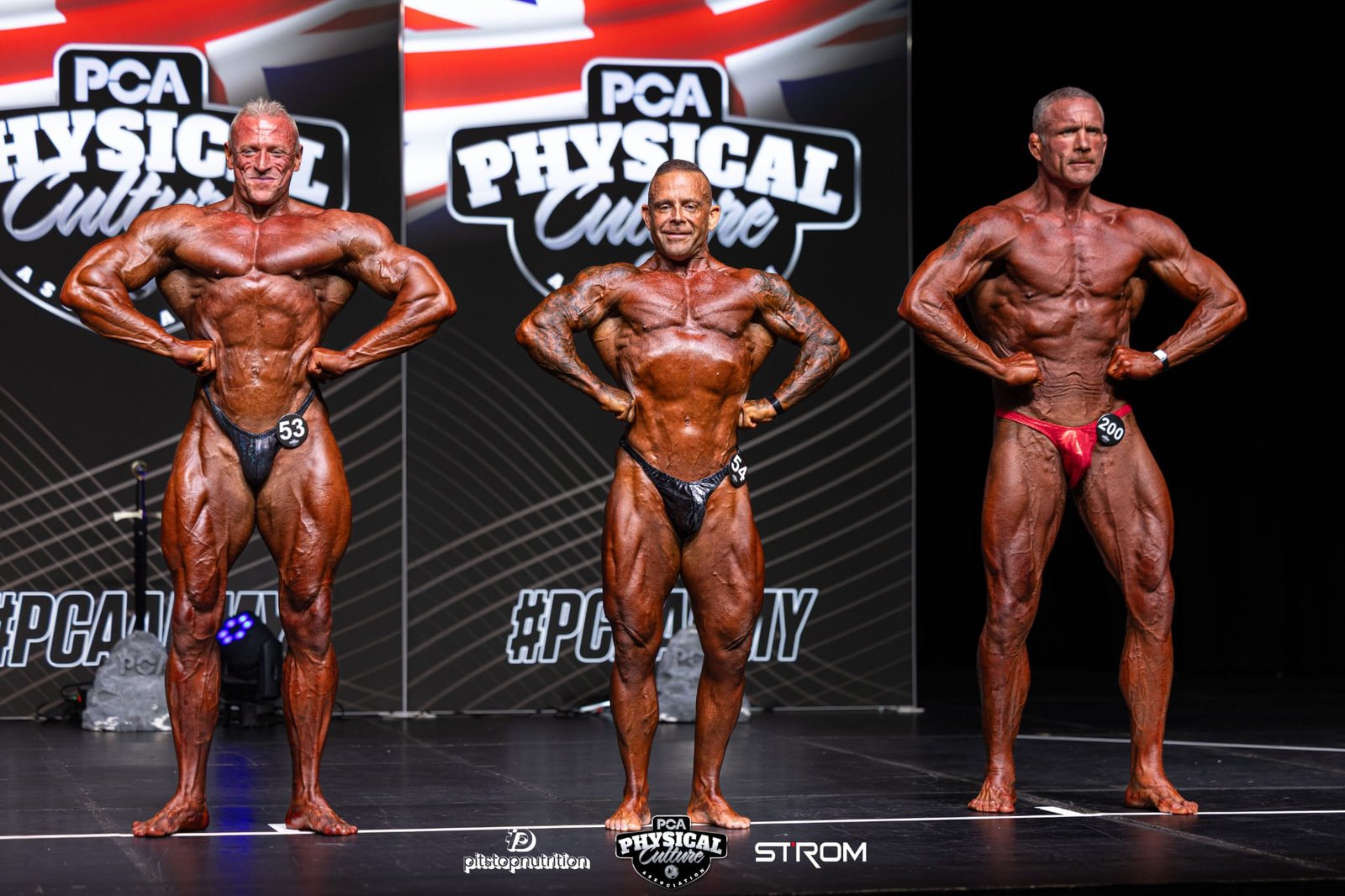
Masters Physique 40+ 1 Ant Porter – New PCA Pro 2 Chris B [surname TBC] 3 Maximo Edralin 4 @abritsythe [full name TBC] 5 David Small 6 Ron Kemp 7 Wayne Attewell
Fit Model 1 Emma Perry 2 @rachhfitt [full name TBC] 3 Zoe Calaway 4 Aneta S [surname TBC] 5 @angel.x [full name TBC] 6 Elisha Draper
Wellness Short 1 @naijaa_doll [full name TBC] 2 Tayla Hunter 3 Sophie Ward 4 @jo.wellness_ [full name TBC] 5 Becca Mardon 6 Lauren Lucas 7 Olivia O’Neill
Wellness Tall 1 Denise Glen – New PCA Pro 2 @theerealmissjackson [full name TBC] 3 Jen Bembridge 4 Kinga Hawryluk 5 Charlotte Bruton 6 Bev Vickers-Pieri
Junior Bikini 1 Milly Grunwell – New PCA Pro 2 Clodagh Nora 3 Aoife Daniels 4 Lisa Turton 5 becky Coulson 6 Keisha [surname TBC]
Masters 35+ [class TBC] 1 Jessy Payne – New PCA Pro
Bikini Short 1 Devon Eleanor – New PCA Pro
Bikini Tall 1 Emily Conroy – New PCA Pro
Pro Bikini 1 Val Steele
Pro Masters Bikini 1 Jade Simmons
Pro Physique 1 Ayesemuate Ike Agho (£2,500 prize winner) 2 Shaik Sameer 3 @promise_coach [full name TBC]
Physique Overall – British champion JJ Grams
Bikini Overall – British champion @naijaa_doll [full name TBC]
Every results board, athlete profile, interview and feature on FrontDouble is kept going by readers who chip in each month. Support us from £4 a month and get your name on the FrontDouble Supporters Wall.
“I’m in real trouble”: the worst week of my prep, two days out from the PCA British Finals
Prep Diary of a Masters bodybuilder - Episode 6
Saturday, October 10, 2026
Diarrhea day two. I rack my brains as to the cause. Have I eaten something? No. Diet the same and has not changed. In which case, was the rice OK? Was the chicken OK? My wife has eaten it. She is fine. So it's not that. I push on. Take Oliver to football training. Sit in the car and go through my online check-ins with clients. Georgia Currie, a PT in our gym, has made stunning progress in just 12 weeks. Hips down, midsection very lean. Abs on show. Quads slimmer. No extreme dieting, either. Just a sustainable plan and monitored, adjusted cardio. Charlotte Gerrett too. The assistant manager, soon to be spreading her wings and leaving for pastures new. Lower body much trimmer, upper body definition. Both should be very proud of what they have achieved. I know I am very proud of them. Some clients, however, forget to check-in. It is no coincidence that the ones who never forget a check-in are the ones who get results.
Sunday, October 11, 2026
Match day is always the first and pretty much only thing on my mind on Sundays. My son's football always takes precedence. Another strong game for the big man. Man of the match continues to be a strange decision but I stress to him that we no longer need this external validation. We strive to put in a man-of-the-match display each and every match and if others choose to recognise this fine. But if we can self-assess afterwards and ask if we could have done any more, then we have done all we can do. I'm trying to build his mental and emotional strength. Two more online check-ins today, plus some writing for my websites. Oh and diarrhea day three. Diet remains at baseline amount of 1900 calories. It's been a week and a bit on this now. Things are fine. Hungry-ish but nothing I cannot manage. I notice that my face is coming in even more now, though. And I didn't think that was possible.
Monday, October 12, 2026
Diarrhea day four. I feel rough today. I feel ill. I have a client at 8.30am, then a 10-2 shift. Training after. I honestly believe I'm going to struggle to do all this. I have an interview tomorrow for an assistant manager role at Thurrock and still need to put together a plan for my first 30 days and a SWOT analysis. But my printer needs ink. Something else I need to worry about while nursing a bad tummy. It is distended on occasion; swollen, as if sore. And the diarrhea shows no signs of stopping. I choose to take a rest from training and end up having to leave a few hours early because I am so ill. I take half a day's holiday so I still get paid.
Tuesday, October 13, 2026
Diarrhea day five. No idea what is causing this. I check in again early doors. Two more days of baseline diet. I'm super light, super lean and have a face like death. And a tummy to boot. My interview is at 11.30am. Then a client at 1pm. Then I will try to train legs for the last time ahead of the PCA British Finals. Advice from Nathan "light pump session only". I message back "understood". I get through the day, then have Oliver's football training in the evening. I also change my posing routine music for something slower. But right now I just don't have the energy to practice it.
Wednesday, October 14, 2026
Client at 9.30am. Train a push session. Then shift 12-4. Have to see a mate immediately after, then pick up dog food. I don't get home till 7.30pm. And it's diarrhea day six. Something is seriously wrong.
Thursday, October 15, 2026
Diarrhea day seven. It has now gone nuts. By early morning, I've been close to eight times. I feel like I'm in real trouble now. I check-in. I'm very light. Almost half a stone down from the PCA Masters less than two weeks ago. Nathan messages back: "I was really hoping it would have cleared up by now. Do you think you can handle more food going in today?" We are supposed to be starting our carb load for the Brits. I reply: "I can handle more food. I'll just push through." I have a client at noon, a pull session planned, then a 2-6 shift. I sit at home wondering how the hell I am going to go in today. It is that bad. I feel very ill.
First meal is 100g rice pudding 50g whey, 20g honey, 10g dark chocolate. No issues. I eat again before I leave: 300g rice, 150g chicken breast, 100g green veg, 30g raisins, 10g honey. Again, no issues. I get through my PT client without issue. Training a different story. I struggle Long breaks. I can't seem to manage it. It is a very light workout. Midway through my shift my tummy starts to hurt. I'm almost bent double as I tidy weights away. Some members are asking if I'm OK. I end up going to the locker room. I crouch down as the pain courses through me. I'm in agony. So much so, I'm calling out in pain. As I'm crouched on the floor, my colleague, PT and boxing trainer Vasil Pilarski, comes in. He's immediately concerned. Tells me to take deep breaths, then goes to fetch a mat and returns telling me to lie down. The pain dissipates somewhat. He stays with me, checking if I'm OK. I text Laura to come get me. No way I can drive home. I can barely move. I'm three days out from the PCA British Finals. I get straight into bed once home. We call 111. They promise a call back within two hours. It gets to 11pm – several hours and countless trips to the toilet later – and still nothing.
Friday, October 16, 2026
I'm up several times in the night as water continues to cascade through me. I'm in real trouble. Two days out from the PCA British Finals and I have no idea what is wrong with me. I use the toilet so many times I actually lose count. My tummy is gurgling like something from a deep sea horror movie. I do an eConsult and get a GP appointment for 11.20am. I check-in, somehow managing to do my photos. Nathan messages: "I know it's not ideal but you still look crazy." All I can see is that I am now a prep lightest, having lost almost 3lbs overnight through constant diarrhea and only managing four of my five meals. I see John Yousseff, an Over 45 competitor, on insta saying how his first carb loading day saw him nine lbs up. And here I am losing weight. GP says he can't do anything. Can't give antibiotics. Nothing. Just monitor. This is not what I had hoped for. I wanted it gone. Yesterday. Food, however, I can still manage. We increase Meal 2 to 140g rice pudding, 50g whey, 10g peanut butter, 10g dark chocolate, 100g banana and 30g honey. Goes down a treat. I return to taking Imodium Plus and a heavy dose of hope.
Want a coach who's living the prep alongside you? I'm taking on clients. DM me on instagram @gary_chappell76 or email info@dietplanman.com to apply to work with me.
Every results board, athlete profile, interview and feature on FrontDouble is kept going by readers who chip in each month. Support us from £4 a month and get your name on the FrontDouble Supporters Wall.
From the archives: Eddie Hall on anxiety, depression and the mindset of The Beast
By Gary Chappell
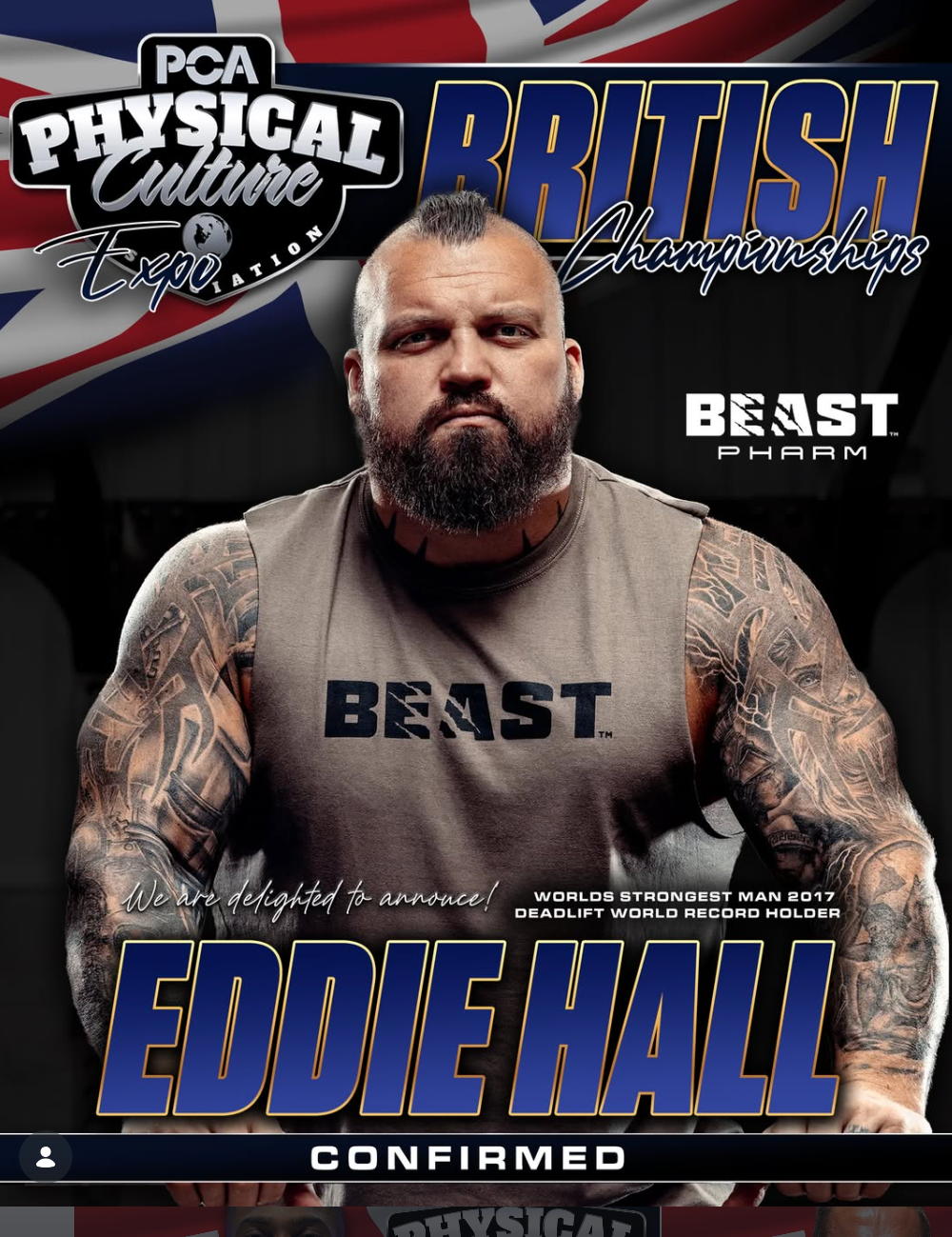
FORMER World’s Strongest Man Eddie “The Beast” Hall is set to appear at the PCA British Finals on Sunday, October 18 and the British bodybuilding community has taken notice.
Since retiring from strongman, Hall has moved from the deadlift platform into combat sports, boxing and physique work. His appearance at one of the biggest weekends in UK bodybuilding is another sign of his drive to keep pushing physical boundaries.
Long before any of that, at the height of his strongman fame, I sat down with Hall for an interview that turned out to be far more personal than I expected.
The world saw an unstoppable force. But as a journalist and as a competitive bodybuilder who knows the mental side of forcing the body to change, I wanted to look past the trophies. During our chat in 2018, Hall spoke openly about severe childhood anxiety, depression and his mental health, with an honesty that is still rare among elite athletes.
For Hall, training was not just about winning. It was how he coped.
With The Beast heading to the PCA British Finals, here is my 2018 interview with him again, a reminder that the heaviest weights he ever carried were not made of iron.
*This article was written by Gary Chappell and was first published by the Daily Express in 2018.
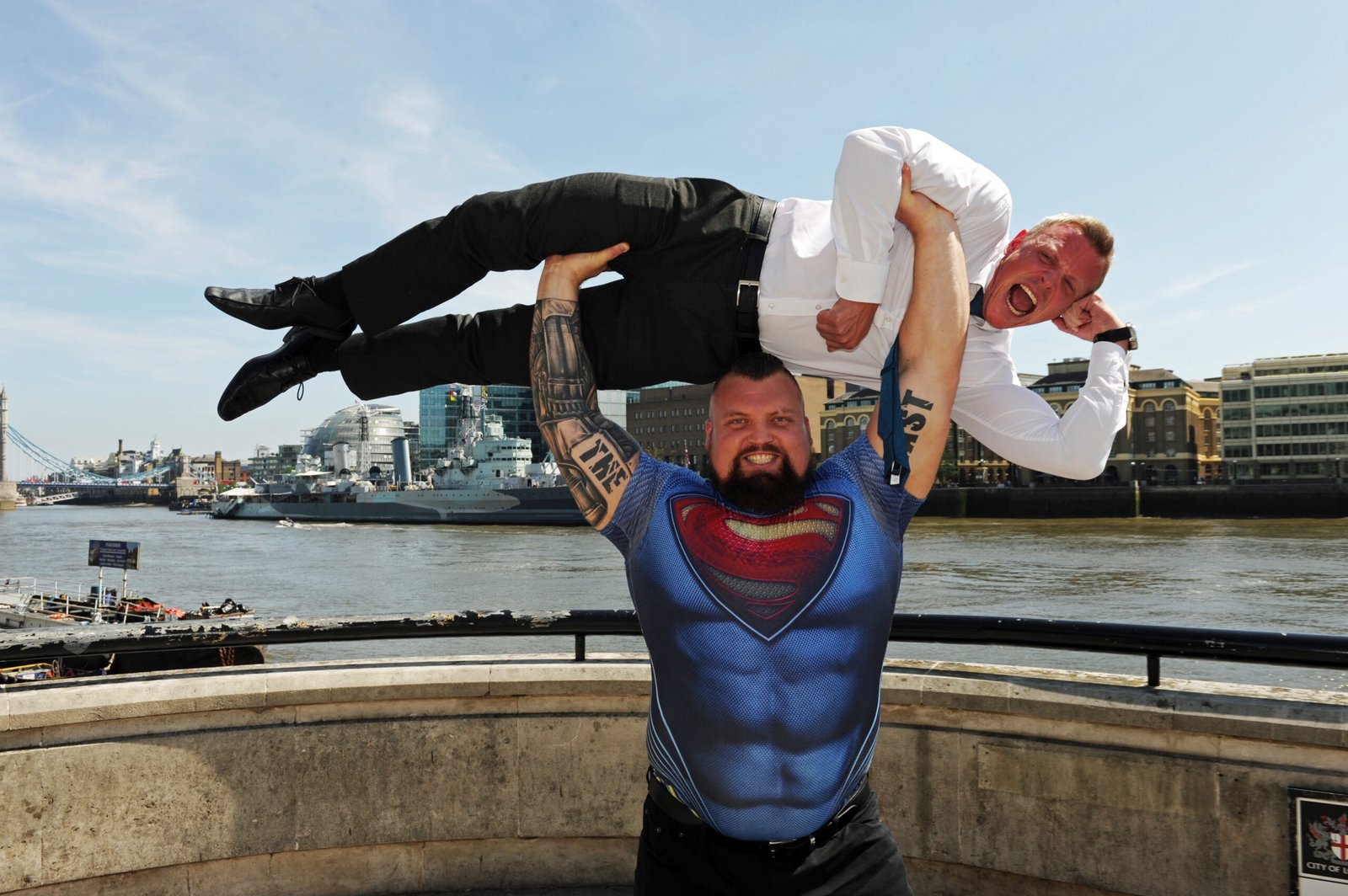
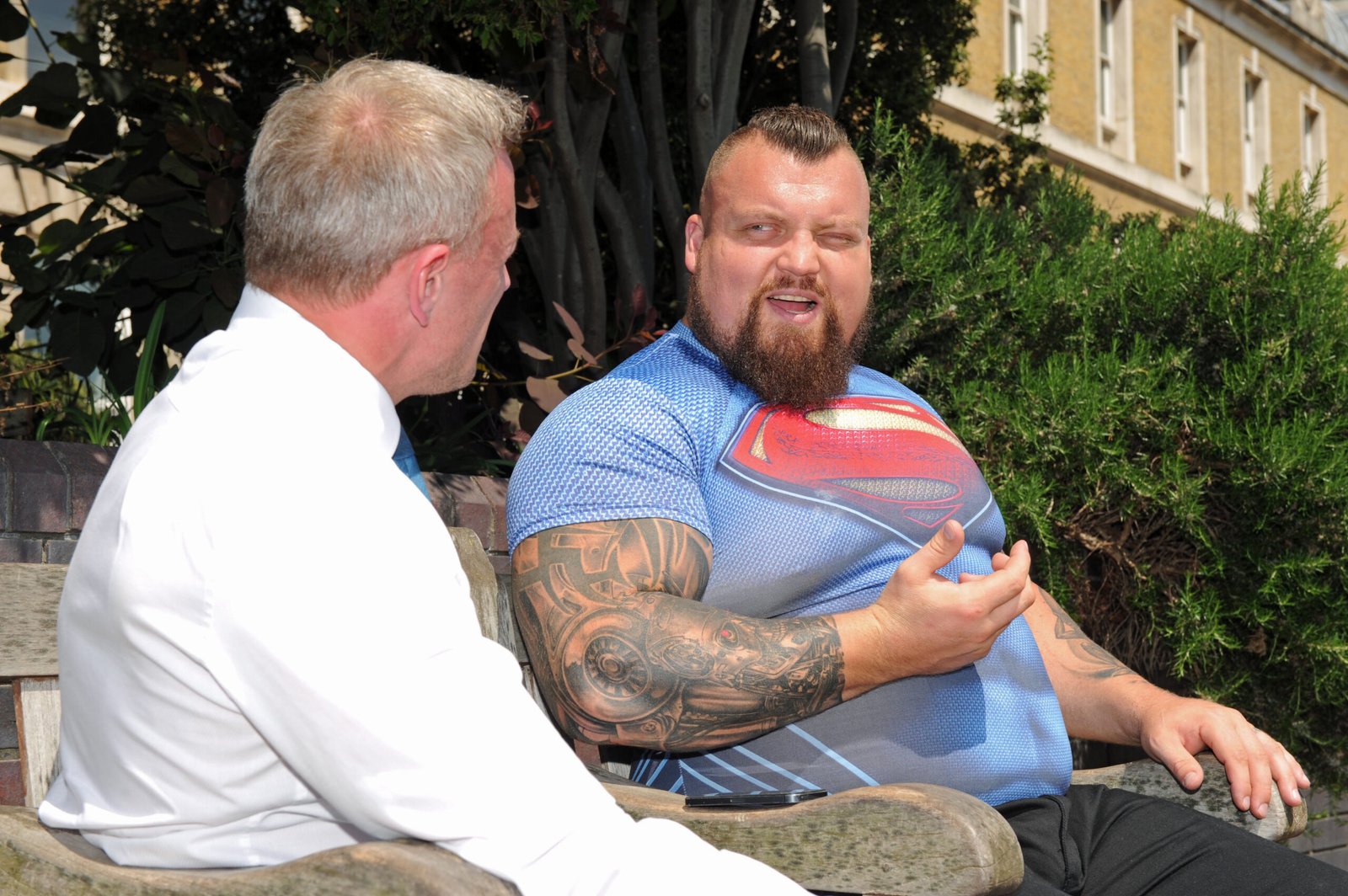
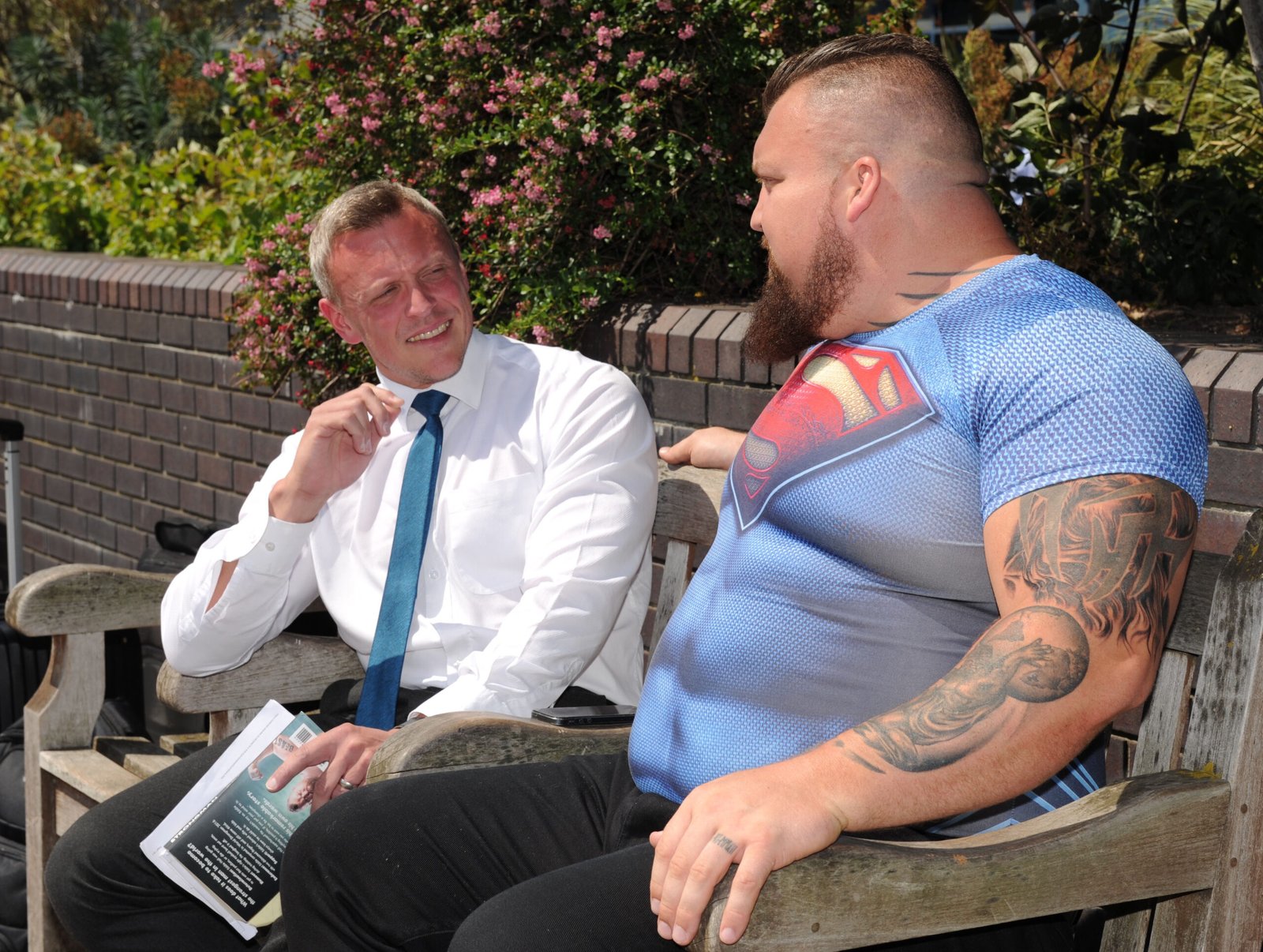
Reporter Gary Chappell and World's Strongest Man Eddie Hall. Picture: Peter Luckhurst
EDDIE HALL is the strongest man in the world. He is the first and only person to lift half a tonne. He can walk along pulling a plane. There is almost no feat of strength that is beyond him. But to get there almost cost him his marriage and his relationship with his two children. But it may also have cured a depression and anxiety that threatened to end his life.
His skin-tight laser blue Superman T-shirt hugged his 27-stone frame and made him look more akin to a comic character as he bounded out of a black taxi on London’s Lower Thames Street.
Fresh from gracing ITV’s famous couch on This Morning, he laughed while regaling how he narrowly avoided swearing on live TV while chatting with Phillip Schofield and Holly Willoughby.
He has every reason to be relaxed; he is the World’s Strongest Man – the sporting title he craved for so long – his family are set up for life and acting lessons are well underway as he plans to emulate his hero Arnold Schwarzenegger.
As we walk alongside the Thames, Hall takes every giant step as if he does not have a care in the world, no hint of the time he locked himself in the school toilets, rocking back and forth in a desperate bid to ease his anxiety.
No hint of downing bottles of whisky as a 14-year-old to drown the depression, or the fact a future as an Olympic swimmer had gone terribly wrong, or the hours spent throwing up because he could not face the every-day task of meeting pals in Stoke-on-Trent or enjoying a family meal.
No hint of the fact his training for the World’s Strongest Man almost crushed his marriage and made him a stranger to his children.
No hint of enjoying the thought that his sporting ambition could lead to his death, thus ridding him of the plague of mental health problems.
Gary Chappell talks to World's Strongest Man Eddie Hall. Picture: Peter Luckhurst
In his autobiography, Strongman: My Story, first released last year but updated this month with a special diary of his World's Strongest Man victory, Hall's voice is captured brilliantly as he describes a boisterous childhood with his two brothers, a strong bond with his nan, fights with 20 police officers and how strongman saved his life.
Squeezing us both on to a bench in the baking heat, Hall finally gave a glimpse of the pain behind the hard-man exterior.
“When I was 12 or 13 my nan was diagnosed with cancer,” he says. “I was having a really hard time at school, I was thrown out of the swimming club – which was going to be my career – I was always in trouble with the police, in trouble with my parents, my family, always getting into fights and, I don’t know, it just f****** hit me hard. I got huge anxiety attacks where I couldn’t leave the house.
“Sometimes I just couldn’t go to school and ultimately that’s why I got expelled because, when I was there, I just didn’t want to be there. I was always in panic mode.
“I’d always be wanting to go to the toilet to sit on my own and just rock back and forth and just calm down and get the anxiety out.
“If I had to go out for a family meal or go out with mates, I’d be throwing up before I went out, I’d be that anxious.
“Doctors put me straight on Prozac and straight into counselling. I was on them for about four years and it did help. Then I started doing strongman and it just disappeared.”
Except that it did not. Not entirely. Thrown out of swimming’s World Class Potential Programme after clashing with its “military” discipline, Hall found he was naturally gifted elsewhere too. At just 17 years old he could deadlift a quarter of a tonne. His unbelievable early strength was his route from no-hoper to achiever.
Five years later he was the UK’s Strongest Man, a title he went on to win for six successive years.
The pinnacle, however, was the world title.
But such feats of strength appeared easy compared the road to get there.
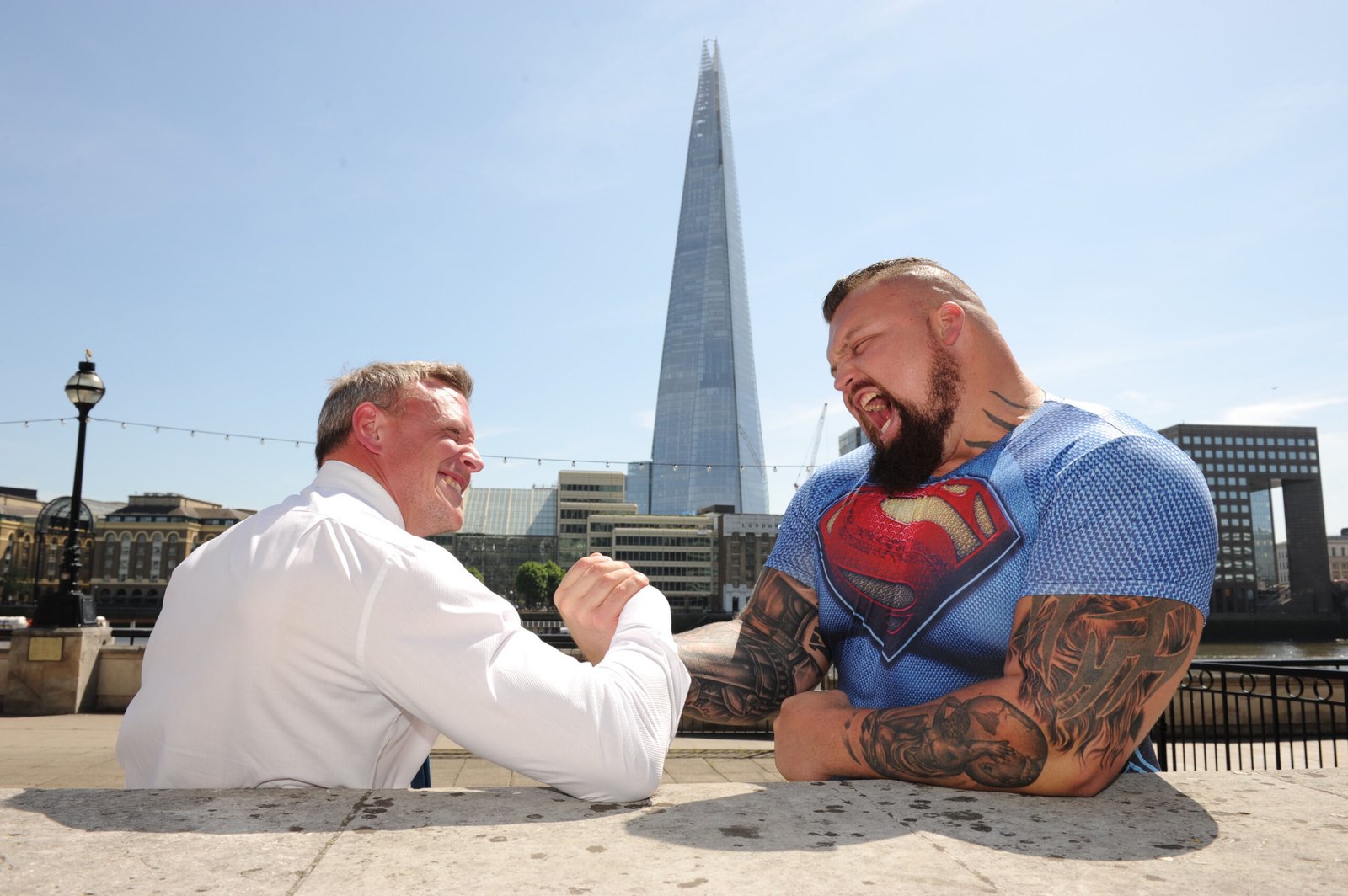
Gary Chappell 'beats' World's Strongest Man Eddie Hall in an arm wrestle. Picture: Peter Luckhurst
Hall describes it as his suicide mission; when the big black dog returned.
“Five weeks before I won it, my wife was basically packing her bags... she was gone, she was out the house,” he says.
“I had to beg her to give me five more weeks just to let me win the World’s Strongest Man.
“I promised her I’d win it and that our life would get better. And thank f*** I won it because, honest to God, that saved my marriage.
“You see, because of my depression I didn’t really give a s*** if I died doing it because, unless I won the World’s Strongest Man, there was no point in me living anyway.
“In a way it was my suicide. It was a win-win for me; if I died along the way, I died, and if I won, I’d achieve the dream.
“I didn’t care about my well-being. I didn’t care about anybody around me – my wife, my kids, my family, mum, dad, brothers – I didn’t give a f***.
“I was training four hours a day, physio two hours a day, stretching an hour a day, hot-cold treatments an hour a day, hyperbaric an hour a day, meditation, I was sleeping 13 hours a day, food prep, eating food.
“Honestly, no joke, I would see my wife and kids for an hour or two a week at most.
“And that put so much strain on me mentally because, if I failed, all that f****** sacrifice would have been for nothing. And that in itself made me very anxious and very depressed.
“I was paying my wife no attention. I would f*** up Christmas, birthdays, meals out, I wouldn’t do anything because I was obsessed with strongman.
“It just got to the point where my wife just didn’t have a husband and my kids didn’t have a dad.
“My son Maximus didn’t know me. I’ve got a nine-year-old daughter as well who I don’t know. I’m getting to know her now but I didn’t because I spent so much f****** time obsessed with strongman.”
On May 28, 2017 Hall was finally crowned World’s Strongest Man – on the 40th anniversary of the competition – in Botswana.
Gary Chappell talks to World's Strongest Man Eddie Hall. Picture: Peter Luckhurst
Smoother times are now ahead.
“I can honestly say that, since I’ve won the title, the depression has disappeared,” he says.
“I can now look in the mirror and be content, happy and see success. And that for me made all the worries as a kid disappear.
“All that stress and strain of your career, your GCSEs; that was my middle finger to all those teachers saying, ‘You’re going to be a nobody, you’re going to be in jail or dead’."
If anything in this interview resonates with you, support is available. Visit FrontDouble's Helplines section for mental health resources.
Every results board, athlete profile, interview and feature on FrontDouble is kept going by readers who chip in each month. Support us from £4 a month and get your name on the FrontDouble Supporters Wall.
PCA England 2026 – Royal & Derngate, Northampton, 11 October 2026
The PCA England 2026 took place at the Royal & Derngate in Northampton on 11 October 2026. Don Valley won a strong five-man Men’s Bodybuilding Medium line-up and Wayne Angus continued his remarkable run by winning Classic Bodybuilding Tall for the third PCA show in a row, after victories at PCA Yorkshire and PCA Central. Lukas Tarbaj took Classic Short, adding to his win at IBFA Teesside. Several PCA Central athletes went one better a day later: Jacob Tipper won Junior Bodybuilding and William Chaundy won Novice. Placings are below:
Mixed Disability 1 Abiodun Daramola 2 William Tell
First Timers Bodybuilding 1 Poul Parker 2 Chris Bielby
Junior Bodybuilding 1 Jacob Tipper 2 Jack Bell 3 Will Holmes 4 James Herring
Every results board, athlete profile, interview and feature on FrontDouble is kept going by readers who chip in each month. Support us from £4 a month and get your name on the FrontDouble Supporters Wall.
PCA Central 2026 Results – Wulfrun Hall, Wolverhampton, 10 October 2026
The PCA Central 2026 took place at Wulfrun Hall in Wolverhampton on 10 October 2026. Karl Grayston, an overall champion at FitX Leeds the week before, won Men’s Bodybuilding Medium. Wayne Angus continued his strong run by winning Classic Bodybuilding Tall, having also won it at PCA Yorkshire. Sam Udall took Men’s Bodybuilding Tall, and Solomon El-Shirbiny topped a six-strong Junior Bodybuilding line-up. Other winners included Hamzah Bondary (Classic Short), Alex Morrison (Masters 40+), Rebecca Davenhall (Toned Figure) and Emma Burton (Athletic Figure). Full placings for every class are below:
FrontDouble results sponsored by Physique Pro
Mixed Disability 1 Luca Williams
First Timers Bodybuilding 1 Adam Davis 2 Gino Allen-Necco 3 Alex Sweet
Junior Bodybuilding 1 Solomon El-Shirbiny 2 Will Holmes 3 Lewis Sutherland 4 Harley Dixon 5 Zeph Fergusson-Platt 6 Felipe Gomes
Novice Bodybuilding 1 Dan Northard 2 Jake Doidge 3 William Chaundy 4 Riki Davies 5 Luke Skidmore
Classic Bodybuilding Short 1 Hamzah Bondary 2 Jacob Tipper 3 Jacob Morgan
Classic Bodybuilding Tall 1 Wayne Angus 2 Kamil Lobaczewski 3 Ugur Solak 4 Jake Simpkin
Masters Bodybuilding 40+ 1 Alex Morrison 2 Dariusz Felczykowski
Men’s Bodybuilding Medium 1 Karl Grayston 2 Luke Thorley 3 Jakub Železnák
Men’s Bodybuilding Tall 1 Sam Udall 2 Rafal Bentkowski 3 Josh Davis
Every results board, athlete profile, interview and feature on FrontDouble is kept going by readers who chip in each month. Support us from £4 a month and get your name on the FrontDouble Supporters Wall.
Three from three, an overall near-miss and a stomach bug nine days out
Prep Diary of a Masters bodybuilder - Episode 5
Saturday, October 3, 2026 – PCA Masters show day
Sleep has been disrupted four or five times because I'm up to the toilet with more water flowing through me than the Trevi Fountain. Yesterday we put in 100g asparagus in four of five meals and 1g of vitamin C per meal. No Peak Max this time either but we wanted to be a touch sharper, because the PCA lean towards condition over anything else. I've dropped more water with this protocol than anything, but I am still nice and full. We arrive at the venue, Connexin Live in Hull, early. I have to urinate in a plastic cup after parking my car because I'll never make it to the toilet in time. The glamour is never far away in bodybuilding. I meet lots of friendly faces – competitors in my class and in other classes – as the build-up begins. One thing that always stands out to me at bodybuilding competitions is the mutual respect and camaraderie among competitors.
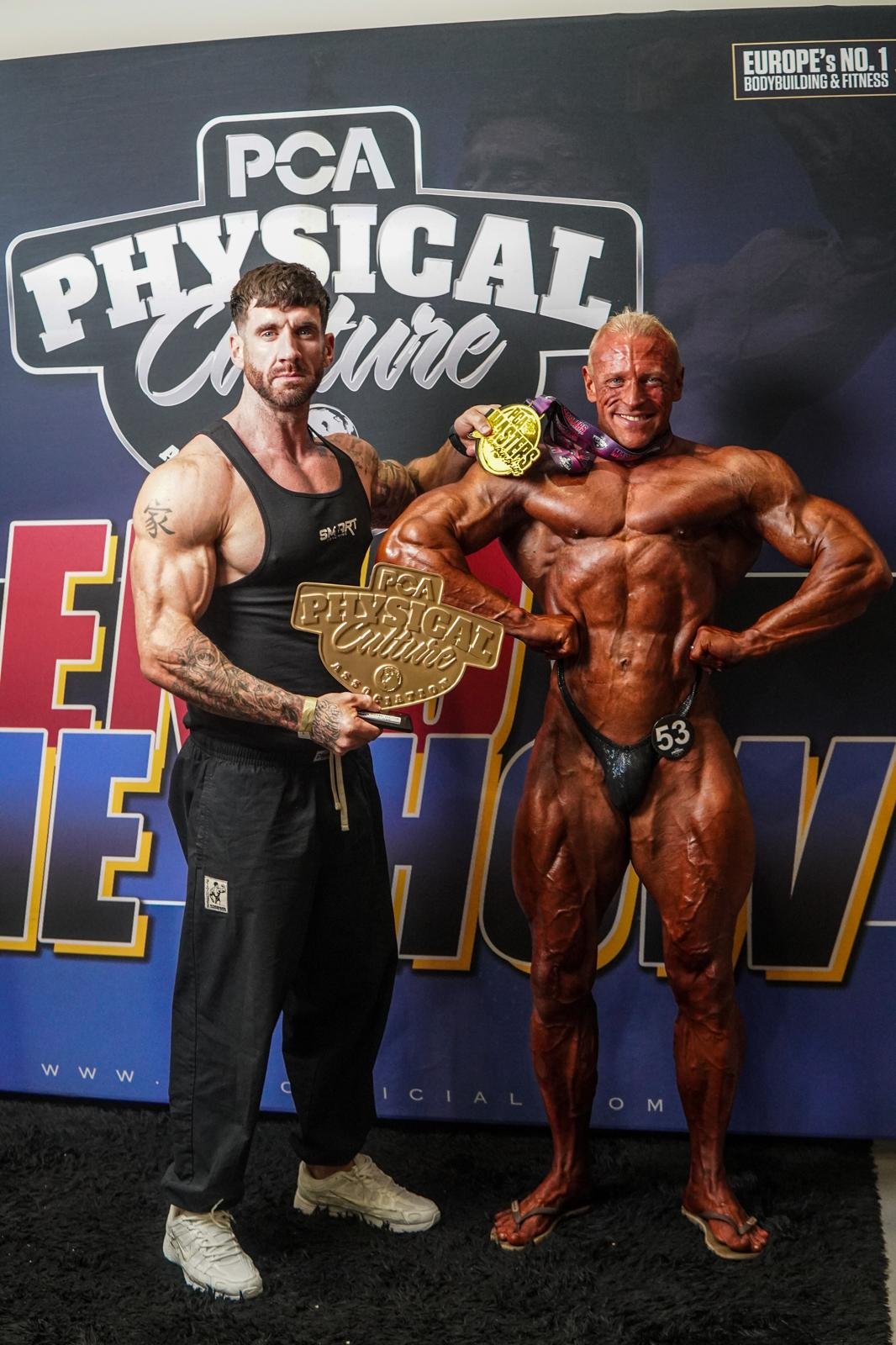
My coach, Nathan Smart (above), is in attendance for this one. He has a look at me. Everything is on point. We agree to hit the pre-stage pump up a little harder to close the gap to my post-workout look, the one that has me in the best bog in Thurrock. He gives me some of his Engineered Muscle Turbo Pump supplement, which I sip while flogging myself with bands backstage, in between a few trips to the toilet, of course. On stage I get moved. I look down. The tape to mark the competitor line is in a cross. I'm in the middle. Good sign. Former England captain and World Cup winner Phil Vickery (below, right) is in my class. I mention it to the PCA MC who says he recognised the name. As Phil finishes his routine, the PCA MC gives him a congratulatory message. The rest of us walk back on stage for our posedown, all shaking his hand as we return. I take the victory - three from three. The feeling of winning never gets old. Phil is very complimentary about my physique, which feels surreal given his stature. We hang around another five hours for the overall, drip-feeding four rice cakes, 80g chicken and 15g honey twice, all with just sips of water now, having already put in 2.5 litres. I believe I have a genuine shot at the overall. Indeed, it is close. I am convinced I have it. It goes to the brilliant Over 40 winner Zack Gibson. Top bloke and who has a very similar shape to me. He wins his PCA Pro Card. I have to wait for my chance to win mine at the PCA British in two weeks.
Sunday, October 4 2026
Laura, thankfully, did the four-hour drive home. I had an off-plan meal at a services on the way - the first since May. We are up early and standing at Oliver's football match by 9.15am. He scores. That's another fiver for Robux. I give him another pep talk. Watching the overall video back Zack is a touch sharper than me. He deserved the overall. Nathan messages: "We won't miss next time."
Monday, October 5, 2026
I have another shot at an AGM job. Thurrock branch, where I work as a PT/FC, is becoming available. I'm told to apply but temper my expectations. From yesterday, I'm back to baseline diet; 1900 calories. Cardio is back in, this time a modest 20min. Steps at 10k. This will remain for the next few days as for the first time in three weeks we do not have a show this weekend. The PCA Brits is next on October 18. The school texts. Now my daughter has a detention. She's not had one in the three years she's been there. I send a reply; not in my time she isn't. In yours. We receive a lengthy email from a teacher which is very intimidating and aggressive. It gives me an insight into what this place is really like. The school’s reply was blunt: no debate, no parental input and, if I didn’t like it, I could take it up with Ofsted. In other words; 'you will comply. If you don't like it, bring it on'. All additional stress none of us in the house need, nor asked for. More stuff I have to deal with while preparing for a British finals.
Tuesday, October 6, 2026
The email tirade with the school continues. I'm calm. In control. Purely because I wasn't making a request. I was telling them what would happen. I'm also no longer interested in anything they have to say. I consider pulling them out of the school system entirely, moving further afield to clear the mortgage and therefore setting up an easier financial situation whereby I can homeschool the children. I have a disagreement in the gym. I ask how many sets someone has left, while with a PT client. "I've just started," they say. OK, but how many sets do you have? "I've just told you I just started," she shoots back. We walk away and do something else, realising quickly we would have more success howling into the void.
Wednesday October 7 2026
With the baseline diet returning, so does the need to prep spend. I buy two cheap games for my Steam Deck totalling a tenner. They will no doubt sit in my library unplayed for months. Honestly, I think it is the act of spending which is better than doing anything with the things you actually buy. I stumble upon a YouTube video analysing the PCA Masters. I'm in it. My ego is massaged nicely. "Look at this guy!" "Gary just needs more back" is ringing in my ears. But it's a positive assessment.
Thursday, October 8 2026
Last day of baseline diet before a brief top up tomorrow with a high day. Face is really starting to come in now, even more than it has been. Feeling in a good spot though. Cruising in. I have no idea of what is about to come...
Friday, October 9, 2026 – 9 days out
High day drops. Good deal of food here. Meal 1, for example, is 175g rice pudding [Hydrorice from Engineered Muscle], 50g whey, 30g honey, 10g dark chocolate. Meal 2 is 300g basmati rice [cooked weight], 150g cooked chicken breast, 30g raisins, 20g honey, 100g green veg and four rice cakes. I swap meals 1 and 2 purely because I'm waiting for my delivery. Midway through 175g hydrorice I start to feel like I can't finish it. Still, I do. I go to train about 3pm, two meals in. But when I arrive I'm feeling off. I'm flagging pretty quickly during training; back with some arms to push carbs in specific places. I'm taking longer and longer between sets. I feel rough. Energy tanks. I message Nathan about whether cardio is still required because I feel I'm about to puke any second. It is. I get through the work out somehow but I'm not right. I feel ill. I do my post-workout pics but need to take a long rest in between each one. This is not like me. God only knows how I manage to drive home. I slump on sofa. Stomach all over the place. Laura checks my blood sugar. It's super low. I eat four rice cakes but cannot manage the rest of meal 3. She checks it again before I'm allowed to fall asleep. Upon waking about an hour later, I take myself to bed. I've clearly got some sort of tummy bug. Stomach is upset and I'm belching large clumps of air. Not pleasant. Eight days out I'm bed ridden from 5pm. Temperature slightly raised too. In eight days, I go for a PCA British title and my PCA Pro Card. This is not a good spot to be in.
Want a coach who's living the prep alongside you? I'm taking on clients. DM me on instagram @gary_chappell76 or email info@dietplanman.com to apply to work with me.
Every results board, athlete profile, interview and feature on FrontDouble is kept going by readers who chip in each month. Support us from £4 a month and get your name on the FrontDouble Supporters Wall.
PCA Yorkshire 2026 Results, Connexin Live, Hull, 4 October 2026
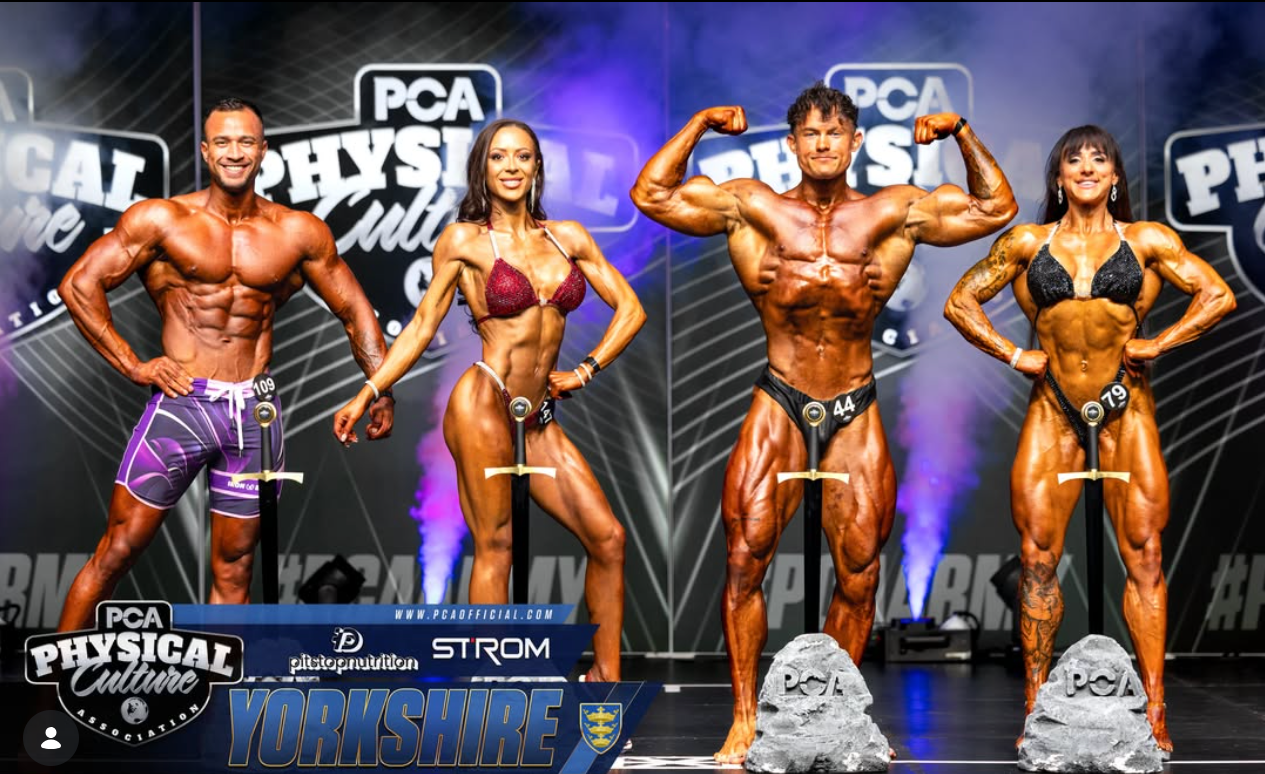
The PCA Yorkshire 2026 took place at Connexin Live in Hull on 4 October 2026, with athletes competing across bodybuilding, classic, physique, figure, bikini and wellness classes. Wayne Angus won Classic Tall before taking the Overall Bodybuilding title. Vitor Rocha won Men's Physique Tall and the Overall Physique crown, while Katie Barnes took Trained Figure and Overall Figure. Josh Tranter had a standout day of his own, winning both First Timers and Junior Bodybuilding. Moll Field claimed the Overall Bikini title. Results are below:
First Timers Bodybuilding 1 Josh Tranter
Junior Bodybuilding 1 TBC 2 Ellis Brown
Novice Bodybuilding 1 Erwin Furman (from Instagram handle, full name TBC)
Bodybuilding Short 1 Pete (surname TBC)
Bodybuilding Medium 1 Māris Martinsons 2 Sam Rogers
PCA's Masters Championships took place at Connexin Live, Hull, on October 3 2026, with a full Masters card spanning Classic Bodybuilding, Men's Bodybuilding, Figure, Bikini and Physique. Zack Gibson took the overall Bodybuilding title, Emma Quinn topped Figure and Lotan Carter claimed overall Physique.
Classic Bodybuilding
35+
1 Marty Rice 3 Lewis Moore 4 Chris Homewood 5 Luke Layman
45+
1 Lee Desoiza 2 Gavin Morris 3 Ross Thomas
55+
1 Mark Bentley 2 Derek Gorman 3 Ian Lamb
60+
1 Paul Norton
Men's Bodybuilding
40+
1 Zack Gibson 2 Lee Chambers 3 Steven Marzouk 4 Ruben Luque Molina 5 Fran Beier 6 Adam Northover 7 Chris Gumley 8 Dariusz Felczykowski
45+
1 Ricky Moore 2 Artur Nowak 3 John Youssef 4 Wesley Moore
50+
1 Gary Chappell 2 Brendan Hickey 3 Dan Norman 4 Perry Doyle 5 Brett Smith
55+
1 James O'Neill 2 Ian Flynn 3 Detlef Schmidt 4 Leigh Bennett 5 Christopher Unitt
Ladies Toned Figure
35+
1 Louise Barriball 2 Sandra Iscenko 3 Lisa Lamb
45+
1 Jo Searle 2 Terri James 3 Annette Kynaston 4 Marcelle Williams
Prep diary of a Masters bodybuilder Ep.3: Teeth falling out, a prep kitten and my opening win
A week of contest prep, family life, work, fatigue and increasingly precise attempts to get my physique right for the next four shows – with the next one my 2Bros debut
Saturday, September 19, 2026 – show day:
I wake at 6am. No tan on the white bedding because both coats are being sprayed this morning. But as has happened once or twice over the past few weeks, I get sharp pains in my stomach. I struggle to find decent lighting in the Airbnb but take pics and weight and fire them over to Nathan, who has just landed in Vegas as he plots the 212 Olympia debut for his client Yinka Majolagbe. They are eight hours behind, he's had a 10-hour flight and it's getting late stateside. Without fail my phone lights up within minutes; espresso and 5-10min walk to get things moving. I venture out into the morning light, wander round a park, past a squirrel ruffling the feathers of a flock of hungry pigeons then, of course, a Ghostbuster van. Meal 1 goes in; 100g Hydrorice – rice pudding to you and me – whey and honey. Pics and weight in two hours. Water and salt consistent. As I prise the kids out of bed and the family gets ready, I wash up, make sure the place is clean for check-out and gather my bits together for the day ahead. I have tanning at 9am and expect to be on stage at 1.30pm. Short drive to the venue – seven minutes or so. Tanning is, as it always is, delayed. I chat to mass monster Don Valley in the changing room as we both wait to stand together, naked, except for a sock. Amiable chap. We talk bodybuilding and its problems. We're clearly on the same page and I reflect how these shows always create friendly bonds with people who live the other side of the country. It is one of competitive bodybuilding's positives. I finish tanning at gone 11 and realise the show has started and they are rattling through classes. That means they are ahead of schedule. I rush to get pics and weight to Nathan waiting more than 5000 miles away across the pond for my update. Messages struggle to go through due to dodgy reception and I'm feeling increasingly rushed. Finally they go through. I get my meal plan. Then I find out I'm going to be on much earlier than planned. We halve the meal and I just start pumping up. I'm now on in 30 minutes roughly, not 90. I stand behind the stage curtain as some guy I have never met rubs glaze into my skin. They call me on straight into my posing routine. I perform it to a backdrop of my wife and daughter's support. No rest as it finishes as they want me straight into mandatory poses. It is just me in the class. Happens sometimes. You just get on with it. At least I've won.
I'm surprised by my posing fitness - this never happened in 2024 BC [see previous diary entry]. My midsection control is excellent and breathing nicely under control. I'm confident, happy. It has gone well. As the chance is there, I step into Class 2 - open bodybuilding - just for extra stage time. It is me and the friendly Don Valley. What a battle. Don outmuscled me. I out conditioned him. Today they want muscle and he takes the win. I'm pleased for him. He messages me later with very complimentary words about how I've helped him realise what he needs to do condition-wise to achieve his PCA Pro Card. I always struggle with people being positive. That and self-belief. I am working on it. Later, I win best poser, even though in my head I cannot pose. Overall, it is job done as we prepare for two more shows back to back. I ditch my flip flops and change back into trainers for the three-hour drive home. As I drink a sugar-free energy drink and sugar-free fizzy to help navigate the M6 and M1, I start feeling more human again. I walk through the door at 8.30pm. Two meals to go and we reset for another competition in six days.
Sunday, September 20, 2026:
Back to baseline diet today. 1900 calories. Fully expected. I take my son to his football match for 9.15am. He is captain for the day and opens the scoring. The weekend seems to continue in a positive vein. He misses out on man of the match and seems upset afterwards. But I ask him: 'Did you put in a man of the match display today'? He did. I say: 'This is what we want. You keep your standards high, put in performance worthy of man of the match every single game, the rest is out of your hands. But do everything in your control to be the best'. It seems to lift him. I tell him he's done a good job, bank it and move forward. The depleted feeling starts rinsing through me late in the day as the lower food starts to bite. The dog walk gets hard when this feeling returns. I do what feels like mountains of washing up and fold what also appears to be two tonnes of washing. Full client check-ins too. Many have cheated on their diet this week. It reminds that I haven't done that ever. And had nothing off plan since May. I get an insta message asking me to do a podcast. I'm told some people think I'm an icon. I wonder if she means eyesore. Who knows.
Monday, September 21, 2026:
Baseline diet again. More food expected tomorrow as we polish for the next show, my 2Bros debut. I need to do this UK regional qualifier so I can compete at the NPC European Masters in Milan. Last leg session today. Lots of writing too as I catch up from the weekend's exploits. Son got in the school football team, albeit the reserves. That'll do. He can build from there. Things are looking up.
Tuesday, September 22, 2026:
Carbs start going back in after two days on baseline diet. Regardless, I start to feel washed out. Strange, because there isn't even any cardio at this point. I have an overtime shift until 1pm, then a PT client, training, then straight to get the kids. Tuesday is always manic. I need to take my youngest to football training by 5.45pm. I try to eat first – but there's no chicken already done so I have to prepare more. With my wife on a 12-hour ambulance shift, I'm juggling plates. I put washing on, wash up the mess left from the morning rush, eat – finally – then dash out the house for football. I take my laptop so I can do some writing in the car but the laptop is low on juice and it dies quickly. Training ends earlier than usual because of the fading light but I'm still not home till nearly 8pm. Then I prepare dinner for the kids, eat again and take the dogs out. It's now 9.30pm. I have one more meal left, my head's spinning with stuff I need to do and haven't done, a million emails from the kids' school [why do they insist on sending so many?!] and a message to deal with after my son was given a detention for forgetting to bring in a whiteboard. This is his third week of high school. Their arbitrary rules are just so unnecessary. I keep checking emails to see if anything has dropped from the literary agents I pitched. It's been about seven weeks since I finished re-polishing my children's picture book. I need another income stream and this idea has been in the works for years. I've had one rejection and silence from six others. Nothing from The Times, either, after two job applications for sports production and sports news editor; roles I have close to 20 yeas' experience in. At different points I remember I'm prepping for another four bodybuilding shows.
Wednesday, September 23, 2026:
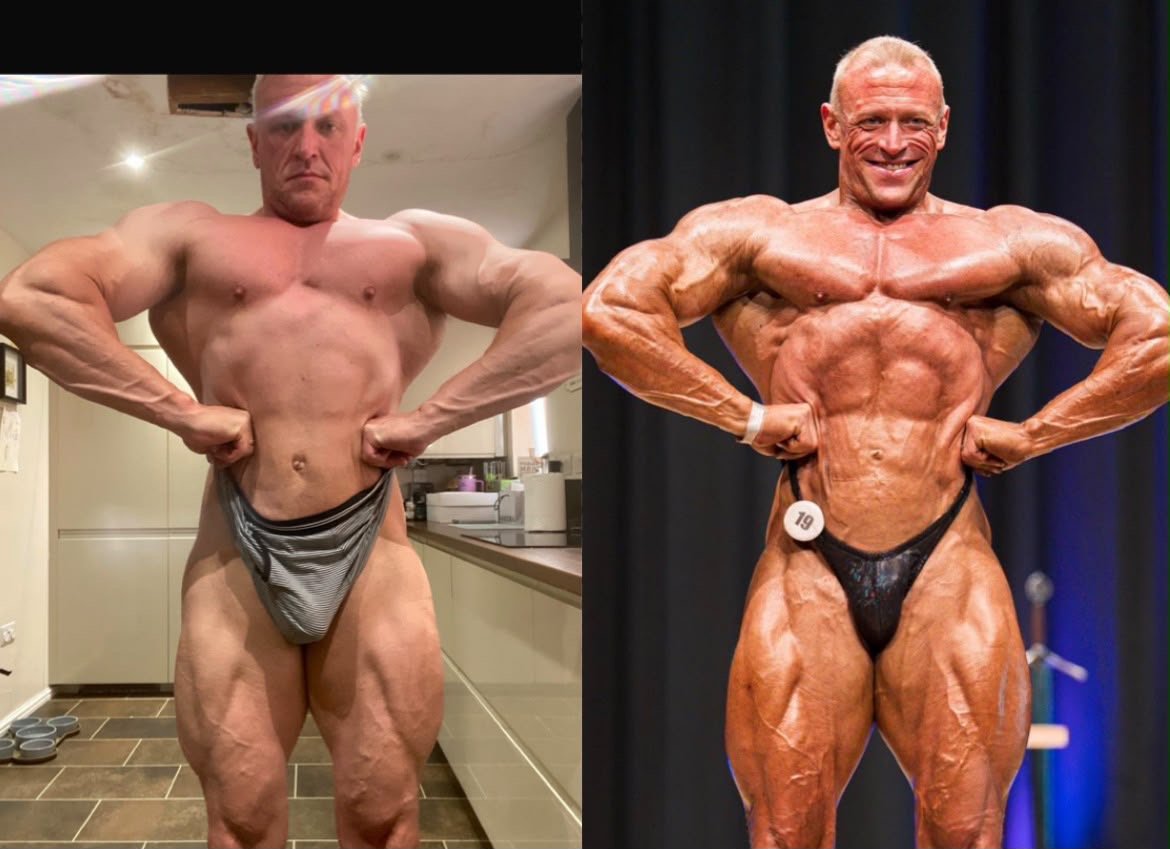
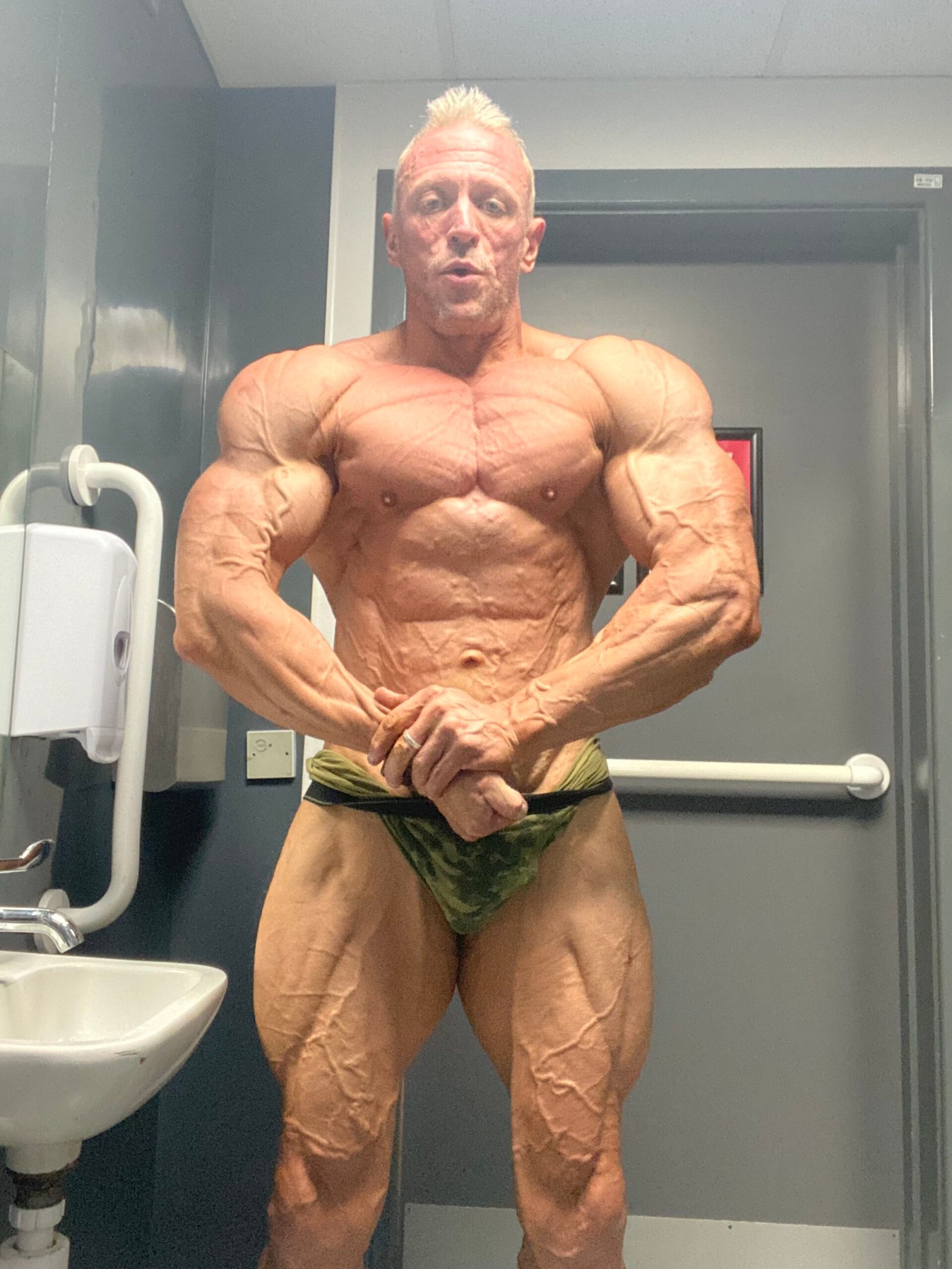
I'm up at 4.30am to do fresh pics and weight to ping to Nathan, who is eight hours behind in Vegas and who has been up since 4am himself preparing Yinka for his 212 Olympia debut. We exchange a few messages, then I go back to bed until 6.45am when I take more pictures, this time in the garden for natural light. They are so much better. I keep referring to my post-workout pics in the best bog in Thurrock and how I believe that look is even better than the stage look from Saturday. I never think official photos do the physique justice somehow. Or maybe I'm never happy. I sent Nathan some stage shots overnight and his reply landed: "Some of these shots are crazy". He mocks up our 12-week transformation from when we started working together saying "crazy 12 weeks work" and "should be super proud of these". Still, the thought persists that I can improve that stage look.
I'm tired at work today. Client at 9.30am, train, then straight into holding a circuit class. I eat soon after then retreat into my shell for a bit. I clean the treadmills and crosstrainers as it helps me think. I leave at 4pm and head straight to collect my son from school football training. His training overruns and I'm nodding off in the car. Three days out from show number two of five.
Thursday, September 24, 2026:
Up before the alarm today at 4.15am. Pics sent across the pond to Nathan. Then back to bed for all of two hours. Weight holding after two days of higher carbs so a few more going in today. We are trying to land a similar look to my post-workout fullness; dry and vascular. I take them after two meals and 2.4litres of water. So what I need to do on Saturday for my 2Bros debut is improve my pump-up routine. I won't be working out obviously. But in the past I have not pumped up very much for fear of blurring detail in the muscle when in fact, with me, the opposite appears to be true – and these post-workout pics prove this. As the day goes on, I get that empty, quiet feeling again. So I hoover and clean the gym simply to be alone with my thoughts. I feel rushed when I leave; writing bits for FrontDouble, preparing stuff to get to Milton Keynes on Friday in time for tanning and registration. My mind is not clear. I don't like this feeling.
Friday, September 25, 2026:
One day out from show two of five, my 2Bros debut. I wake groggy after a bad night. Dreams were wild and weird. First, I dreamt my teeth suddenly starting falling out one by one. Then I dreamt my plans dropped from Nathan for my next show and he wanted to me to buy a kitten. I can remember thinking, why the hell do I need this? I already have four dogs. I work the early shift today 8-12. Food is pulled back slightly. We are trialling the look without Peak Max this time. Everything has looked ideal day after day, following two meals, two litres and a workout. So we are not adding any more variables. On Saturday we just repeat, two meals, two litres and I fix my backstage pump-up protocol by doing a bit more and not worrying whether I'm going to blur any lines. Looks like I need more of a pump up, not less. These two qualifying shows will serve the perfect purpose of refining for the more important trio to come; the PCA Masters next Saturday, October 3, the PCA Britain and the NPC European Masters. I finish work at 12, get home, get my bits together, collect the kids from school at 2pm – early finish Fridays – then head to the venue at Milton Keynes. Loads of motorway traffic as usual. And once again I have to stop at a services to use the toilet, which they helpfully locate 400,000 miles away from the car park. I switch to passenger and let Laura [my wife] drive. I click the heated seat button and doze off, waking on M1 to yet more traffic. We arrive just in time for me to dash behind an outbuilding and because I'm busting for the toilet yet again. Base coat of tan goes on. The spray is freezing. We then get diesel but due to a couple faffing at the pump and then the pump not reading the debit card, I somehow lose my reading glasses. Stress after stress. We finally reach the Airbnb, I eat and settle down to get some writing done ahead of tomorrow's second outing.
Bodybuilding results from the International Centre, Telford, September 20, 2026
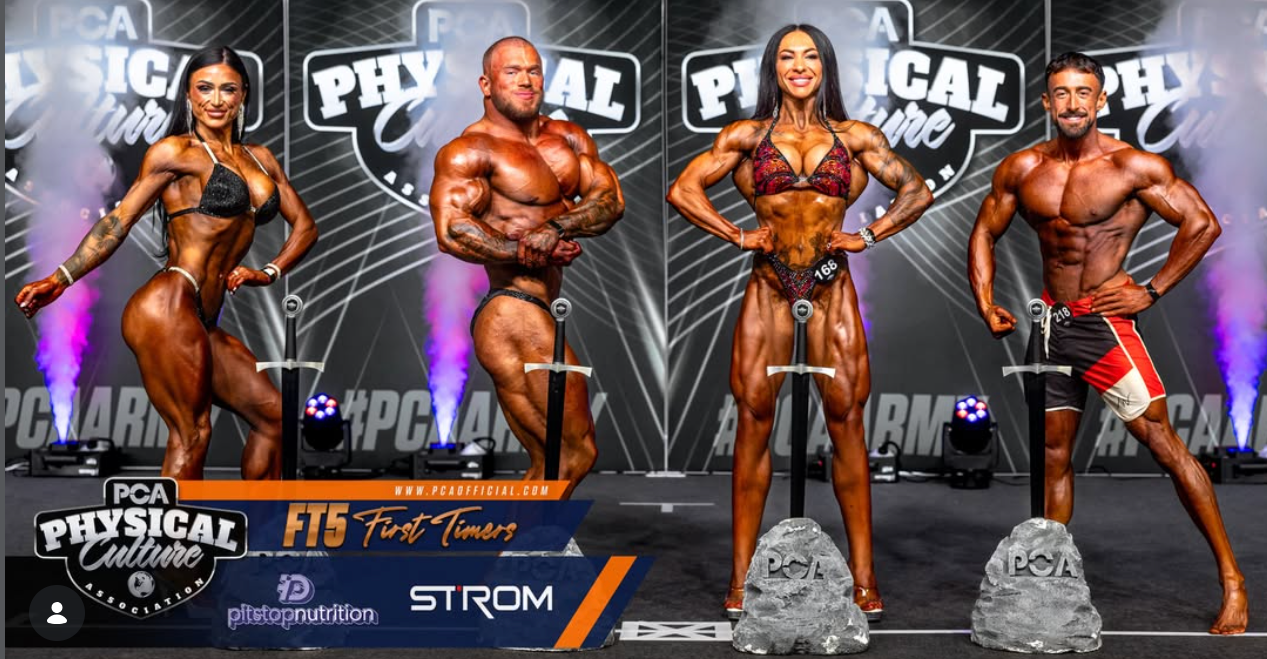
The PCA First Timers (5) took place at the International Centre in Telford on 20th September 2026, bringing first-time competitors together across bodybuilding, Classic Bodybuilding, Men’s Physique, Figure, Fit Model, Wellness and other categories. Here are the full PCA First Timers (5) results and placings from the Telford show.
Mixed Disability
1 Cali Groombridge
Junior Bodybuilding Short
1 Lewis Nankivell 2 Will Thomas 3 Noah Dundee 4 Joshua Phillips 5 Dylan Hayes 6 Benjamin Madan
Junior Bodybuilding Tall
1 Taylor Morris 2 Nathan Flanagan 3 George Waite 4 Leon Köget 5 Brody Duncan
Classic Bodybuilding Short
1 Edward Reshad 2 Ross Connelly 3 Gabriel Constante 4 Mike Melladay 5 Michael Ampofo-Anti
Classic Bodybuilding Medium
1 Lukas Raudaschi 2 Rob Shaw 3 Alfie Davies 4 Adam Sharpe 5 Sion Hughes 6 Owen Price 7 Ashley Ross
Classic Bodybuilding Tall
1 Kamil Lobaczewski 2 Edward Brunt 3 Joey Farry 5 Ryan Patton
Classic Bodybuilding Super Tall
1 Joel Lee 2 Marcus Pelaczyk 3 Lewis Belcher 4 Ali Slam
Masters Bodybuilding 40+
1 Wayne Cole 2 Scott Barlow
Masters Bodybuilding 50+
1 Stephen Hough 2 Ramon Gonsalves 3 Perry Doyle
Men’s Bodybuilding Short
1 Matthew Fitz-Patrick
Men’s Bodybuilding Medium
1 Sam Waddup 2 Joshua Mahoney 3 Jake Fricker
Men’s Bodybuilding Tall
1 Lewis Michael 2 Tom Isham 3 Bobby Holmes 4 William Chaundy 5 Jacob Hughes
Ladies Toned Figure
1 Alicia Tasch 2 Sophia Fenn 3 Julia Krawczyk 4 Jodie Murton 5 Emily Rhodes 6 Francesca Fry 7 Lucy Witty 8 Kelsey Kirkman 9 Rae Deane
Ladies Trained Figure
1 Valentina Ecclestone 2 Rebecca Roden
Junior Men’s Physique
1 Louis Moger 2 Elliot Collinson 3 Aaron Kanda
Masters Men’s Physique
1 Nathan Isaac 2 Shane Martin 3 Hamza Sheraz 4 David Short 5 Ben Reynolds
Men’s Physique Short
1 Jake Hall 2 Paul Kamara 3 Peter Royle 4 Jack Jones
Men’s Physique Tall
1 Akshay Rangari 2 Paul Pölz 3 Sam Lloyd 4 Callum Hayes 5 Ismaiel Evans-Edwards 6 Samuel Taylor
Ladies Fit Model
1 Emma Mumford 2 Laura Bosah-Reece 3 Sanela Prodic-Brunned
PCA Midlands Results 2026 – Birmingham Town Hall, September 13, 2026
Live results as they're posted throughout the day
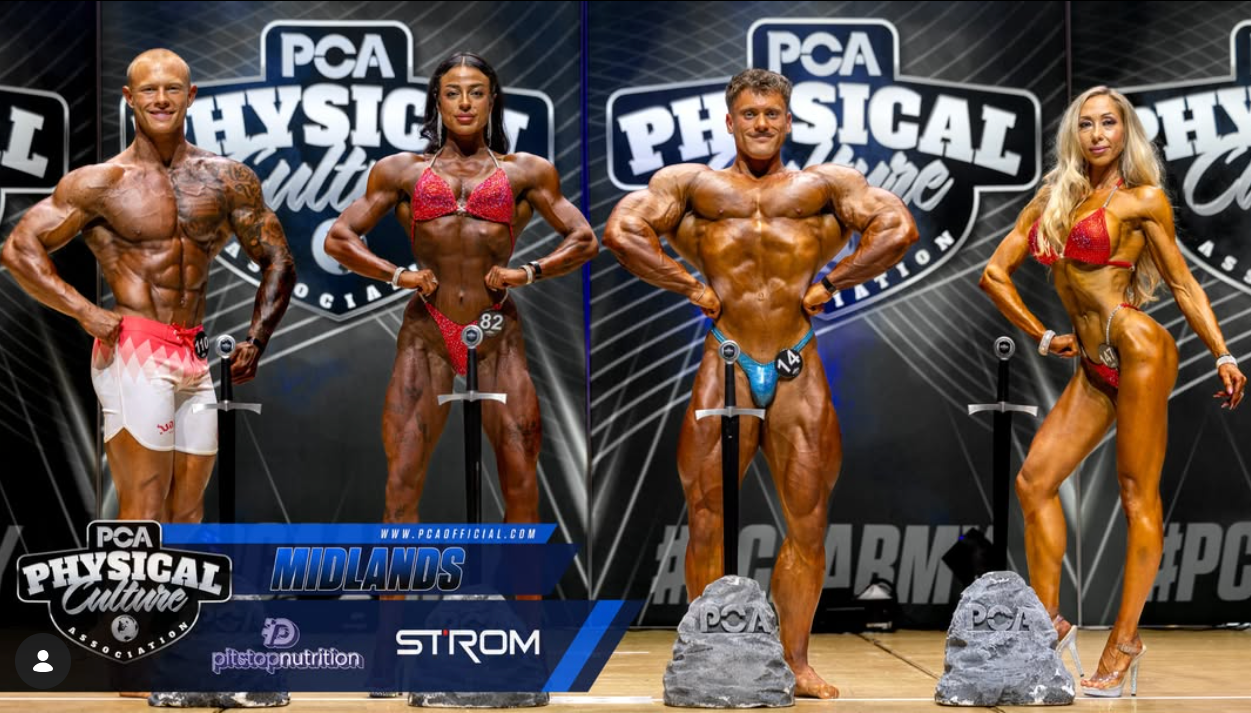
PCA Midlands took place on Sunday, September 13 at Birmingham Town Hall, with a full card running across Bodybuilding, Classic Physique, Men's Physique and Figure. Placings below are being added class by class as they're confirmed on stage – check back for updates, including the Overall Champions once posing is complete.
Bodybuilding
First Timers
1 Aaron Bosworth 2 Malachi Mcleary 3 Waqas Ahmad
Juniors
1 Samuel O'Keeffe 2 Jacob Tipper 3 Samuel Coulthard 4 Harry Smith 5 Jorge Donaldson
Novice
1 George Randall Johnson 2 Harri Sadler 3 Erwin Furman 4 Jake Doidge
Masters 40+
1 Lee Chambers 3 Rory Harris-Williams 4 Owen Farrell
Masters 50+
1 Brendan Hickey 2 Rocco Sestito 3 Leon Burgess 4 Darren Lindley
Men's Short
1 Connor Launer 2 Lewis Church 3 Diogo Moraes
Men's Medium
1 Matthew Howard 2 Sam Rogers 3 Jack Hearmon 4 Jacob Randall 5 Liam Farquhar
Men's Tall
1 Soren Valls 2 Alan Costa
Classic Physique
Short
1 James Alabaster 2 Ross Mccarthy 3 Karl Grayston 4 Harry Perkins 5 Marcus Lee
Medium
1 Cam Wales 2 Luke Layman 3 Farhad Rahmani 4 Scott Burns 5 Joshua King 6 Sam Ward
Tall
1 Tom Rhodes (after a pose-down for 1st) 2 Theo De Kerckhove 3 Marty Rice 4 Jack Clark 5 Matt Owen 6 Ben Walsh
Figure
Ladies Toned
1 Marianne Robson 2 Alisha Hannibal
Ladies Athletic
1 Rebecca Sheppard 2 Emma Burton 3 Elle Seville 4 Sarah Preece
Ladies Trained
1 Diane Davidson
Men's Physique
Junior
1 Will Fishlock 2 Jack Kelly
Masters
1 Joseph Stevenson 2 Mark Winder 3 Remon Moriss 4 Dam Gibbs
Bikini Short
1 Mol [no surname provided] 2 Alex Ogston
Bikini Tall
1 Lindsay Spence 2 Zlattie [no surname provided]
Bikini Trained
1 ZT [full name not provided] 2 Alice Robinson
Bikini 45+
1 Tara [no surname provided]
Wellness
1 Jasmina [no surname provided] 2 Lauren Lucas
Fit Model
1 Emma Perry
Overall winners
Bodybuilding: Samuel O'Keeffe
Figure: Rebecca Sheppard.
Men's Physique: Ollie Greaves.
Bikini: No name provided.
More to follow
This page will be updated as soon as they're posted.
Missing from the list? Email us on info@frontdouble.com
PCA Manchester Results – Middleton Arena, September 6, 2026
Full results from PCA Manchester at the Middleton Arena
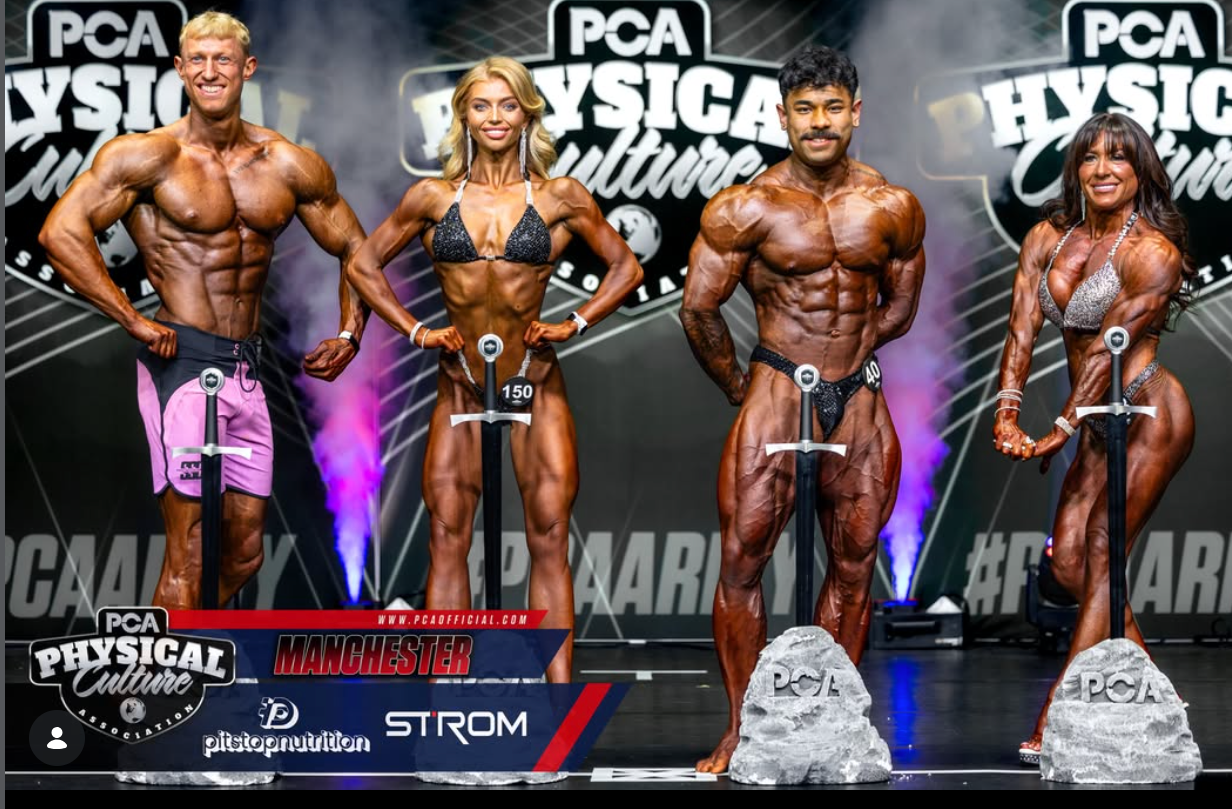
PCA Manchester ran at Middleton Arena on 6th September 2026, with a full card across Bodybuilding, Classic Physique, Men's Physique, Figure and Bikini. James McDermott took the overall Men's Bodybuilding title, with Scott Harrison topping Men's Physique, Cassandra Wright winning overall Women's Figure and Hannah Carpenter claiming overall Women's Bikini.
PCA Welsh Championships 2026 Results – August 30, 2026, ICC Newport, Wales
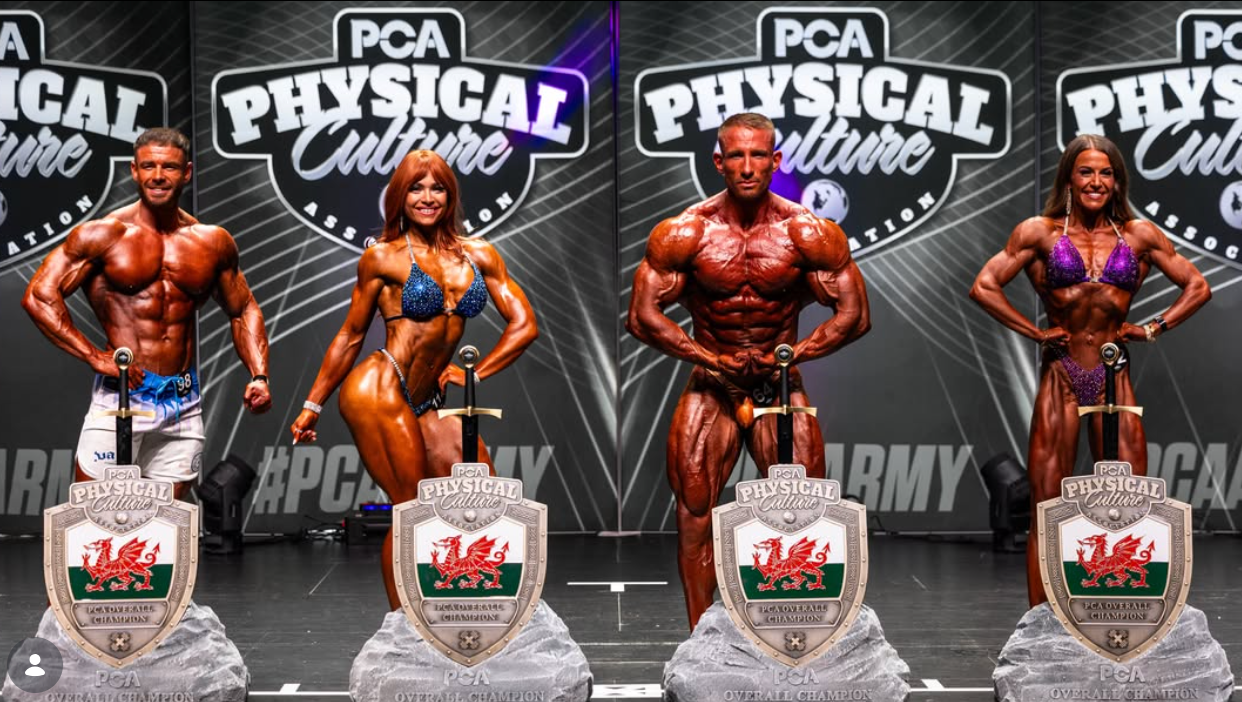
The PCA Wales 2026 brought athletes from across the UK to compete in bodybuilding, classic bodybuilding, physique and figure classes. Lloyd Rutter was the standout of the day, winning Men's Bodybuilding Medium before taking the Overall Men's Bodybuilding title. Jack Mercer completed a double of his own, winning Men's Physique Short and the Overall Men's Physique crown. Other class winners included Tommy Miles (Classic Bodybuilding Tall), Morgan Phillips (Classic Bodybuilding Short), Zack Gibson (Masters 40+) and James O'Neill (Masters 50+). Full placings for every class are below:
First Timers Bodybuilding
1 Toby Brown 2 Stacey De Beer 3 Alex Berrow
Junior Bodybuilding
1 Samuel Coulthard 2 Mason Williams 3 Oscar Tucker
Novice Bodybuilding
1 Josh Law 2 Emmet Maguire 3 Jason Holmes 4 Keith Phillips 5 Connor Cooper 6 Bryan Brown 7 Connor Sullivan
Classic Bodybuilding Short
1 Morgan Phillips 2 Jamie Daniels 3 Jim Crossin 4 Pearse O'Callaghan 5 Andrew Challoner
Classic Bodybuilding Tall
1 Tommy Miles 2 Theo De Kerckhove 3 Josh Morley-Farmer 4 Matt Price 5 Caleb Keating
Masters Bodybuilding 40+
1 Zack Gibson 2 Vaclav Bouska 3 Artur Nowak 4 Rafal Kwiatkowski 5 Marcus Warner 6 Matt Hughes
Masters Bodybuilding 50+
1 James O'Neill 2 Leigh Bennett 3 Mark Bentley
Men's Bodybuilding Short
1 Daniel Leszczynski 2 Caine Small 3 Gareth Miller
Men's Bodybuilding Medium
1 Lloyd Rutter 2 Jack Hearmon 3 Don Valley 4 Arnas Auksakis 5 Jeremy Wray 6 Ryan Dolan 7 Liam Davies
Men's Bodybuilding Tall
1 Callum Jones 2 Callum Pyatt 3 Dan Pickstock
Ladies Toned Figure
1 Louise Hick 2 Cyanne Unis
Ladies Athletic Figure
1 Leanna Clark 2 Lucy Watkins 3 Sarah Preece 4 Chloe Finney
Ladies Trained Figure
1 Lindy De Beer
Junior Men's Physique
1 Scott Harrison 2 Will Fishlock 3 Antony Knott
Masters Men's Physique
1 Andy Barkes 2 Joseph Stevenson 3 Mark Winder 4 JT Mbae 5 Daniel Rogers
Men's Physique Short
1 Jack Mercer 2 Ahmed Salih 3 Matthew Prowting 4 Reece Bunting 5 Kerry Taylor
Overall champions
Overall Men's Bodybuilding: Lloyd Rutter Overall Men's Physique: Jack Mercer Overall Bikini: Full name not provided Overall Figure: Leanna Clark
"Both my legs, from the knee down, have no muscle and no nerves. My feet are paralysed. I can't feel them"
After being told she would never train, work as a Personal Trainer or bodybuild again, Rita Trotter has returned to the stage and won multiple overall titles
By Gary Chappell
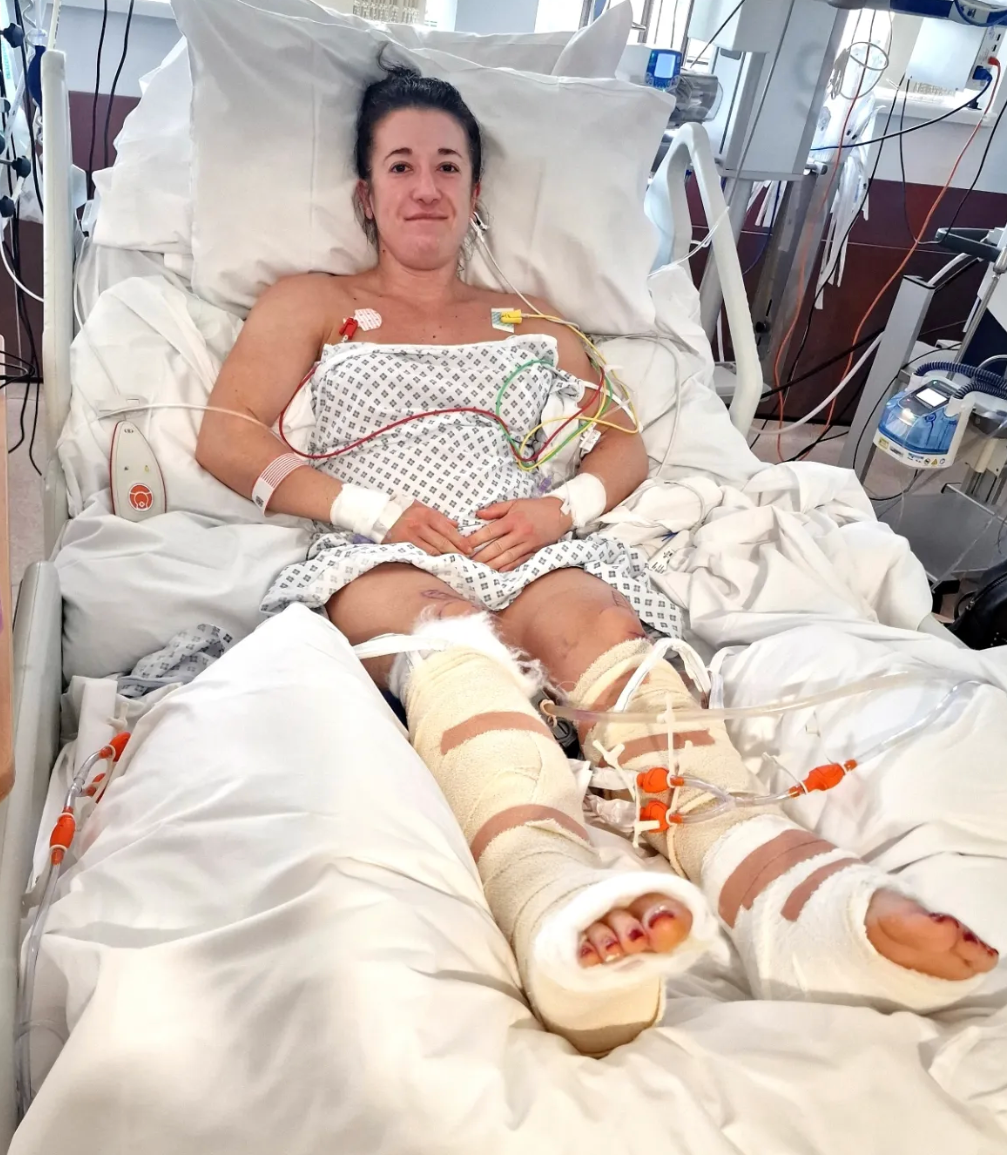
TWO years ago a surgeon told Rita Trotter she would probably spend the rest of her life on crutches, never work as a Personal Trainer again and never return to bodybuilding.
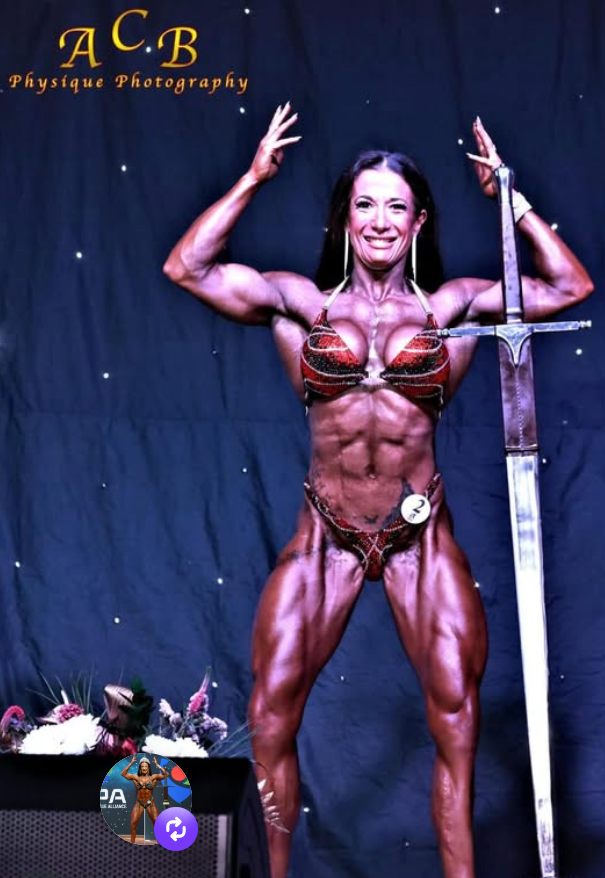
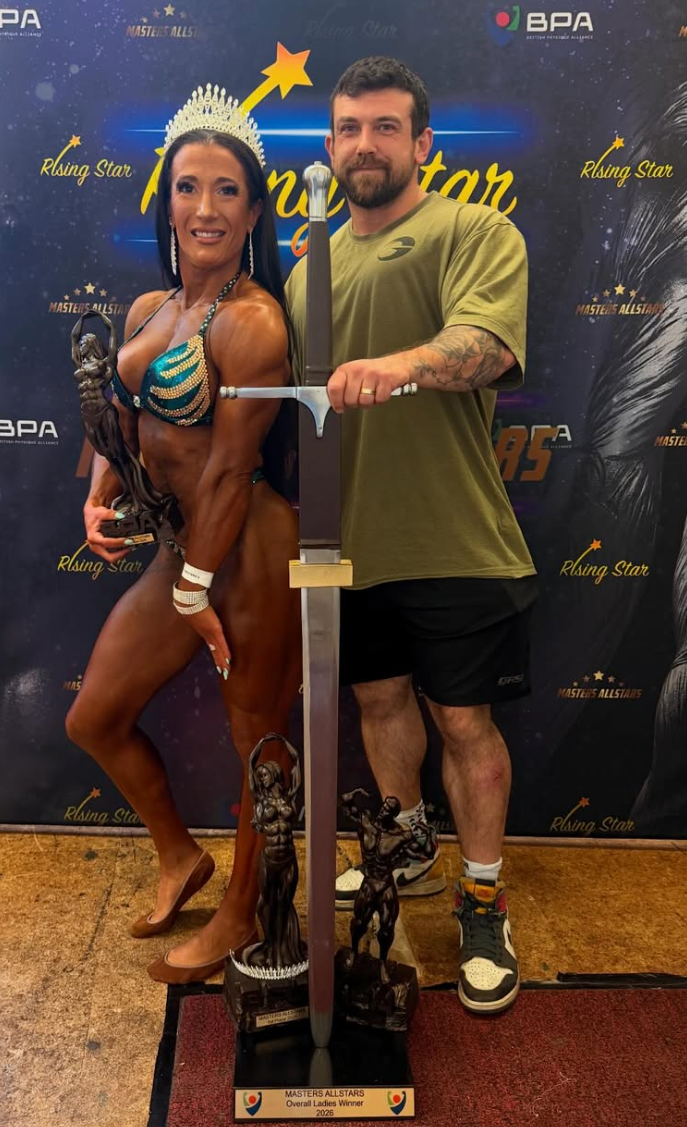
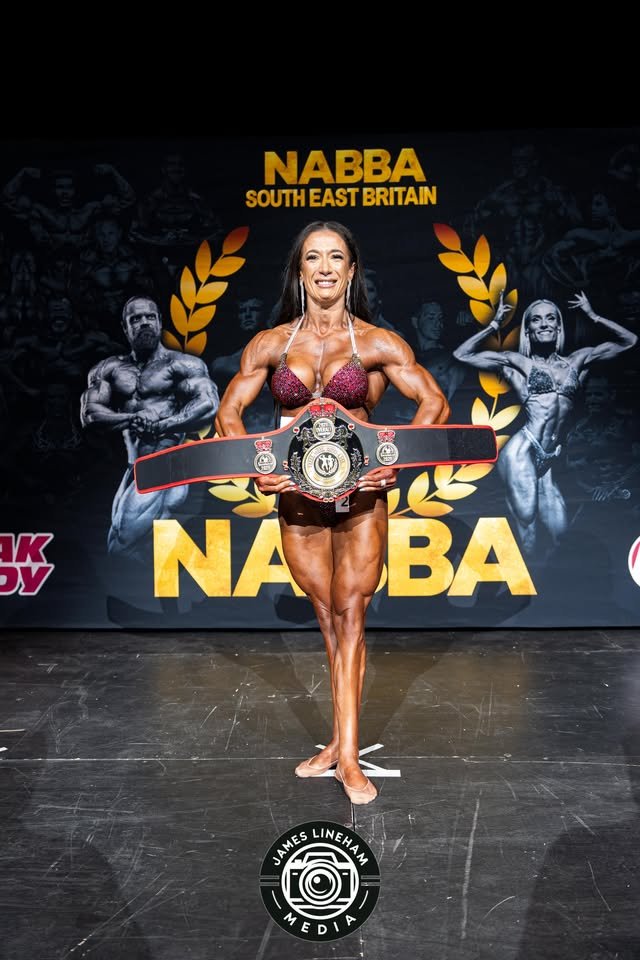
This season she has won her NABBA Pro Card, the PCA Universe qualifier overall and the overall titles at the IBFA Liverpool and BPA Masters AllStars.
But make no mistake, Trotter's achievements have come in the face of serious adversity. That devastating medical ordeal left her with paralysis from the knee down in both legs.
How a routine medical procedure changed everything
"I had cervical cancer about five years ago now," she told FrontDouble. "So I get annual checks just to make sure everything is OK.
"The blood tests came back a bit funny in July 2024, so they did a cervical biopsy. Everything was fine. No cancer. All in remission."
The biopsy itself, however, led to complications.
"The biopsy caused an infection," she said. "The infection spread to my kidneys. The kidneys shut down."
What followed would change her life for ever.
"When the kidneys shut down, your whole body fills with fluid," she said. "My lower legs filled with fluid. It's called compartment syndrome. It crushed all the muscle and nerves. They couldn't save it.
"So both of my legs, from the knee down, have no muscle and no nerves. My feet are paralysed. I can't feel them."
'My feet are paralysed. I can't feel them'
It means every step she takes – both on stage and in everyday life – has to be relearned and carefully managed.
"So I'm only moving and posing by practice," she said. "I can feel knee up. I know what my quads are doing. But I have no idea where my feet are. I'm having to guess because I can't feel the stage."
The injury has forced changes most competitors never have to think about.
"I can't wear heels anymore at all," she said. "I can't move my feet."
Despite being officially registered disabled, Trotter refuses to allow the label to define her.
"I'm registered disabled now," she said. "But I can beat able-bodied people. It [her disability] doesn't show. Most people don't even notice."
Watching Trotter win the overall title at the NABBA South East last month, FrontDouble was surprised to learn she was registered disabled when the subject came up during an on-stage interview.
The evidence of what happened is visible – but you have to really look for it. Scars run down her lower legs where surgeons removed damaged tissue following the compartment syndrome.
"That's what the big scars are," she said. "That's where they took all the muscle and nerves out. There's nothing down there."
The surgeon said she would never bodybuild again
Yet perhaps the most remarkable part of Trotter's story is not what happened to her, but how she responded.
"The surgeon said, 'You'll never train. You'll never be a PT again. You'll never bodybuild. You'll probably be on crutches for the rest of your life.'
"And I went: 'Screw you. Not having it.'"
That attitude has carried her back on to the bodybuilding stage.
Ironically, one of the biggest dilemmas she faced after returning to competition was whether to compete in disability categories at all.
"When my coaches, Sarah and Jordan Fern of TeamFAF, and I first started discussing my competition season, we looked carefully at both disability and able-bodied categories. It was never a decision taken lightly and we had many conversations about where I would be most appropriately placed.
"My disability presents challenges, but thanks to my splints and the rehabilitation I've gone through, I am still able to train in a way that is much closer to an able-bodied athlete than many competitors in disability divisions.
"There are athletes competing in those categories who face far greater physical limitations than I do and I have enormous respect for every one of them. For me, entering disability classes didn't feel like the right fit. Not because those categories are any less valuable, but because I felt it would be unfair to athletes whose disabilities significantly affect how they can train, perform and compete.
"Together, my coaches and I agreed that the able-bodied route would allow me to challenge myself against the strongest competition available while ensuring I was competing in the most appropriate category."
Rita Trotter's enormous praise for her coaching team
That determination recently led to one of her proudest achievements – beating her posing coach. She said: "I couldn't have reached this point without Sarah and Jordan. They have been with me before, during and after my diagnosis.
"My disability was completely new territory for all of us, yet they embraced every challenge, adapted my training when needed, believed in me when I struggled to believe in myself and guided me through every stage of the journey.
"Their support, knowledge and encouragement have been instrumental in every success I've achieved.
"One of the proudest moments of my competitive career came when I won the NABBA South East overall title. Standing in the overall line-up against my own posing coach, Sarah, was genuinely one of the most intimidating moments I've ever experienced on stage.
"She is an exceptional athlete and an outstanding poser and I know first hand how much work, skill and dedication she brings to the sport. To stand alongside her was an honour in itself. To narrowly edge out the win was something I never expected and a moment I will always treasure.
"More than anything, it was a reflection of how well she has coached and taught me. Sharing a stage with someone I respect so much, then coming away with the title, remains one of the most meaningful achievements of my bodybuilding journey."
Learning to walk, pose and compete again
Away from the stage, everyday life still requires adaptations. Trotter relies on specialist splints attached to her shoes to walk normally.
"Those plastic things you can see coming out of my shoes are splints," she said. "In normal life, you walk heel-to-toe. I can't do that because I can't move my feet.
"So the splints lift my feet for me and move them as if I was walking normally."
Yet throughout the interview, there is little self-pity. Instead, there is acceptance. And perhaps more importantly, perspective.
"The thing I've told people is I'm no longer trying to be the old me," she said. "I'm just trying to be the best version of the new me. And whatever I do now, I try to see it as a positive.
"How can I use this to show people that disability doesn't mean you stop doing stuff?"
For many athletes, losing the ability to feel both feet would have marked the end of a bodybuilding career.
For Rita Trotter, it became the start of a different one.
PCA Masters Championships: Pro Cards not limited to overall winners
The federation says the number of Pro Cards will depends on the size of the event and quality of athletes
By Gary Chappell
THE PCA has suggested that more than just overall winners at its new Masters Championship could be awarded pro cards.
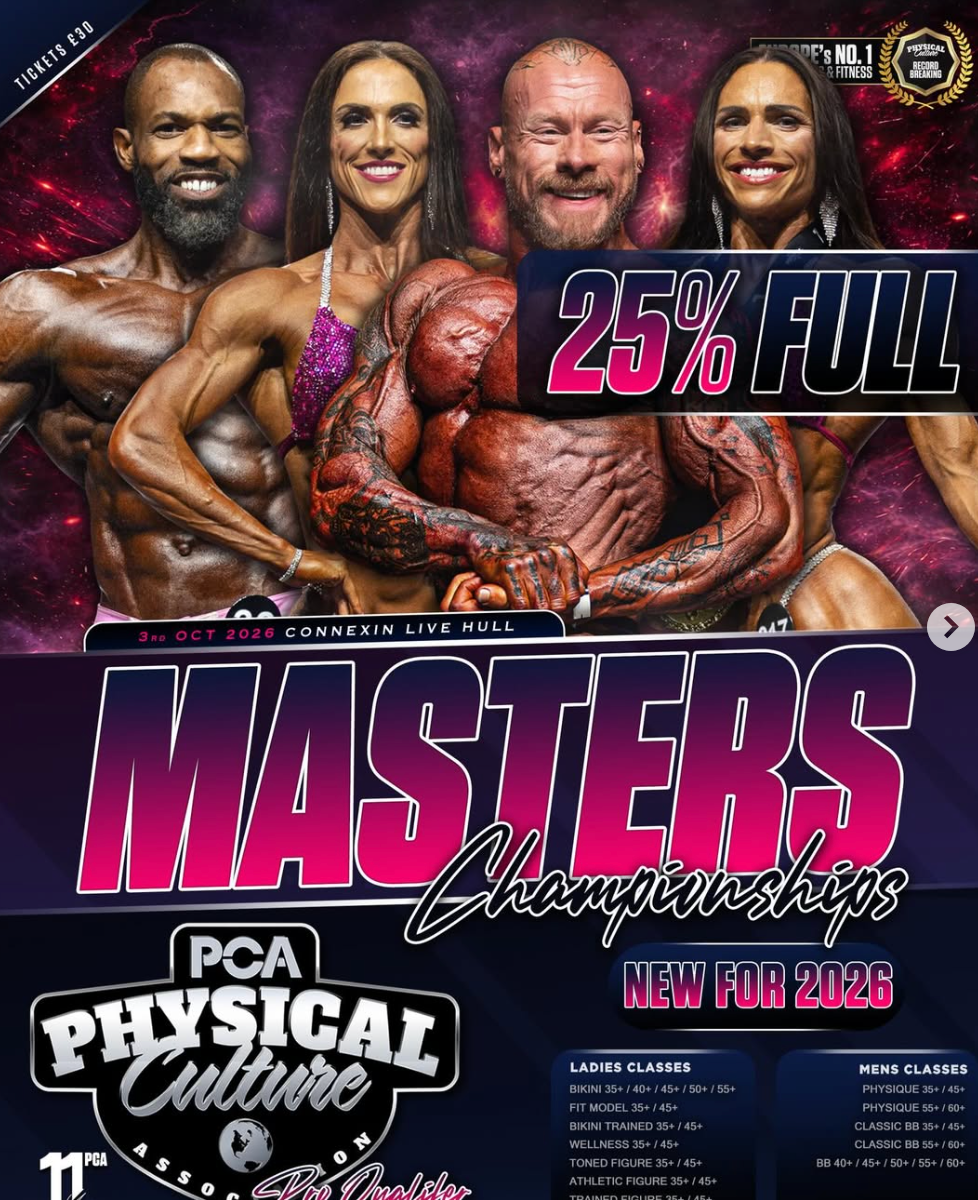
The contest, to be held at the Connexin Live Arena in Hull on October 3, will be the federation’s first event dedicated exclusively to Masters competitors.
While it was already understood that this show would be a pro qualifier for the PCA's Masters Pro Division, the exact number of cards had not been clarified. However, the PCA has now made clear that there will be no fixed quota and that the final decision will rest with the judging panel on the day.
Speaking to Frontdouble, the federation said: “The total number of Pro Cards awarded will depend on the size of the event and the quality of the athletes competing. There is no set quota and the final decision will be made on the day by our head judges.”
The PCA also stressed that Pro status would only be awarded when the standard justifies it.
The federation added: “PCA is committed to maintaining the prestige and exclusivity of its Pro Status by awarding it only to the most deserving athletes. The Pro Card will never be granted automatically or by default.”
The wording suggests that Pro Cards may not be restricted solely to overall winners at the PCA Masters Championships, as is often the case at amateur bodybuilding shows. In fact, PCA Pro Cards are only usually awarded at its flagship events, such as the Universe, British Championships, Worlds and UK Open.
Instead, it appears that individual class winners could potentially earn Pro status if the standard is high enough, giving more Masters competitors a genuine opportunity to turn professional.
The PCA Masters Championships is expected to attract strong interest from older competitors across the UK – with the show already 25 per cent full.
With the number of Pro Cards ultimately dependent on the calibre of athletes who step on stage, the message from the PCA is clear: earn it on the day.
This season's full UK bodybuilding show calendarHERE.
This season's bodybuilding results from recent PCA shows can be found HERE.
First-Time bodybuilding: Is the judging standard clear enough for beginners?
For anyone entering their first bodybuilding competition, one of the biggest unknowns is judging. While federations outline criteria such as symmetry, muscularity and conditioning, the reality on stage can feel far less clear, especially for first-time competitors.
COMMENTBy Gary Chappell
ARGUABLY the biggest show on the British amateur circuit in terms of sheer competitor numbers is the PCA First Timers. It’s enormously popular: well run, slick and carries an electric atmosphere. But in some of the so-called “bodybuilding” classes, the physiques being rewarded don’t actually look like bodybuilding physiques. Instead of dense muscle, maturity and mass, it’s the slimmer, more aesthetic look taking the top spots.
That raises an awkward but unavoidable question. What exactly are some of the first-timer categories supposed to be about? If they are bodybuilding classes, then muscle and condition should be king. If they more about symmetry and flow, then call them Classic. At the moment, competitors are chasing one ideal while the judges often seem to reward another.
For athletes and coaches, that inconsistency matters. Months of prep, dieting and posing can be undone by judging that doesn't appear to be aligned with the category title.
CHAMPION: Alan Costa delivered an incredible package but was arguably more bodybuilder than Classic
A First Timers show of incredible standard
Take the recent PCA First Timers Five, which took place on Sunday, September 21 in Telford.
The quality and standard of the competitors was incredible. These did not look like first timers – they were polished. The 450 entrants tell their own story of just how popular the PCA First Timers has become. There is no criticism here. The PCA has its way, does its own thing and clearly does it well.
Take the overall winner, for example – Alan Costa. A very deserving champion. He brought a superb physique, dense muscle and the kind of bodybuilding look that would stand out in any line-up.
But to reach that overall title he came through Classic Tall. With the greatest respect to Costa, there was very little that could be described as “classic” about him. He looked every inch the bodybuilder. It raises the question: if a physique like Costa’s – clearly bodybuilding in nature – is winning Classic and classic-looking physiques are winning 'bodybuilding' categories, how are competitors supposed to know what look to aim for?
MATT FINISH: Ford was awarded fourth place in Junior Bodybuilding Tall
Size not always rewarded
Then look at the Junior Bodybuilding class, an enormous category that had to be split into height classes due to the sheer numbers. Even then, the Junior Bodybuilding Tall class had 14 athletes.
As they took their positions on stage, one stood out. Matthew Ford was considerably bigger than any of his 13 rivals. He had incredible mass and good condition — enough, you would think, to win a bodybuilding class. But he was awarded fourth place.
The three men given the nod ahead of him all had good physiques, but not nearly as much muscle. And remember, this was Junior Bodybuilding, not Junior Classic.
It is this inconsistency that confuses. Think of it like trying to hit a moving target while riding the world’s fastest rollercoaster. Bodybuilding will always be subjective, but when results don’t match the class criteria, competitors paying their fees are entitled to question it.
TALL ORDER: Michael Wallaberger's classic lines were given the nod in Junior Bodybuilding Tall
Another example came in Bodybuilding Medium. Luke Blake displayed pro-level muscle and will surely earn his IFBB Pro card at some point. He had more than enough size to dominate his class. Yet the victory went to a much smaller competitor.
Blake’s midsection wasn’t as sharp as it could have been – his condition likely cost him. But when someone carries that much muscle, to overlook them almost feels like an active avoidance of rewarding the bodybuilding look.
TIGHT AT THE TOP: The mass of Luke Blake (far left) was not enough to beat Bodybuilding Medium winner Stephen Eley
Has the PCA drifted from bodybuilding?
You do have to wonder whether the PCA is moving away from bodybuilding per se and leaning toward a “prettier” look in their winners.
Because as good as Costa was — and he was outstanding — if his look was “Classic,” then how did he manage to beat Bodybuilding Tall winner Josh Davis for the overall? Davis was peeled, with full striations across his glutes, carrying both size and condition. Yet he wasn’t considered good enough for that overall sword.
So the question remains: is the judging criteria at these First-Timer shows clear enough?
Either way, the competitors — the lifeblood of the sport — deserve clarity.
The key was in the detail of what Rosiek revealed next. The reason for this, he revealed, was because the federation were looking to introduce a Pro League in 2026. Basically, they need to build an army first.
That NABBA Pro League, says Rosiek, will look to include pro shows at every area show. As it stands, there are nine NABBA area shows, not including the NABBA England.
A BRIT SPECIAL: Matt Griggs won his NABBA Pro Card at last year's British Finals
Then, don't forget, there is the NABBA British Finals and NABBA Universe. Altogether, that means a potential Pro League of 12 shows.
Which other federation currently offers 12 competitions for professional athletes? The IFBB Pro League and the IFBB Pro federation. That's it.
The PCA currently offers pro competitions at the Universe, British Championships and World Finals.
But what NABBA are offering could change the landscape entirely. A proper British-based Pro League.
The key question, however, is this: Where is the money coming from?
Naturally, frontdouble.com has already asked NABBA this very question. The response was: "Our marketing team will be releasing and sending out a press release regarding this soon."
First of all – and with the greatest amount of respect – who knew that NABBA had a marketing team?
Secondly, we must return to something else Rosiek (below) said in his post from Tuesday, January 7.
"This means there will be lots of prize money. And it means a pro can earn proper money, which is what a pro is deemed to be," said Rosiek.
So how much is "proper money"? Some pros in both the IFBB Pro League and the IFBB Pro federation offer £15,000 as first prize. Is this what we are looking at? Or are we looking at something akin to the current PCA top prizes of £2000? Maybe it is somewhere in between. Whatever the case, NABBA must have some pretty concrete deals in place in order to be confident enough to use the language in which they have used.
What is certain is that if NABBA get this right, a proper British pro league is something UK bodybuilding is crying out for. Money talks at the end of the day. So for all their shortcomings over the past few years, NABBA could just have struck gold.

Leave a Reply