Prep diary of a Masters bodybuilder Ep.3: Teeth falling out, a prep kitten and my opening win
A week of contest prep, family life, work, fatigue and increasingly precise attempts to get my physique right for the next four shows – with the next one my 2Bros debut
Saturday, September 19, 2026 – show day:
I wake at 6am. No tan on the white bedding because both coats are being sprayed this morning. But as has happened once or twice over the past few weeks, I get sharp pains in my stomach. I struggle to find decent lighting in the Airbnb but take pics and weight and fire them over to Nathan, who has just landed in Vegas as he plots the 212 Olympia debut for his client Yinka Majolagbe. They are eight hours behind, he's had a 10-hour flight and it's getting late stateside. Without fail my phone lights up within minutes; espresso and 5-10min walk to get things moving. I venture out into the morning light, wander round a park, past a squirrel ruffling the feathers of a flock of hungry pigeons then, of course, a Ghostbuster van.
Meal 1 goes in; 100g Hydrorice – rice pudding to you and me – whey and honey. Pics and weight in two hours. Water and salt consistent.
As I prise the kids out of bed and the family gets ready, I wash up, make sure the place is clean for check-out and gather my bits together for the day ahead. I have tanning at 9am and expect to be on stage at 1.30pm. Short drive to the venue – seven minutes or so.
Tanning is, as it always is, delayed. I chat to mass monster Don Valley in the changing room as we both wait to stand together, naked, except for a sock. Amiable chap. We talk bodybuilding and its problems. We're clearly on the same page and I reflect how these shows always create friendly bonds with people who live the other side of the country. It is one of competitive bodybuilding's positives.
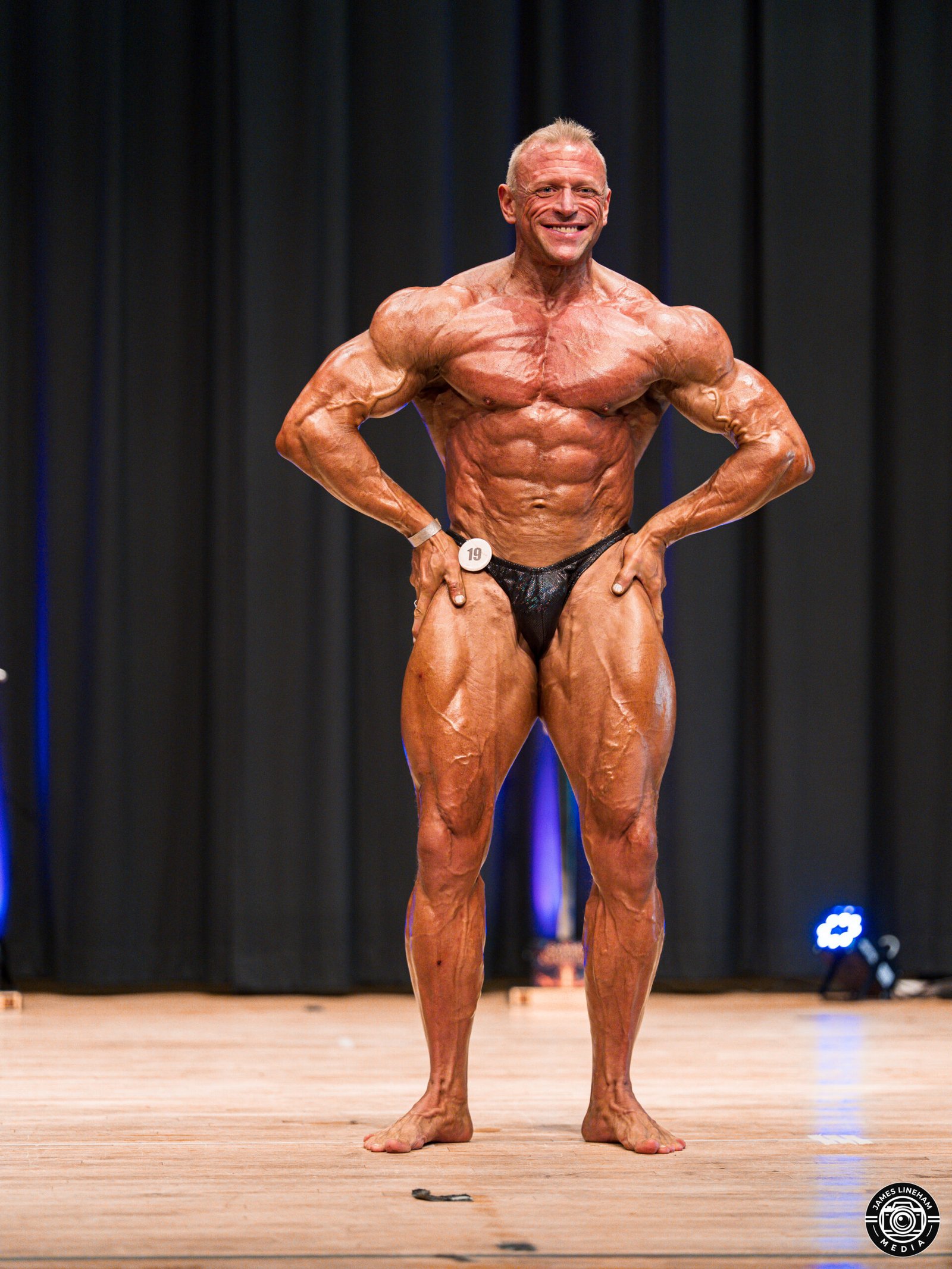
I finish tanning at gone 11 and realise the show has started and they are rattling through classes. That means they are ahead of schedule. I rush to get pics and weight to Nathan waiting more than 5000 miles away across the pond for my update. Messages struggle to go through due to dodgy reception and I'm feeling increasingly rushed. Finally they go through. I get my meal plan. Then I find out I'm going to be on much earlier than planned. We halve the meal and I just start pumping up. I'm now on in 30 minutes roughly, not 90. I stand behind the stage curtain as some guy I have never met rubs glaze into my skin. They call me on straight into my posing routine. I perform it to a backdrop of my wife and daughter's support. No rest as it finishes as they want me straight into mandatory poses. It is just me in the class. Happens sometimes. You just get on with it. At least I've won.
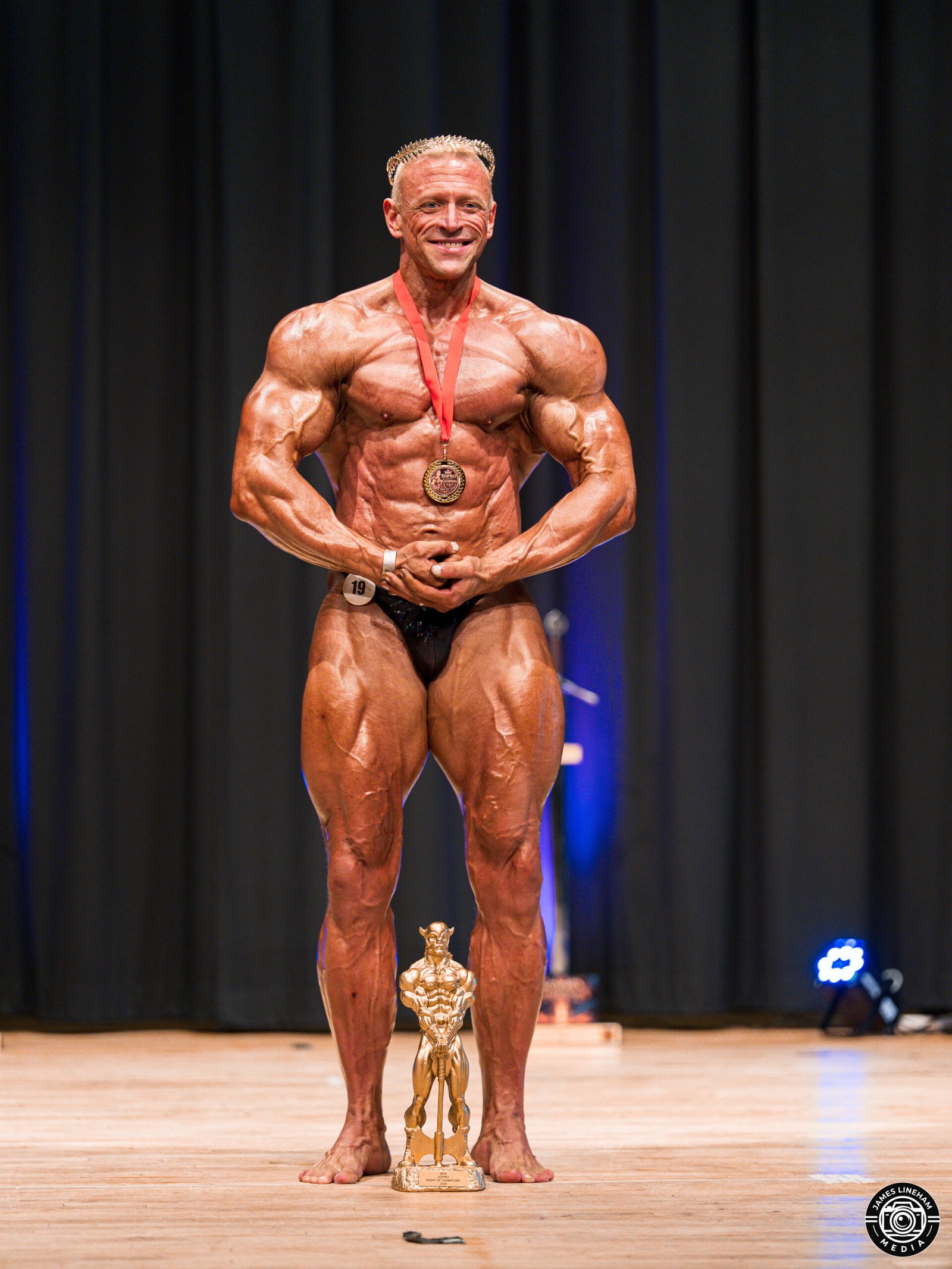
I'm surprised by my posing fitness - this never happened in 2024 BC [see previous diary entry]. My midsection control is excellent and breathing nicely under control. I'm confident, happy. It has gone well.
As the chance is there, I step into Class 2 - open bodybuilding - just for extra stage time. It is me and the friendly Don Valley. What a battle. Don outmuscled me. I out conditioned him. Today they want muscle and he takes the win. I'm pleased for him. He messages me later with very complimentary words about how I've helped him realise what he needs to do condition-wise to achieve his PCA Pro Card. I always struggle with people being positive. That and self-belief. I am working on it. Later, I win best poser, even though in my head I cannot pose. Overall, it is job done as we prepare for two more shows back to back.
I ditch my flip flops and change back into trainers for the three-hour drive home. As I drink a sugar-free energy drink and sugar-free fizzy to help navigate the M6 and M1, I start feeling more human again. I walk through the door at 8.30pm. Two meals to go and we reset for another competition in six days.
Sunday, September 20, 2026:
Back to baseline diet today. 1900 calories. Fully expected. I take my son to his football match for 9.15am. He is captain for the day and opens the scoring. The weekend seems to continue in a positive vein. He misses out on man of the match and seems upset afterwards. But I ask him: 'Did you put in a man of the match display today'? He did. I say: 'This is what we want. You keep your standards high, put in performance worthy of man of the match every single game, the rest is out of your hands. But do everything in your control to be the best'. It seems to lift him. I tell him he's done a good job, bank it and move forward.
The depleted feeling starts rinsing through me late in the day as the lower food starts to bite. The dog walk gets hard when this feeling returns. I do what feels like mountains of washing up and fold what also appears to be two tonnes of washing. Full client check-ins too. Many have cheated on their diet this week. It reminds that I haven't done that ever. And had nothing off plan since May. I get an insta message asking me to do a podcast. I'm told some people think I'm an icon. I wonder if she means eyesore. Who knows.
Monday, September 21, 2026:
Baseline diet again. More food expected tomorrow as we polish for the next show, my 2Bros debut. I need to do this UK regional qualifier so I can compete at the NPC European Masters in Milan. Last leg session today. Lots of writing too as I catch up from the weekend's exploits. Son got in the school football team, albeit the reserves. That'll do. He can build from there. Things are looking up.
Tuesday, September 22, 2026:
Carbs start going back in after two days on baseline diet. Regardless, I start to feel washed out. Strange, because there isn't even any cardio at this point. I have an overtime shift until 1pm, then a PT client, training, then straight to get the kids. Tuesday is always manic. I need to take my youngest to football training by 5.45pm. I try to eat first – but there's no chicken already done so I have to prepare more. With my wife on a 12-hour ambulance shift, I'm juggling plates. I put washing on, wash up the mess left from the morning rush, eat – finally – then dash out the house for football. I take my laptop so I can do some writing in the car but the laptop is low on juice and it dies quickly. Training ends earlier than usual because of the fading light but I'm still not home till nearly 8pm. Then I prepare dinner for the kids, eat again and take the dogs out. It's now 9.30pm. I have one more meal left, my head's spinning with stuff I need to do and haven't done, a million emails from the kids' school [why do they insist on sending so many?!] and a message to deal with after my son was given a detention for forgetting to bring in a whiteboard. This is his third week of high school. Their arbitrary rules are just so unnecessary.
I keep checking emails to see if anything has dropped from the literary agents I pitched. It's been about seven weeks since I finished re-polishing my children's picture book. I need another income stream and this idea has been in the works for years. I've had one rejection and silence from six others. Nothing from The Times, either, after two job applications for sports production and sports news editor; roles I have close to 20 yeas' experience in. At different points I remember I'm prepping for another four bodybuilding shows.
Wednesday, September 23, 2026:
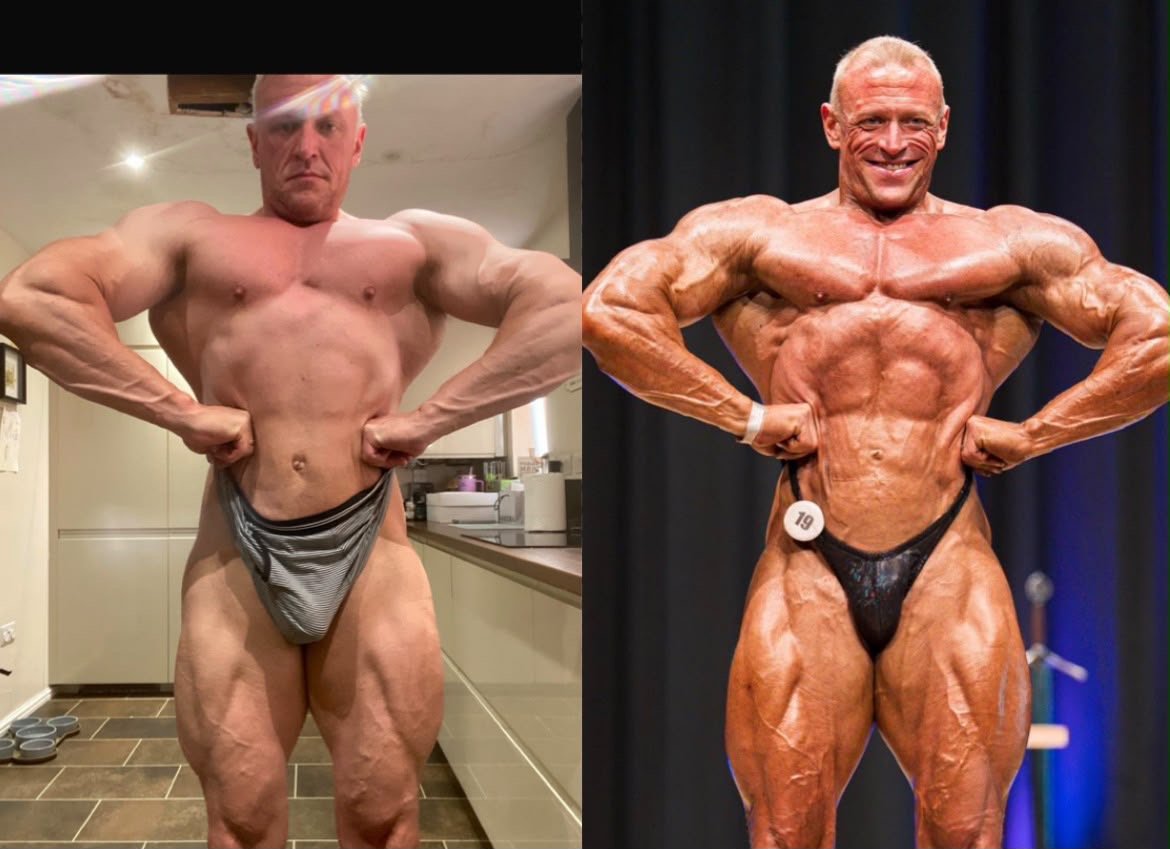
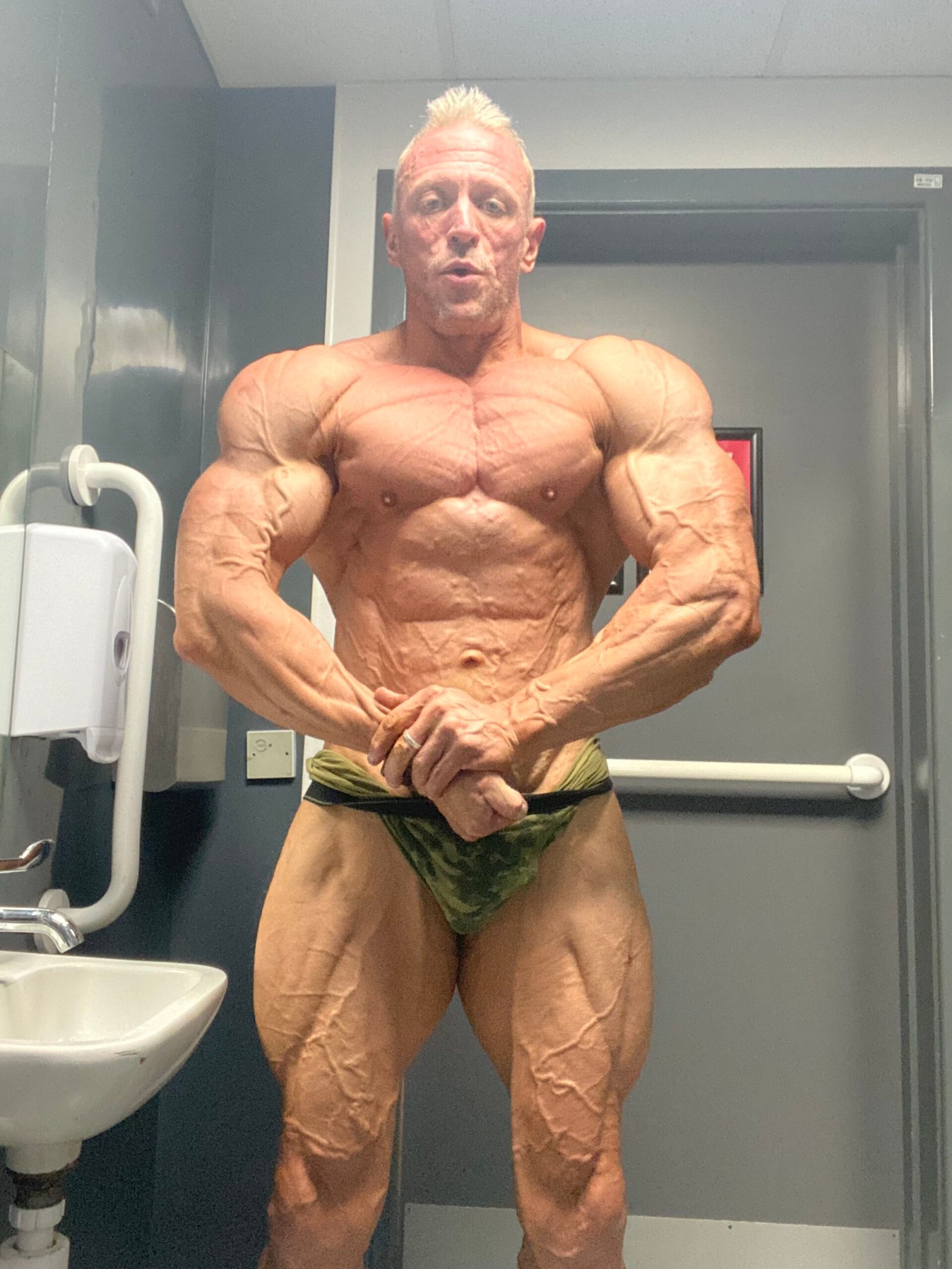
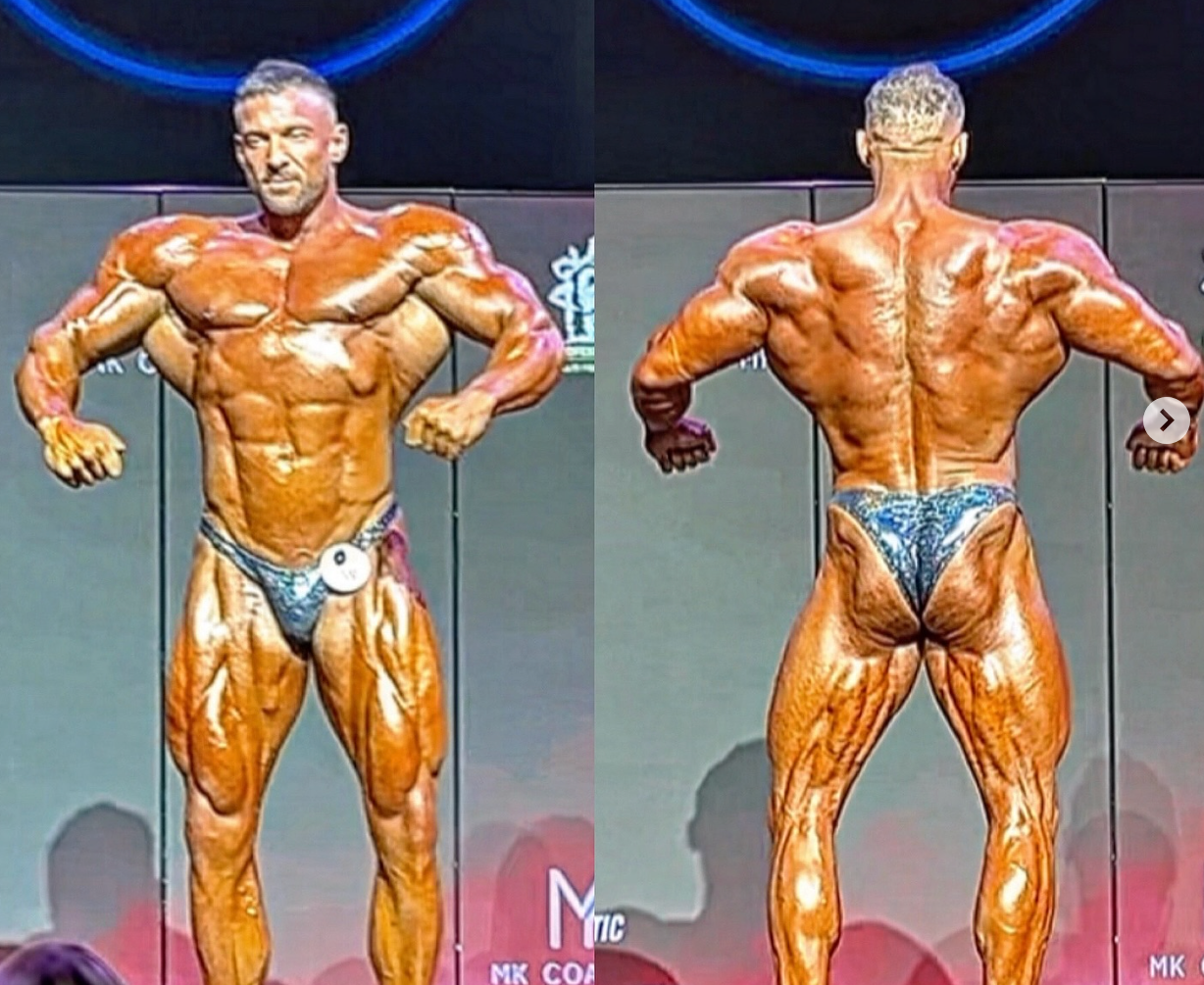
I'm up at 4.30am to do fresh pics and weight to ping to Nathan, who is eight hours behind in Vegas and who has been up since 4am himself preparing Yinka for his 212 Olympia debut. We exchange a few messages, then I go back to bed until 6.45am when I take more pictures, this time in the garden for natural light. They are so much better. I keep referring to my post-workout pics in the best bog in Thurrock and how I believe that look is even better than the stage look from Saturday. I never think official photos do the physique justice somehow. Or maybe I'm never happy. I sent Nathan some stage shots overnight and his reply landed: "Some of these shots are crazy". He mocks up our 12-week transformation from when we started working together saying "crazy 12 weeks work" and "should be super proud of these". Still, the thought persists that I can improve that stage look.
I'm tired at work today. Client at 9.30am, train, then straight into holding a circuit class. I eat soon after then retreat into my shell for a bit. I clean the treadmills and crosstrainers as it helps me think. I leave at 4pm and head straight to collect my son from school football training. His training overruns and I'm nodding off in the car. Three days out from show number two of five.
Thursday, September 24, 2026:
Up before the alarm today at 4.15am. Pics sent across the pond to Nathan. Then back to bed for all of two hours. Weight holding after two days of higher carbs so a few more going in today. We are trying to land a similar look to my post-workout fullness; dry and vascular. I take them after two meals and 2.4litres of water. So what I need to do on Saturday for my 2Bros debut is improve my pump-up routine. I won't be working out obviously. But in the past I have not pumped up very much for fear of blurring detail in the muscle when in fact, with me, the opposite appears to be true – and these post-workout pics prove this. As the day goes on, I get that empty, quiet feeling again. So I hoover and clean the gym simply to be alone with my thoughts. I feel rushed when I leave; writing bits for FrontDouble, preparing stuff to get to Milton Keynes on Friday in time for tanning and registration. My mind is not clear. I don't like this feeling.
Friday, September 25, 2026:
One day out from show two of five, my 2Bros debut. I wake groggy after a bad night. Dreams were wild and weird. First, I dreamt my teeth suddenly starting falling out one by one. Then I dreamt my plans dropped from Nathan for my next show and he wanted to me to buy a kitten. I can remember thinking, why the hell do I need this? I already have four dogs.
I work the early shift today 8-12. Food is pulled back slightly. We are trialling the look without Peak Max this time. Everything has looked ideal day after day, following two meals, two litres and a workout. So we are not adding any more variables. On Saturday we just repeat, two meals, two litres and I fix my backstage pump-up protocol by doing a bit more and not worrying whether I'm going to blur any lines. Looks like I need more of a pump up, not less. These two qualifying shows will serve the perfect purpose of refining for the more important trio to come; the PCA Masters next Saturday, October 3, the PCA Britain and the NPC European Masters.
I finish work at 12, get home, get my bits together, collect the kids from school at 2pm – early finish Fridays – then head to the venue at Milton Keynes. Loads of motorway traffic as usual. And once again I have to stop at a services to use the toilet, which they helpfully locate 400,000 miles away from the car park. I switch to passenger and let Laura [my wife] drive. I click the heated seat button and doze off, waking on M1 to yet more traffic. We arrive just in time for me to dash behind an outbuilding and because I'm busting for the toilet yet again. Base coat of tan goes on. The spray is freezing. We then get diesel but due to a couple faffing at the pump and then the pump not reading the debit card, I somehow lose my reading glasses. Stress after stress. We finally reach the Airbnb, I eat and settle down to get some writing done ahead of tomorrow's second outing.
MORE FROM FRONTDOUBLE:
Prep Diary of a Masters Bodybuilder: Episode 2 – Learning to let go
Prep Diary of a Masters Bodybuilder: Episode 1 – The Road to Milan begins
Road to Milan: Sibel Osman opens Her 2026 season on the anniversary of her father's death
'Sick of the bitching' – Sibel Osman on privilege, opportunity and keeping the bar high
"Masters, stop comparing yourself to younger athletes"
Masters Series Ep.2: "We are not taken as seriously as we should be"
Introducing the Masters Series with Sibel Osman
BODYBUILDING RESULTS
ATHLETE PROFILES
HEALTH AND EDUCATION HUB



Leave a Reply