IBFA UK Cumbria 2026 saw Lee Chambers and Tracey Milligan take the overall titles, across a card spanning Bodybuilding, Classic Physique, Men's Physique, Figure and Bikini.
Bodybuilding
Men's First Timers
1 Anthony Clague 2 Leon Thompson 3 Josef Murray
Women's First Timers
1 Annabelle Smith 2 Rachel Halbert
Men's Novice
1 Luke Jones
Women's Novice
1 Rachel Halbert
Men's Over 40
1 Lee Chambers 2 Mark Coulson 3 Anthony Clague
Men's Over 50
1 Ian Stevenson 2 Barry Hyslop 3 Derek Gorman
Men's Over 60
1 Alex Large 2 Dave Stecca 3 Laurence Dunne
Women's Open Over 40
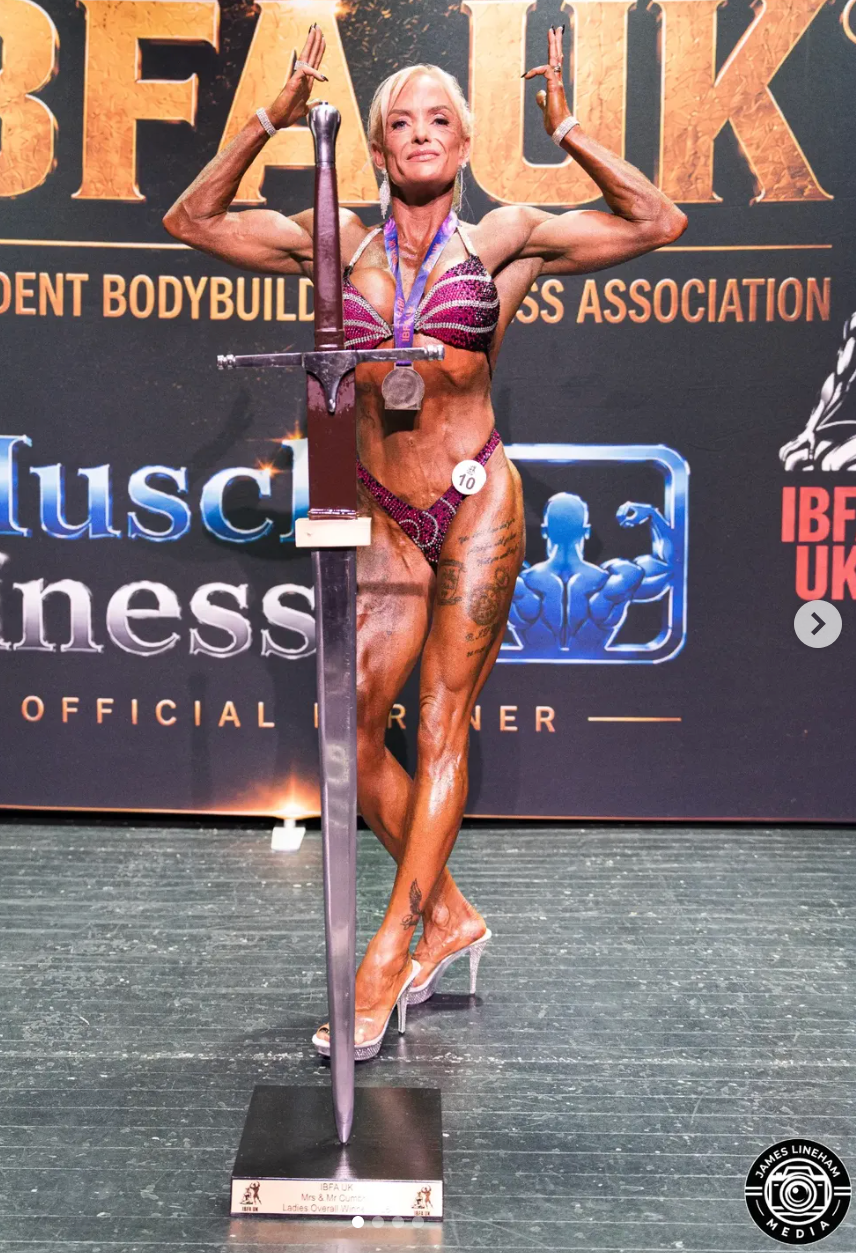
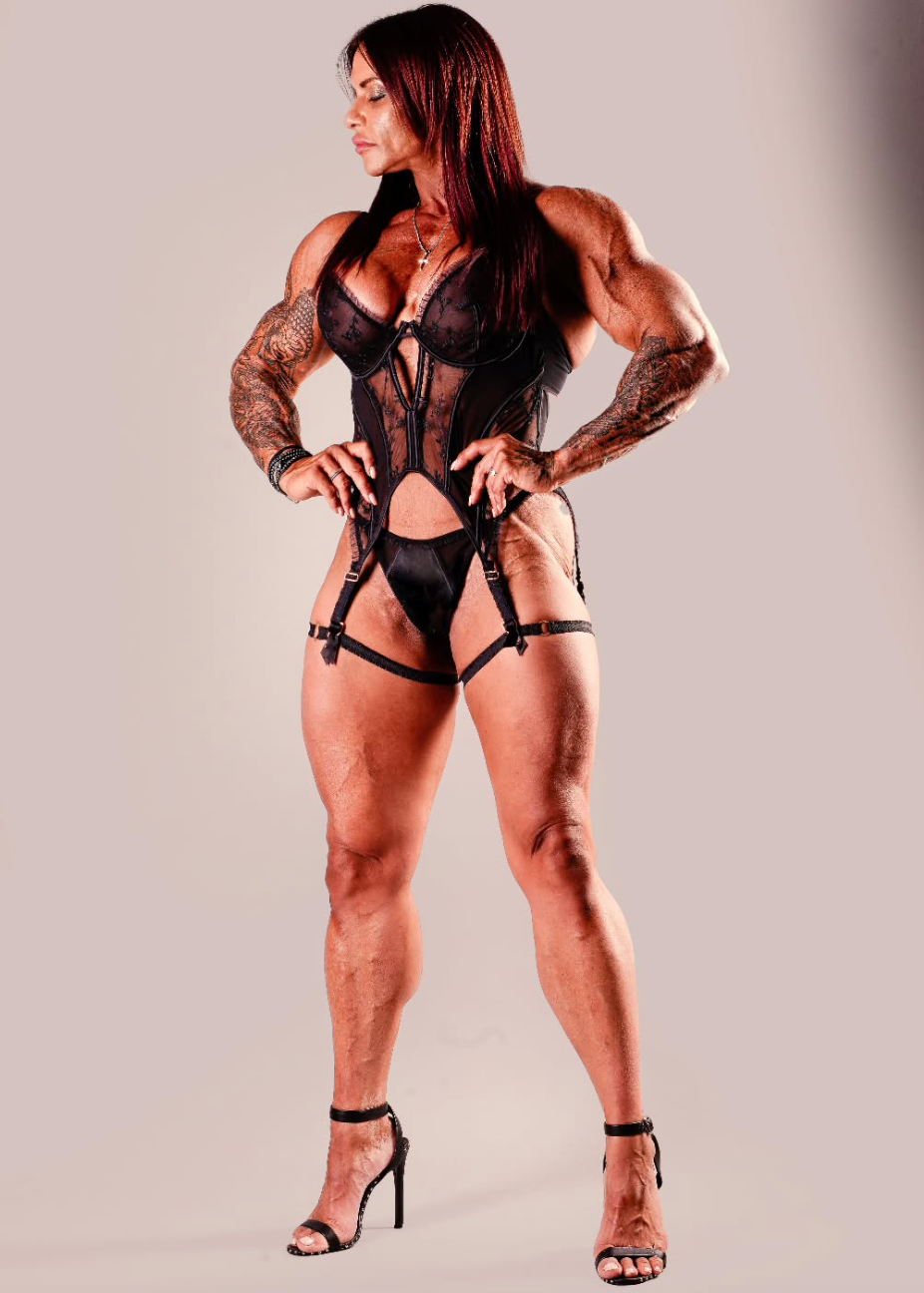
1 Tracey Milligan (above)
Class 1
1 Lee Chambers
Class 2
1 Richard Benson
Class 3
1 Mark Coulson 2 Barry Hyslop
Classic Physique
Short
1 Ryan Fell 2 Luke Jones
Tall
1 Daniel Saadat 2 Ryan Maughan
Men's Physique
Open
1 Ryan Maughan 2 Cameron Osborn
Figure
Ladies Athletic
1 Tracey Milligan
Ladies Trained
1 Tracy Davey
Bikini
Open
1 Annabelle Smith
Over 35
1 Kelly Trueman
Overall Champions
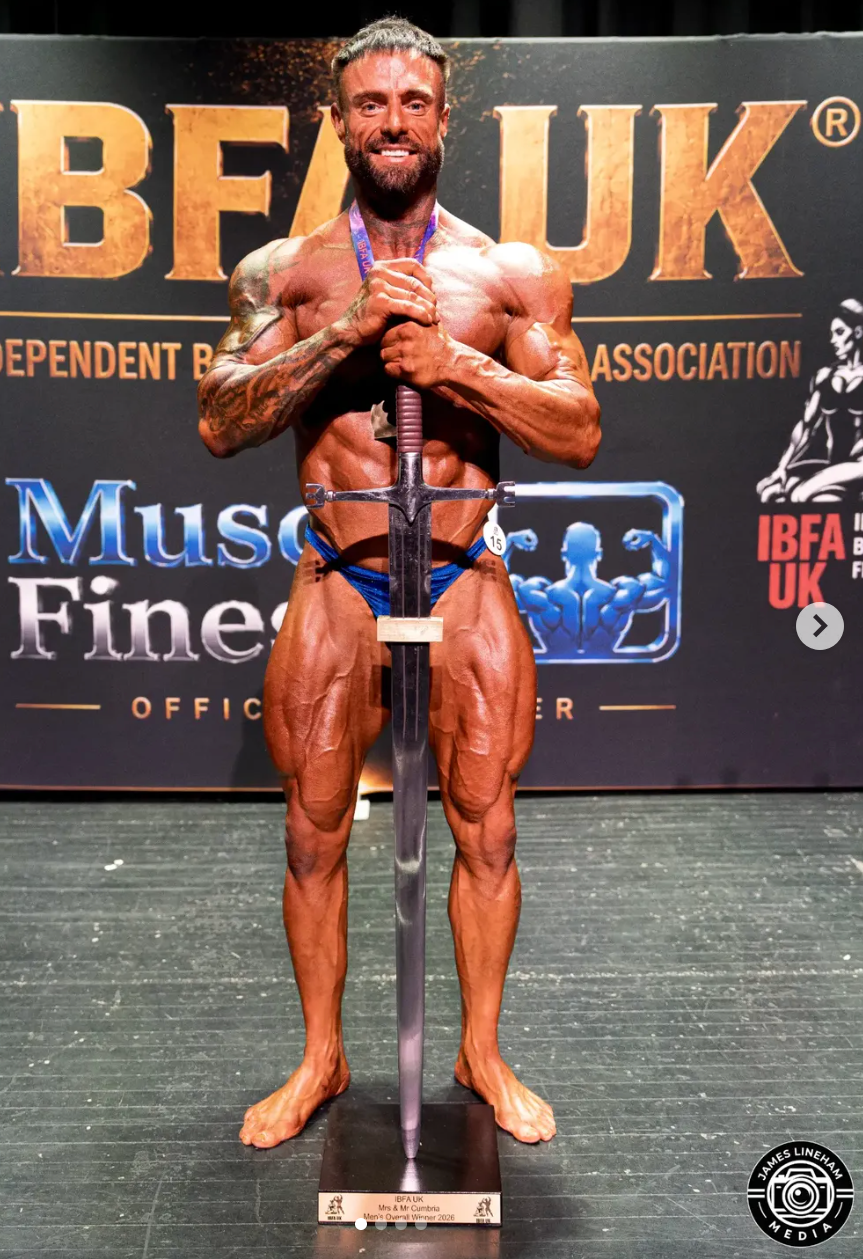
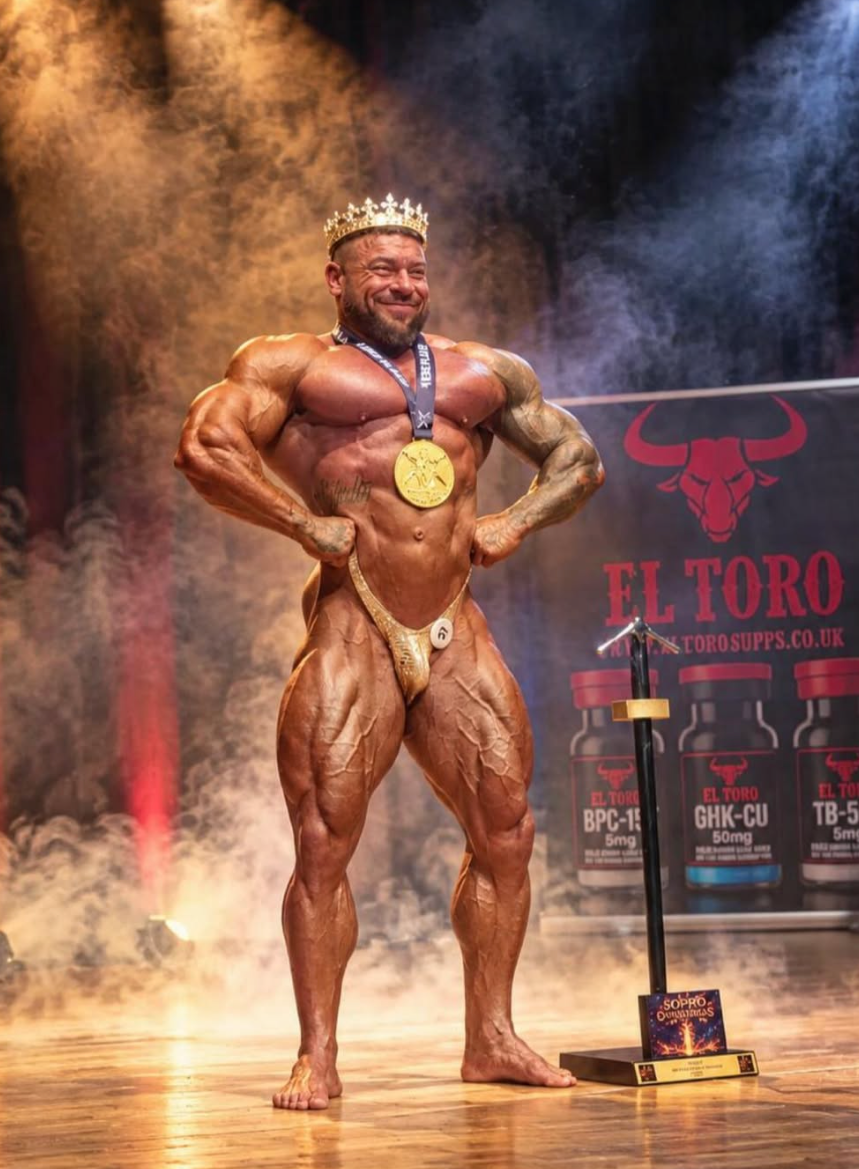
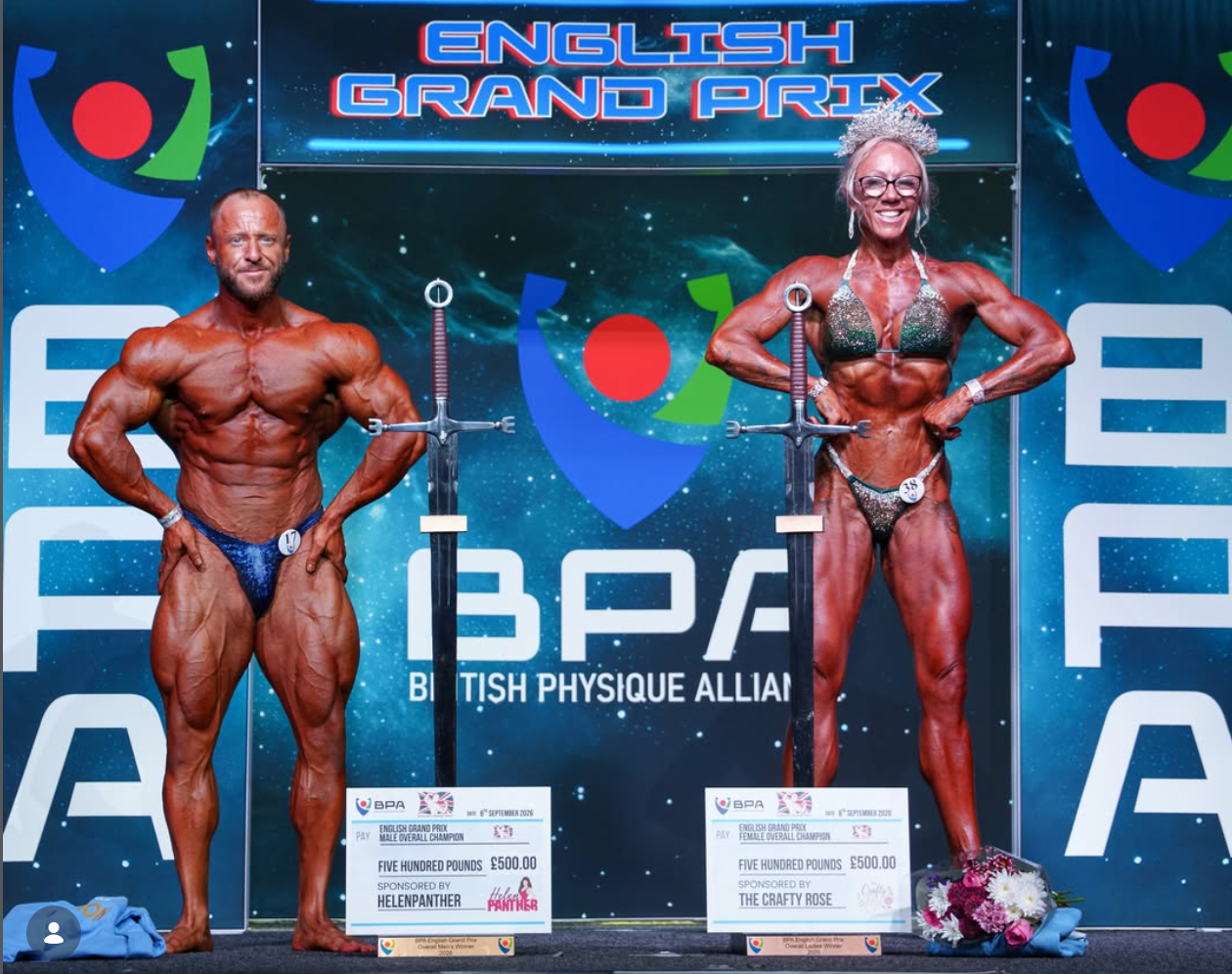
Overall Male: Lee Chambers (above) Overall Female: Tracey Milligan
NPC Worldwide Physique Pro Natural Classic Results – September 26, 2026
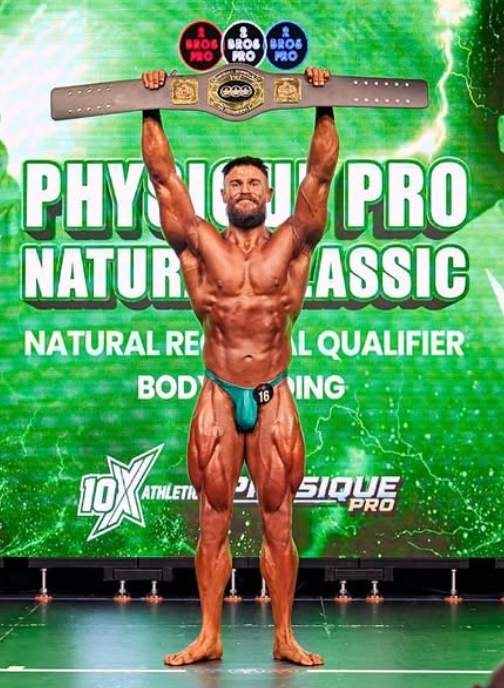
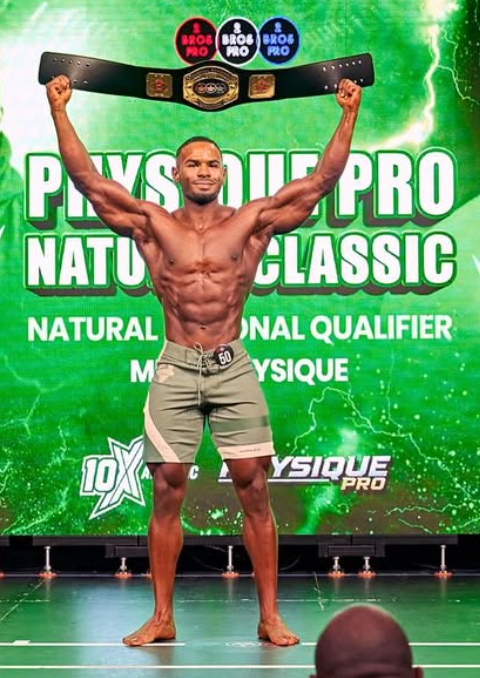
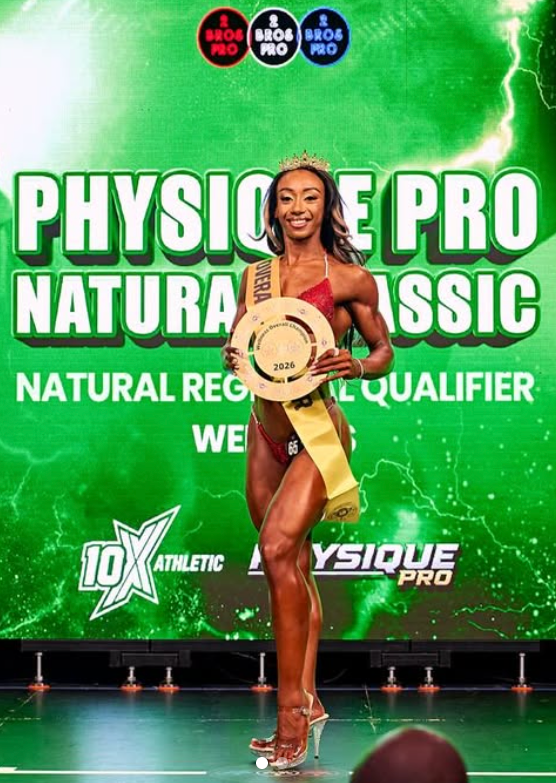
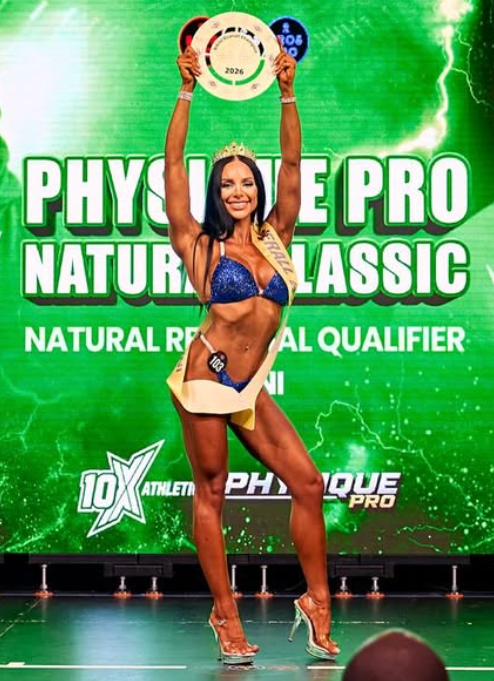
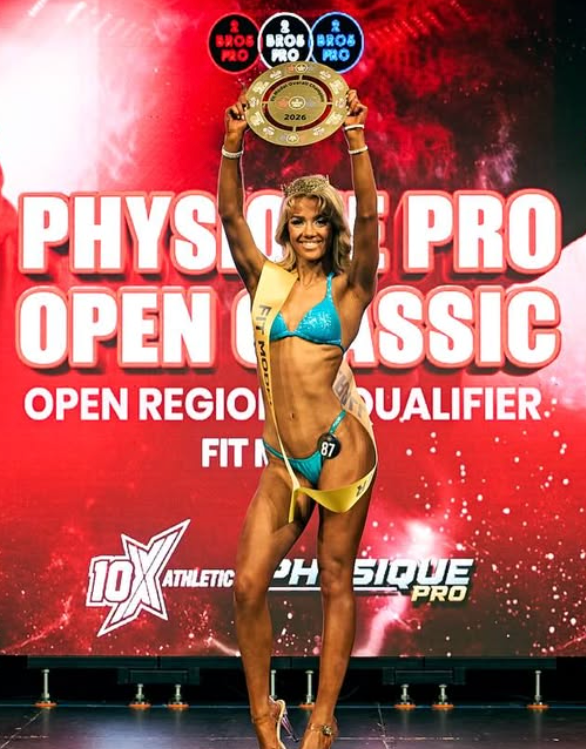
NPC Worldwide's Physique Pro Natural Classic ran on 26th September 2026 alongside the Open Classic, with a full card spanning Bodybuilding, Classic Physique, Men's Physique, Women's Physique, Figure, Wellness, Fit Model and Bikini. Jordan Long took the overall Men's Bodybuilding title, Divine Nwankwo topped Classic Physique, Ahmed Salih claimed Men's Physique, Seren Cooper won Figure, Melissa Hubbard took Wellness, Alice Swale claimed Fit Model, and Chelsea Richardson took overall Bikini.
Men's Bodybuilding
True Novice
1 Suffian Zubair 2 Matthew O'halloran 3 Jordan Shay 4 Joshua Alleyne 5 Archie Hughes-West
Novice
1 Joe Curle
Junior
1 Solomon El-Shirbiny 2 Oban Smith-Hume 3 Ryan Rich
Masters Over 35
1 Suffian Zubair
Open Middleweight
1 Tyrone Dean 2 Aleksandar Velizarov 3 Marius Licurici 4 Joe Curle 5 Zac Edwards 6 Archie Hughes-West
Open Light Heavyweight
1 Jordan Long 2 Harry Cosgrove 3 Jordan Shay NS Callum Nurthen
1 Alice Swale 2 Jasmine Burt 3 Naomi Collins 4 Emmie Fox 5 Eleanor Muscat 6 Alison Morris
Open Class D
1 Zsofia Thomas 2 Laura Bosah-Reece
Women's Bikini
True Novice
1 Aria Vince 2 Hui Kei Wu 3 Nadia Anna 4 Elwira Kaczmarek 5 Ella Bayley 6 Shak Townsend 7 Maria Costanza Katsaros
Novice A
1 Lotte Deubel 2 Naomi Doran 3 Amal Alsubaie
Novice B
1 Victoria Wydra
Junior
1 Nadia Anna
Masters Over 40
1 Malgorzata Kasprzycka 2 Shak Townsend
Masters Over 45
1 Juliette Morgan
Masters Over 50
1 Shirley Morrison
Open Class A
1 Denisa Avramescu
Open Class B
1 Hui Kei Wu
Open Class C
1 Nadia Anna
Open Class D
1 Lotte Deubel
Open Class E
1 Chelsea Richardson
Open Class F
1 Victoria Wydra 2 Sian Morgan
Open Class G
1 Zsuzsanna Gabor 2 Jess Andrews 3 Kira Darby
Open Class H
1 Aria Vince 2 Ella Bayley
Overall champions
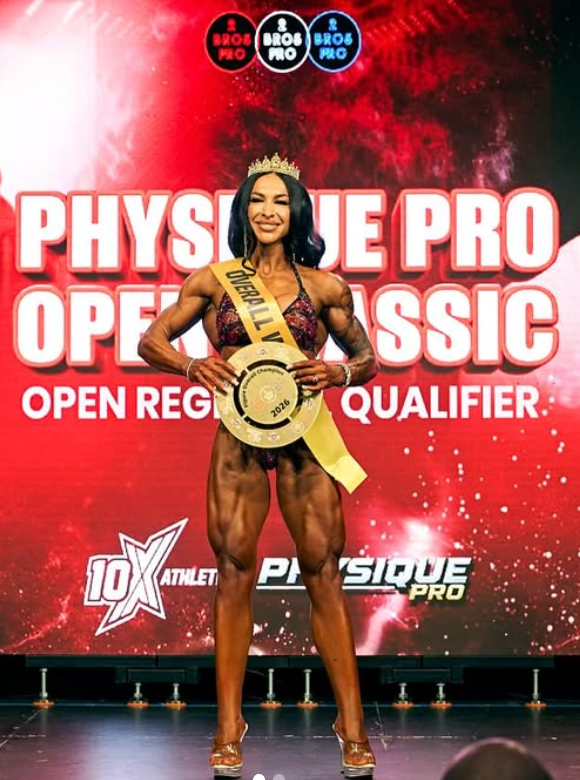
Men's Bodybuilding Overall: Jordan Long Men's Classic Physique Overall: Divine Nwankwo Men's Physique Overall: Ahmed Salih Women's Figure Overall: Seren Cooper Women's Wellness Overall: Melissa Hubbard Women's Fit Model Overall: Alice Swale Women's Bikini Overall: Chelsea Richardson (below)
NPC Worldwide Physique Pro Open Classic Results – September 26, 2026
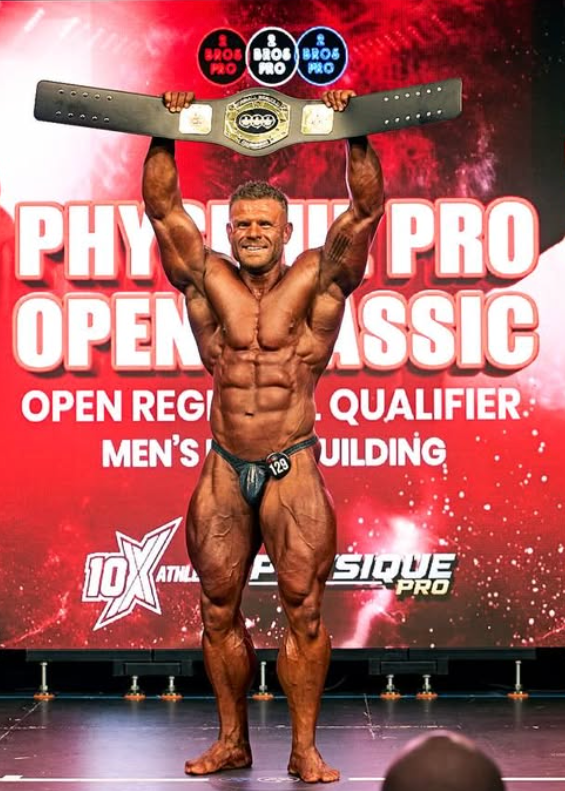
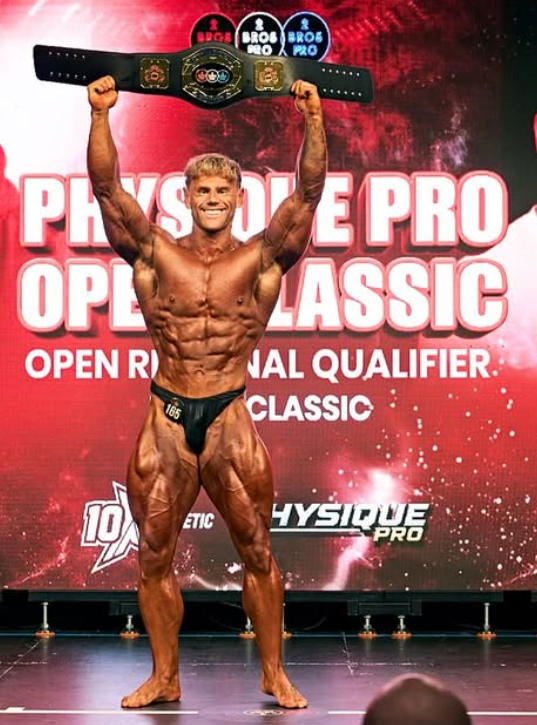
NPC Worldwide's Physique Pro Open Classic ran on 26th September 2026, with a huge card spanning Bodybuilding, Classic Physique, Men's Physique, Women's Physique, Figure, Wellness, Fit Model and Bikini. Matthew Howard took the overall Men's Bodybuilding title, Cameron Cleaver topped Classic Physique, Jordan Richards claimed Men's Physique, Katie Barnes won Women's Physique, Valentina Ecclestone took Figure, Naiara Aparecida Alves Da Silva won Wellness, Alice Swale claimed Fit Model, and Lily Remington took overall Bikini.
Men's Bodybuilding
True Novice
1 Jack Bell 2 Ryan Lane 3 Joshua Mahoney 4 Christian Murray 5 Leon Burgess
Novice
1 Rafal Bentkowski
Junior
1 Jack Bell
Masters Over 40
1 Steven Marzouk 2 Zack Gibson 3 Adam Northover NS Tom Stephens
Masters Over 50
1 Gary Chappell 2 Jamie O'Neill 3 Brett Smith 4 Leon Burgess
Open Middleweight
1 Kumar Swaminathan
Open Light Heavyweight
1 Connor Launder 2 Jack Doughty 3 Karl Grayston 4 Samuel Benson 5 Jack Earle 6 Lewis Church 7 Joshua Mahoney
Open Heavyweight
1 Matthew Howard (above) 2 Mahmood Movahed 3 Rafal Bentkowski 4 David Nkomo 5 Laurynas Zaurinis 6 Jack Bell 7 Neil Rennie 8 Ishmael Hudson 9 Adam Northover 10 Andriy Todorenko 11 Awwal Yusuf 12 Ashish Malik
Open Super Heavyweight
1 Thomas Richards 2 James Sabini 3 Soren Valls 4 Craig Madden 5 Luke Rogers 6 Maris Martinsons 7 Hooman Shafieerad 8 Alex Dinev 9 Lewis Hamill 10 Jamie Burman 11 Eimantas Sarpalis 12 Mindaugas Medzius
Men's Classic Physique
True Novice
1 Ryan Lane 2 Ashley Armitage
Novice
1 Gabriel Constante 2 Darren Hill 3 James Overton
Junior
1 Ellis Brown
Masters Over 35
1 Matthew James 2 Jack Buchan
Masters Over 40
1 Luke Layman
Masters Over 50
1 David Seddon
Open Class A
1 Ovidiu Chilibon 2 Tim Landreth 3 Rhys Richards
Open Class B
1 Cameron Cleaver (above) 2 Samuel O'Keeffe 3 Elliot Robinson 4 Dennis Bell 5 Ryan Brambleby 6 Michael Oduwole 7 Gabriel Constante 8 Ben Blades 9 Jacob Morgan 10 Adem Mustafa Kolliari 11 Mike Melladay 12 Darren Hill 13 Morgan Phillips 14 Callum Donnelly
Open Class C
1 Cam Wales 2 Ellis Brown 3 Alfie Davies 4 Joshua King 5 Shervin Shiri
Open Class D
1 Alan Costa 2 Ross Bowley 3 Lewis Barker 4 Kyle Raison 5 Connor Rudelhoff 6 Ramel Singh 7 Timothy Gbadeyan 8 Hugh Marsh 9 Tim Oswin 10 Constantin Rauti 11 Tommy Galpin
Men's Physique
True Novice
1 Jordan Richards 2 Mo Wazeem 3 Nathan Isaac 4 Jack Howe 5 Akshay Rangari 6 Ben Holden 7 Jonathan Goodsell
Novice A
1 Mo Wazeem 2 Tristan Booth
Novice B
1 Ethan Waterhouse 2 Craig Mcnichol
Junior
1 George Webbon 2 Will Fishlock
Masters Over 35
1 Lotan Carter 2 Ahmad Naif 3 Jack Howe 4 Ben Holden 5 Jonathan Goodsell
Masters Over 40
1 Marcus Smith 2 Amadou Ndiaye 3 James Heath 4 Sameer Abdulla 5 Lance Cooper 6 Craig Mcnichol 7 David Leech
Masters Over 50
1 Ufuk Isik
Open Class A
1 Ariyan Aliyan 2 Nkemjika Eka 3 Marcus Smith 4 James Heath 5 Mo Wazeem
Open Class B
1 Nathan Isaac 2 Muhammad Rameez Jaffer 3 Tristan Booth 4 Haris Sherzai 5 Adam Matthews
Open Class C
1 Lotan Carter 2 Patompong Chaiyasat 3 Will Fishlock
Open Class D
1 Jamal Louis-Cort 2 Muhammad Cole 3 Ant Porter 4 Amadou Ndiaye 5 Ty Khoarai 6 Akshay Rangari 7 Finlay Roberts 8 Mohit Mishra 9 Mitchell Fenton
Open Class E
1 John Sanderson
Open Class F
1 Jordan Richards 2 Scott Harrison 3 Ashley Harris 4 Ahmad Naif 5 Ethan Waterhouse 6 Craig Mcnichol 7 Hasan Furkan Tasdemir 8 Daniel Pollard
SOPRO Night of Champions 2026 Results – Wolverhampton, 19th September 2026
Sibel Osman's SOPRO Night of Champions ran under the IBFA banner in Wolverhampton on 19th September 2026, with class winners across Bodybuilding, Classic Physique, Men's Physique, Figure, Bikini and Wellness – and five pro cards awarded on the night. Don Valley and Alice Robinson took the overall titles.
NPC Worldwide Mr JT Grand Prix Results – September 13, 2026
NPC Worldwide's Mr JT Grand Prix took place on September 13, 2026, with a full card spanning Bodybuilding, Classic Physique, Men's Physique, Figure, Wellness, Fit Model and Bikini. Tom Summers took the overall Men's Bodybuilding title, James McDermott topped Classic Physique, Joseph Pappoe claimed Men's Physique, Leanna Clark won Figure, Katy Searle took Wellness, Valeria Muntean claimed Fit Model and Anya Limbert won overall Bikini.
Men's Bodybuilding
Novice
1 Petru Aradoaie 2 Aku Mannonen
Masters Over 50
1 Christopher Unitt
Open Light Heavyweight
1 Ivo Hristov 2 Ryan Dolan 3 Barry Cunliffe
Open Heavyweight
1 Tom Summers 2 Jay Davies 3 James Young-Walker 4 Dan Pickstock 5 Liam Davies
Open Super Heavyweight
1 Macaulley Jordan 2 Henry Taylor 3 Adam Harding 4 Petru Aradoaie 5 Aaron Carpenter
BPA English Grand Prix 2026 Results – Sunday, September 6, The Fed, Gateshead
Full bodybuilding results from the BPA English Grand Prix
The BPA English Grand Prix took place on Sunday 6th September 2026 at The Fed, Gateshead, with a full card across Bodybuilding, Classic Physique, Men's Physique, Figure, Bikini, Fit Model and Wellness. Tracy Hall took the Overall Female title, while Gemma Kennedy and Gareth Ferris picked up Best Presentation honours.
Novice Bodybuilding
1 Ibrahim Saadeh 2 Ebow Crankson 3 David Smith
Junior Bodybuilding
1 Gareth Ferris
Master's Bodybuilding 40-49 Yrs
1 Lee Cutler 2 David Smith
Master's Bodybuilding 50-59 Yrs
1 Kevin Milne
Master's Bodybuilding Over 60 Yrs
1 Paul Norton
Bodybuilding Under 80kg
1 Diogo Moraes 2 Paul Norton 3 Ibrahim Saadeh 4 Callum Cook 5 Elton Martins 6 Mark Powers
Bodybuilding Under 90kg
1 Matthew Kernohan 2 Daniel McCullough 3 Ebow Crankson
Bodybuilding Over 90kg
1 Neil Rennie 2 Kevin Milne 3 Lee Cutler
Novice Men's Physique
1 Adil Mohammed
Master's Men's Physique 40-49 Yrs
1 Murad Reesh 2 Rowan Logue
Master's Men's Physique Over 50 Yrs
1 Stephen Hill
Men's Physique Open
1 Saad Farooq 2 Murad Reesh 3 Dylan Cahill
Men's Fit Model
1 Saad Farooq 2 Rowan Logue
Classic Physique
1 Dylan Cahill 2 Callum Cook 3 Gareth Ferris 4 Paul McReynolds 5 Max Crawford
Master's Figure Over 35 Yrs
1 Tracy Hall
Figure Open
1 Tracy Hall 2 Ellena Carney
Master's Bikini Over 50 Yrs
1 Sibel Osman 2 Ann Fraser
Bikini Open
1 Gemma Kennedy 2 Sibel Osman
Ladies' Fit Model
1 Gemma Kennedy 2 Ann Fraser
Wellness
1 Shay Aminzadeh
Special awards
Female Best Presentation: Gemma Kennedy Male Best Presentation: Gareth Ferris
Overall Female: Tracy Hall Overall Male: Matthew Kernohan
PCA Manchester Results – Middleton Arena, September 6, 2026
Full results from PCA Manchester at the Middleton Arena
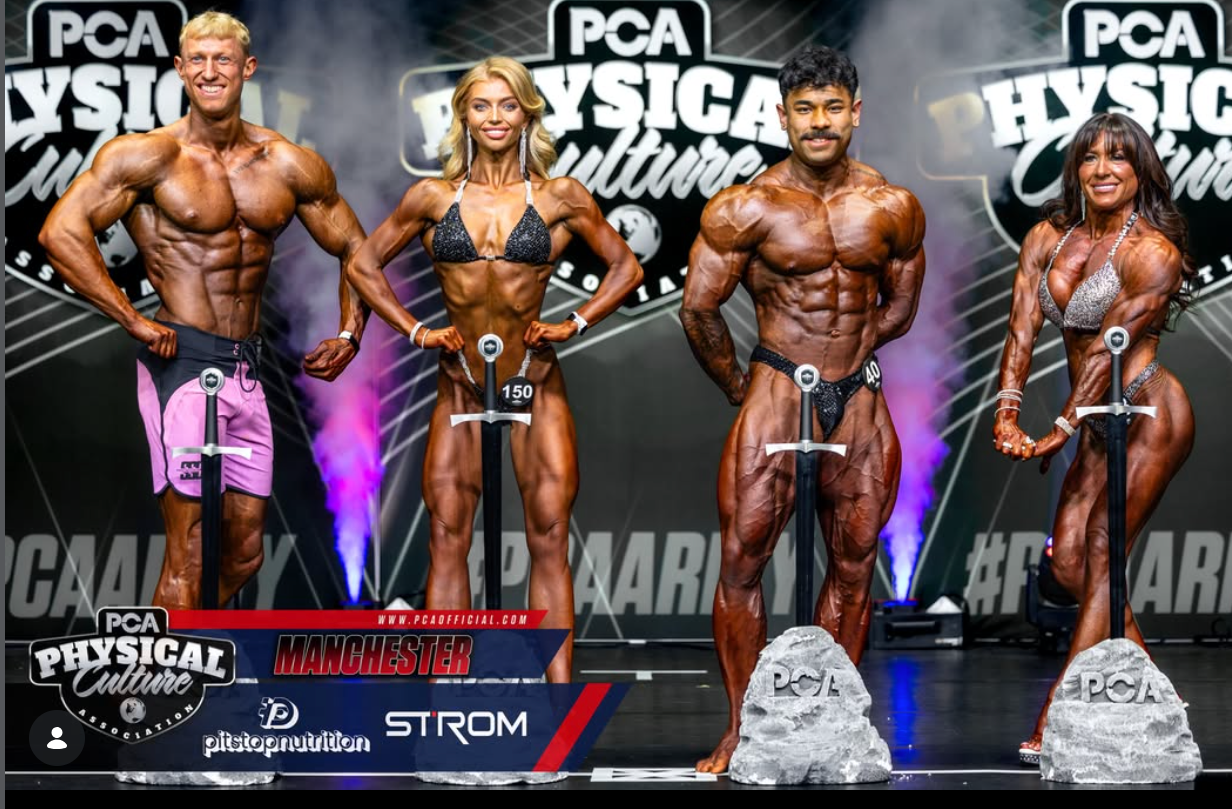
PCA Manchester ran at Middleton Arena on 6th September 2026, with a full card across Bodybuilding, Classic Physique, Men's Physique, Figure and Bikini. James McDermott took the overall Men's Bodybuilding title, with Scott Harrison topping Men's Physique, Cassandra Wright winning overall Women's Figure and Hannah Carpenter claiming overall Women's Bikini.
NABBA needed change. The Worlds showed it's finally happening
There are still inconsistencies to address, but the World Championships demonstrated a federation with renewed energy, better leadership and plenty of reasons to be optimistic
By Gary Chappell
AHEAD of the NABBA World Championships one message was hammered home: Change was needed after leadership and direction problems.
After spending a full day in Gateshead, the verdict is perhaps exactly what NABBA needed: genuine progress, but plenty still to fix.
Yet failing to acknowledge the genuine steps forward NABBA has taken would be unfair. The federation is modernising, of that there is no doubt.
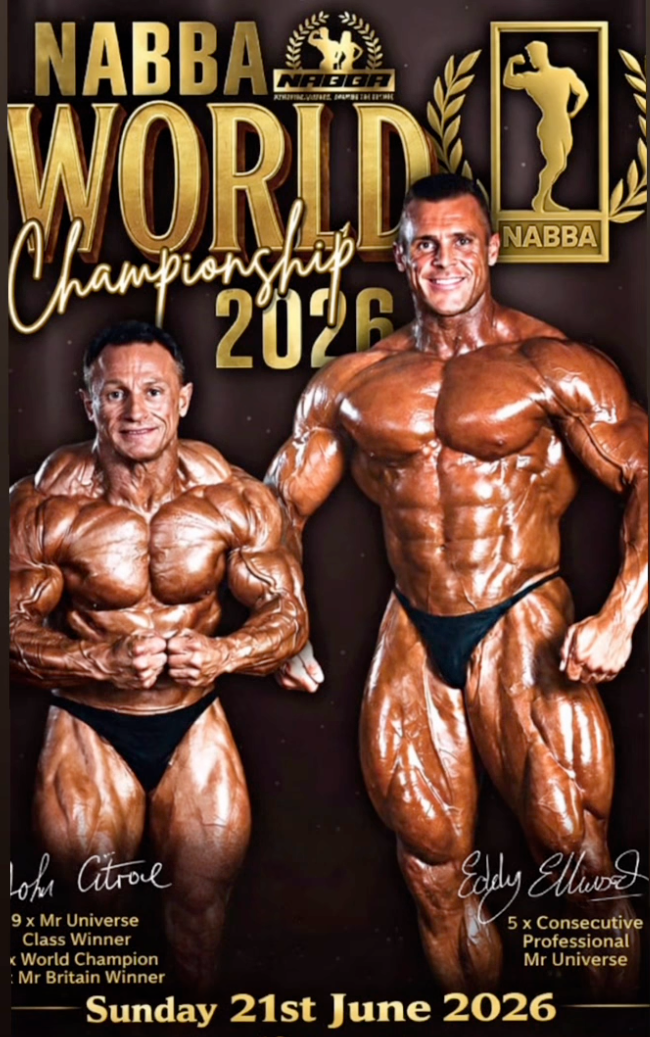
International chairman Eddy Ellwood has a clear passion and no-nonsense attitude the federation has been crying out for. He acted as compère for the day at the NABBA World Championships on Sunday, June 21, 2026, bringing it to the UK for the first time in living memory.
Progress is impossible to ignore
The nod to its history – arguably NABBA's strongest weapon against its rivals – should also be recognised, with Ellwood presenting John Citrone with a Lifetime Achievement award before proceedings with the words: "No one in the country does more for British bodybuilding than John Citrone."
As for the competitors, there were several absolute gems – and FrontDouble will detail those as we go. But some of the condition on show simply was not at World Championship level. If you're prepared to pay a £100 entry fee believing you are stage ready, then you should be stage ready. Some – not many, but some – looked weeks away from competing. They either need to hire someone or fire someone because that level of conditioning is not befitting of a World Championships.
Shiraz Mirza proves class is permanent
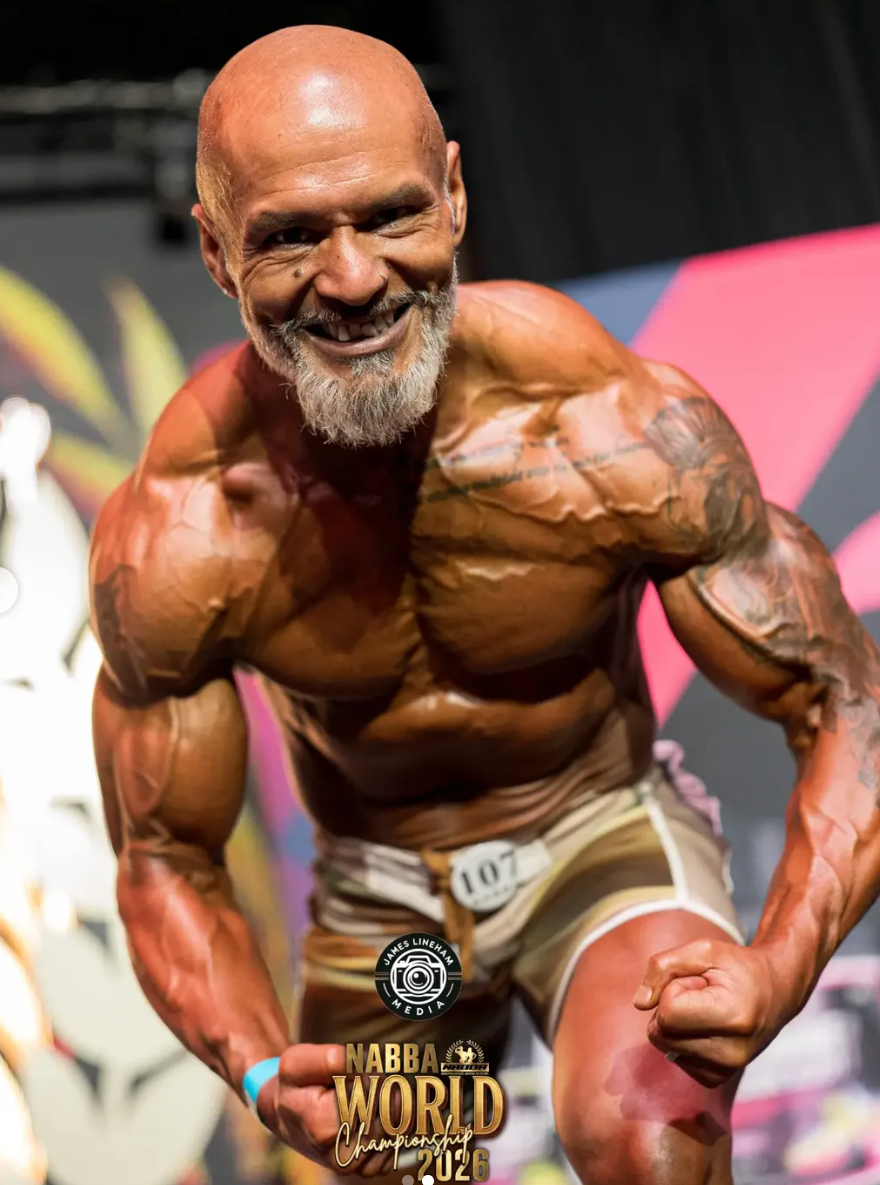
Still, one person who that could never apply to is the ageless Shiraz Mirza. In his first season competing with NABBA, the Masters Men's Physique athlete shone just as anyone who has ever watched him would expect. His carved physique screamed winner as soon as he appeared from behind the curtain, no matter the standard of others. Rivals' hearts must sink at the sight of him.
His presentation is flamboyant but every movement is as sharp as his physique. He flows naturally, controls his breathing superbly, keeps his midsection tight and isn't afraid to show off.
The UK's Lukasz Kasina could have won the Men's Physique Open easily. But his lack of midsection control and inability to crunch right down in his ab poses ultimately cost him dear. The winner, Mexico's Louis Teran, was sharper in those poses, which is what likely saw him take the victory, as Kasina was clearly the more muscular guy. And if he can nail that control he will be a threat wherever he goes.
The judging criteria debate continues
Some of the female classes remain a mystery in terms of criteria, however. Take Roslyn Johnston, who lined up in Trained Bikini. As good as she was, she simply looked like a bikini athlete, with her two rivals far sharper in definition and thus, you would have thought, more suited to the 'trained' category. Whoever suggested Johnston was most suited to Bikini Trained likely did her a disservice; she was far more suited to Open Bikini and would have done well.
Similar issues looked apparent in Toned Figure, with the disparity between some physiques quite baffling. Take Terri James, for example. Nothing wrong with her physique. In fact, she was very lean and very muscular. But herein lies the problem; she was perhaps too lean and too muscular for this particular class. And so it proved. The top two showcased a totally different look from the rest.
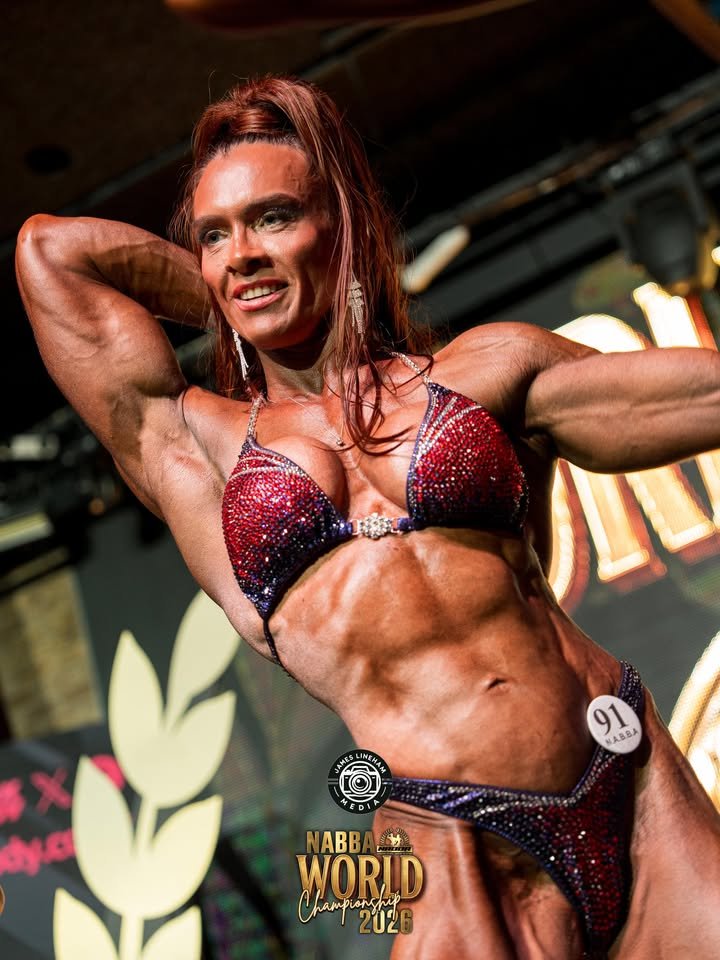
Rachael Turnbull, runner-up, boasted a tiny waist, beaming smile, great back, shapley glutes and strong side poses. Winner Jennifer Newton, above, had glutes slightly boxed, excellent condition and nice shape. The look of these two was far more 'toned figure' than the others.
As for Miss Over 45 open, it was almost impossible for the audience to follow despite the compere announcing which category they represent. You see, this class was judged not on which athlete was best, but which suited their own category the most. But after the initial announcement on which category they were representing, unless they were taking notes, spectators would simply have forgotten, especially with 12 in the class.
Teen bodybuilding was particularly impressive. Softer physiques than many of the men's classes, but winner George Holland – just 15 – had a decent midsection, good lat spread, was defined in the chest and had the best most-muscular pose. He just edged out Sam McClean, despite his tiny waist. Third-placed Modestas Nevardaus was very sharp in most poses but just lacked a little leg muscle. He was, however, probably the most conditioned up there.
Rafa De Pedro and Davide Pioggia steal the show
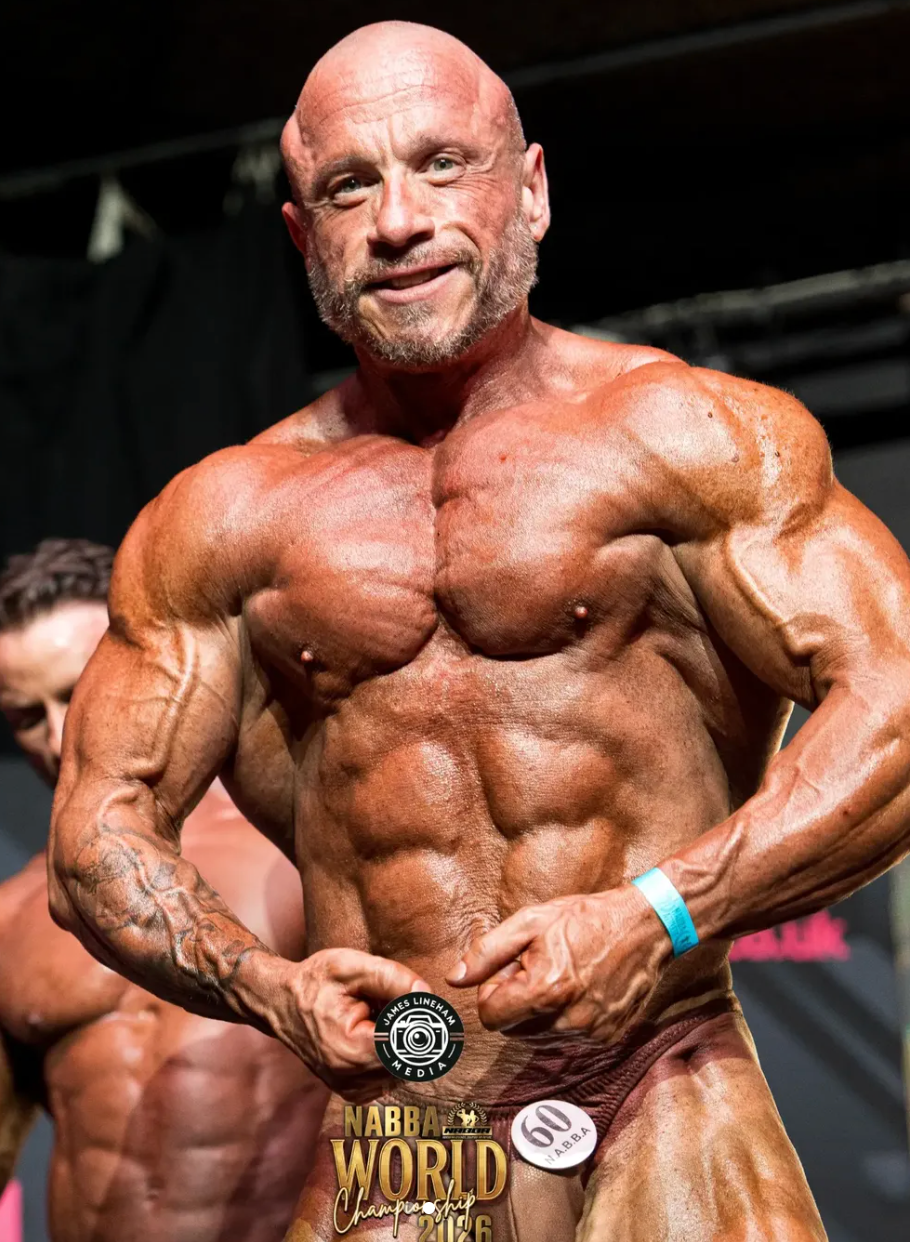
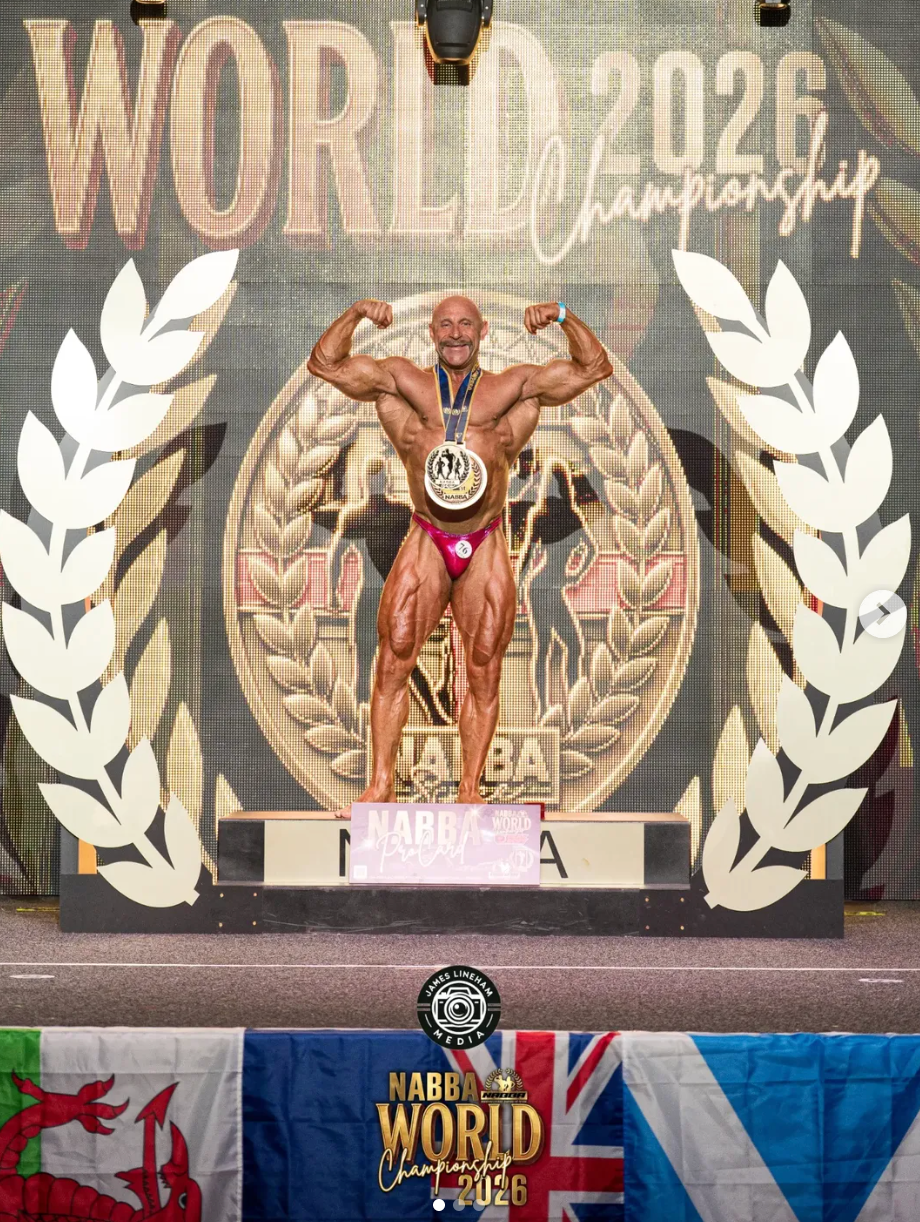
There were more gems scattered across the second half of the show, not least Rafa De Pedro, above, in the Men's Over 55s. Young skin, heavily muscled, enormous quads, he was the clear winner of this class. When he reappeared for Class 3 – taking third – he schooled younger competitors on posing and breathing control; you barely saw him struggle and his midsection remained tight throughout.
The battle between him and top two Connor Lewis and Rob Oldham was a delight; they were seriously put through their paces, but Waldon's sharpness and extra muscle saw him squeeze home. Lewis's structure is always going to be his strong point, however. Incredible aesthetics. Tad more muscle and he will be even more of a danger.
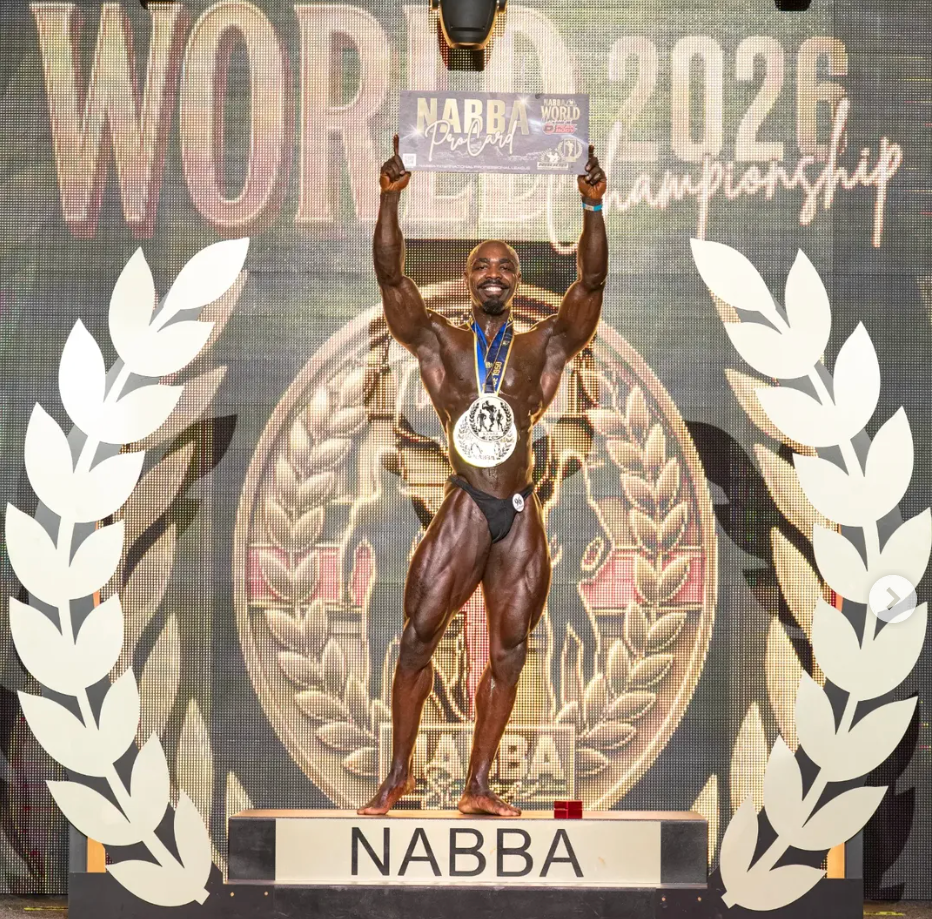
Another absolute star was Italy's Davide Pioggia, below, who went on to win his NABBA Pro Card, won the Pro Bodybuilding show and probably should have won the amateur men's overall too. That is not to take anything away from eventual winner Rob Oldham, who was fantastic in his own right. But Pioggia had the lot; incredible structure, tiny waist, big, broad shoulders, heavily muscled with strong aesthetics. If we were nit-picking, then he could work on his breathing and midsection control, but this was a physique no one could ignore.
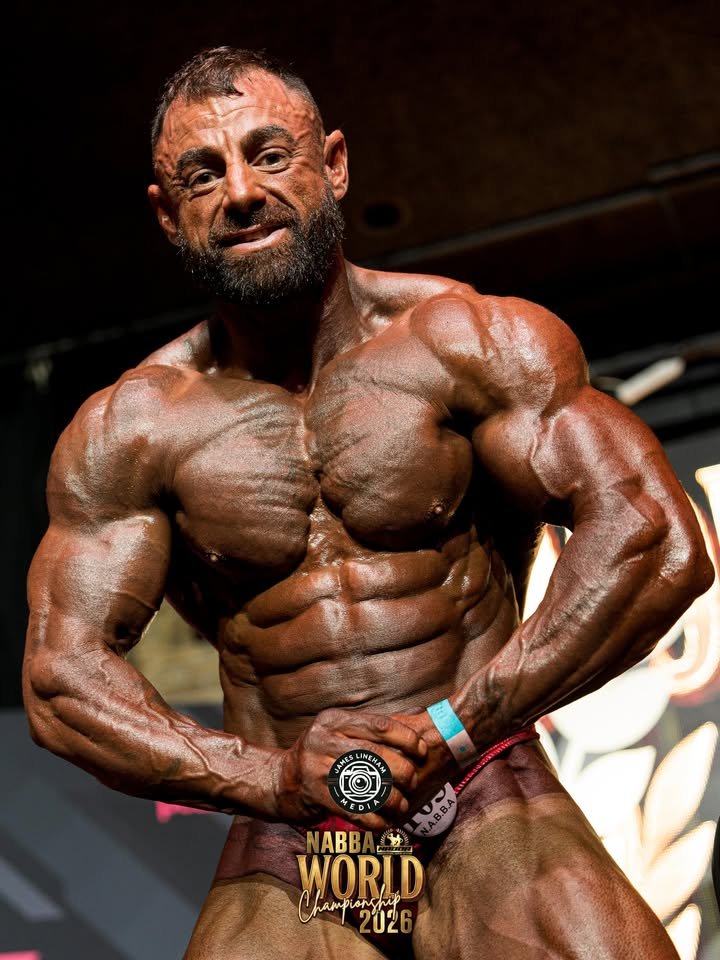
One competitor that drives FrontDouble to distraction, however, is Classic bodybuilder Nick Smith, below. The man has enormous potential. And is likely better than he thinks he is. His structure is akin to the incredible Brian Buchanan; tiny, almost non-existent waist, wide clavicles, silky, flowing posing.
But just as he did at the NABBA South East, his condition could be so much sharper, particularly in his legs - which are huge. Despite winning the Classic class and coming second in the Pro Classic after being offered his Pro Card, Smith could have won everything here at a canter if he was fractionally sharper – and that is what frustrates.
Notable disappointments came in Class 3, with Matthew Seddon packing a ton of muscle and a very nice structure, but simply not bringing anywhere near the condition that could have bagged him this victory with ease. He looked disappointed at fifth place, but could count himself lucky with that. He's better than this showing by a mile and he probably knows it.
The other one was Class 1 athlete Gye Grauzinis. He took the overall victory at the PCA South West on June 7, but did not look in good enough condition here. But that is all that was lacking; the guy is enormous. Tall, massive calves, huge legs, big smile. Come in shredded and he is going to be hard to beat wherever he competes.
Class 2 is never a category to disappoint and certainly didn't on this occasion. Lee Dwayre had the edge over his rivals thanks to his superior structure, razor condition and size, though could showcase his rear double a little better by leaning back a fraction more in that pose.
NABBA finally feels like it is moving forwards
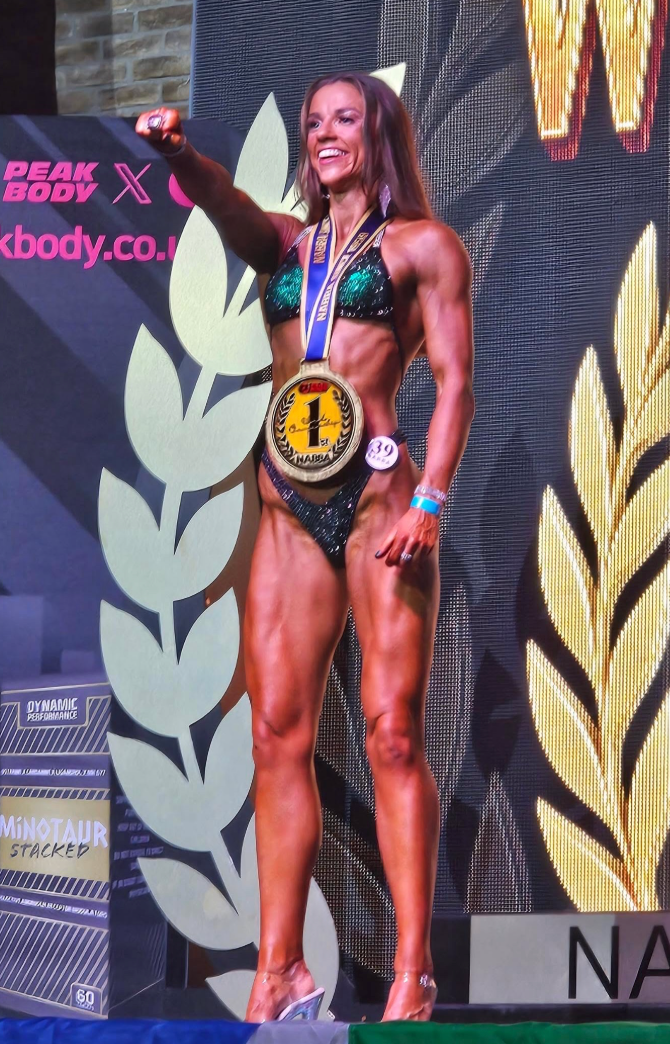
As for the women, Tracy Hutchison cleaned up, taking Miss Athletic Figure – Melanie Oman's fifth place was a shocker here, she really was much higher – and the ladies overall. Fantastic package, particularly for a taller lady. And Lithuania's Geidre Banaitiene will probably need to purcjase extra luggage for her journey home. She won Masters Bikini, Open Bikini and Pro Bikini. Great hysique, but could probably shorten her eye walk. At one point she was simply told to get back in line as she continued to strutt across the stage.
Talking of overalls, the impression of the show itself was one of success. It will take a while for NABBA to achieve what it wants given the creases in the folds; to borrow a football parlance, no one is bigger than the club...
But for the first time in a long time NABBA feels like a federation moving forwards rather than looking backwards. And that, perhaps, is the biggest victory of the weekend.
'NABBA was facing significant challenges': Ellwood's vision for the World Championships
NABBA International chairman Eddy Ellwood explains why he fought to bring the World Championships to Gateshead after concerns over leadership, direction and the federation's future
By Gary Chappell
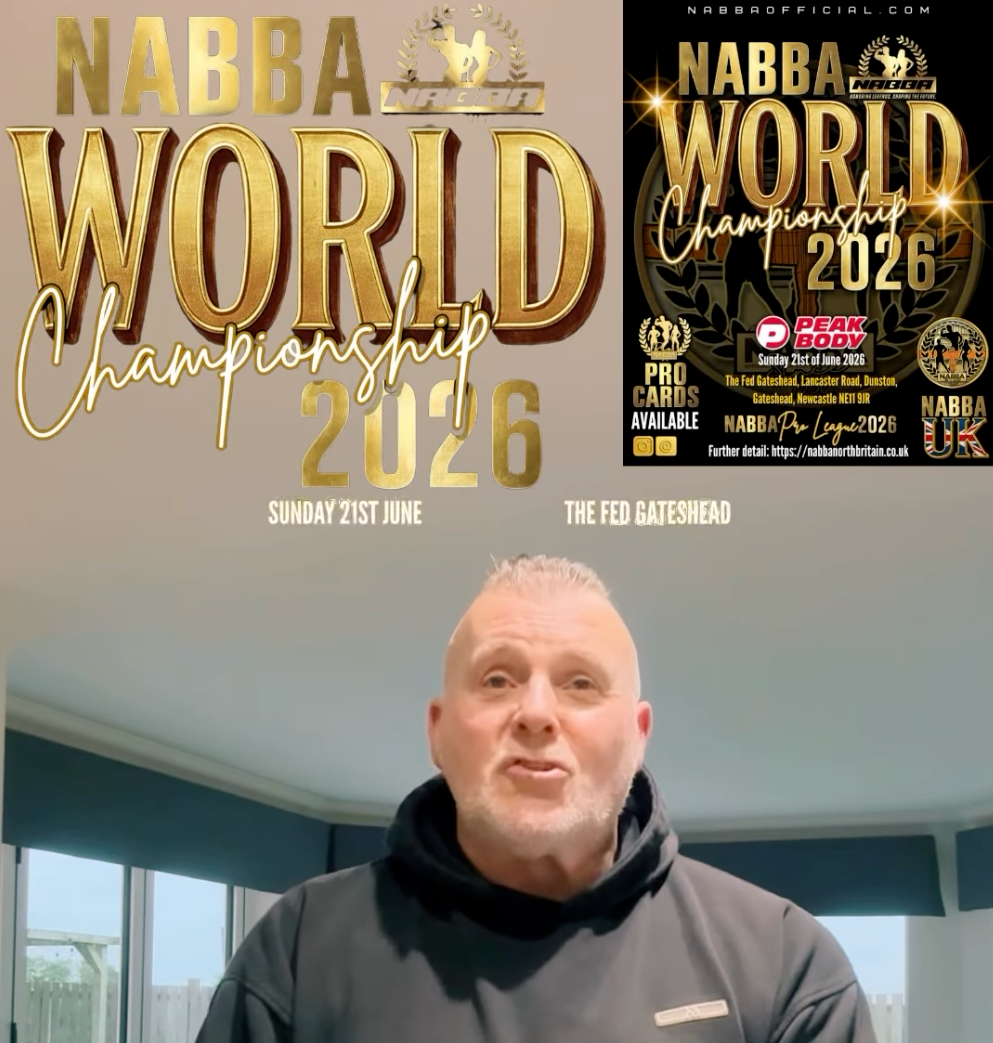
THE NABBA World Championships will be held on UK soil on Sunday June 21, 2026 for what International chairman Eddy Ellwood believes is the start of a new era for a federation he says has struggled with "leadership and direction problems".
The event takes place at The Fed in Gateshead, with Ellwood describing it as a pivotal moment following "significant challenges" for NABBA, both internationally and in the UK.
Ellwood revealed he actively sought to bring the World Championship to the North East after becoming concerned about the federation's future. He revealed that this move was exacerbated after the 2024 Mr Universe in Birmingham – a show he describes as "one of the most disappointing and poorly managed" versions of the prestigious competition.
"Why did I bid to bring this prestigious event here? Quite simply, because NABBA was facing significant challenges," said Ellwood. "Internationally, the federation was struggling under leadership that presented a clear conflict of interest, while here in the UK we were also experiencing difficulties with management and direction."
'NABBA was facing significant challenges'
His ambition to host a major international event dates back to 2023, when he submitted a bid to stage the 2024 NABBA Universe in Gateshead. The proposal was narrowly defeated by a 5-4 vote.
"The event subsequently took place in Birmingham and, sadly, became one of the most disappointing and poorly managed Mr & Miss Universe competitions in NABBA's history," said Ellwood.
'One of the most disappointing Mr Universe competitions in NABBA history'
Determined to help restore the federation's reputation, Ellwood successfully secured the right to organise the 2026 World Championships independently. He was also entrusted with hosting the 2025 Mr Universe, an event he says exceeded expectations.
He was also quick to acknowledge the support of Peak Bodies founders John and Carlo Citrone.
"None of this would have been possible without the passion, commitment and generous sponsorship of Peak Bodies' John and Carlo Citrone," he said. "NABBA UK owes them a tremendous debt of gratitude for their unwavering support."
Angel of the North medals and championship rings await winners
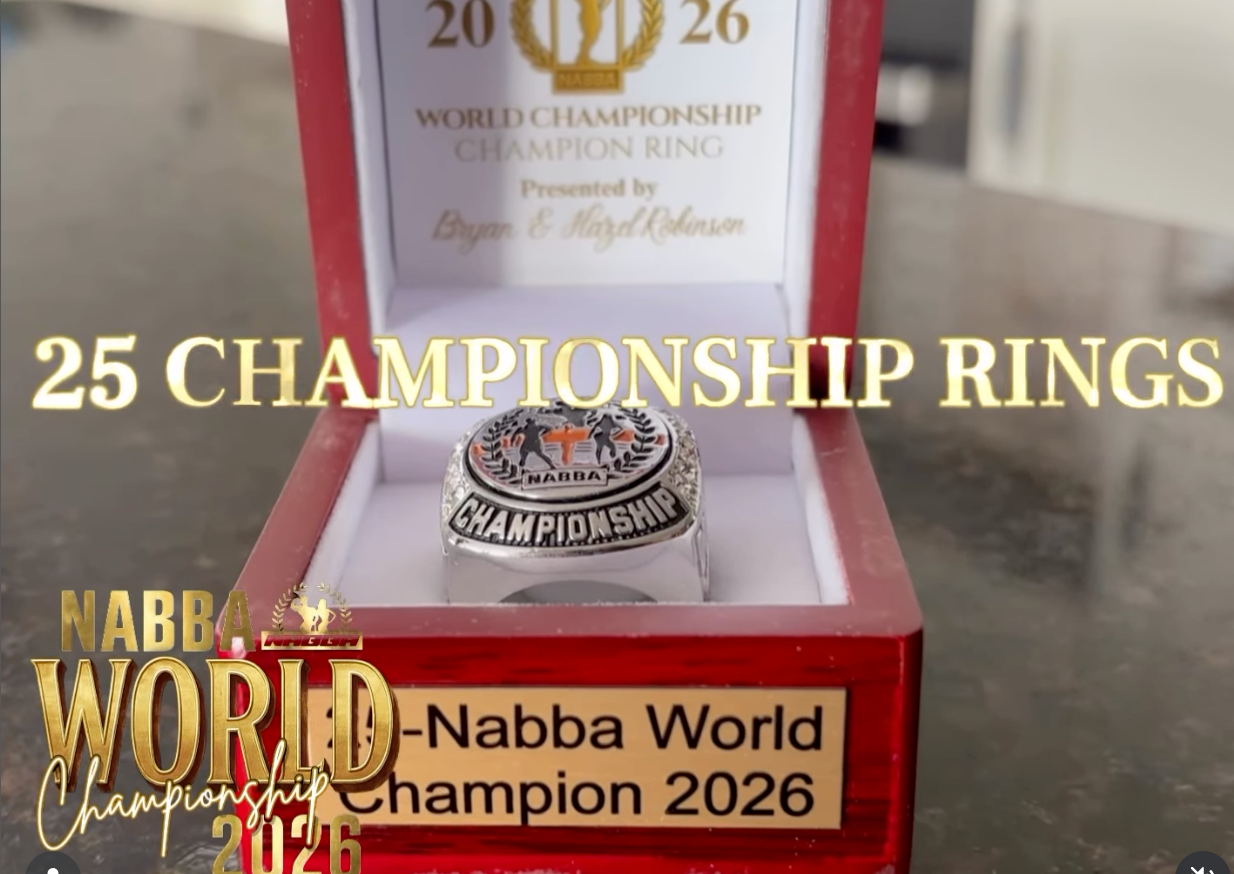
Ellwood says no expense has been spared for Sunday's event, with the top six in every class receiving commemorative medals featuring the Angel of the North, while every world champion will also receive a championship ring presented in a display box.
"I genuinely believe it is going to be a fantastic day for athletes, supporters and bodybuilding fans alike," he said.
'NABBA is being talked about once again'
The International chairman also believes the federation is beginning to rebuild under a new leadership team.
"Under the leadership of myself, UK vice chairman Tim Rosiek and UK chairman Mark Taylor, NABBA UK is once again moving forward with energy, professionalism and purpose," said Ellwood.
He also praised Matt Moody for helping modernise the federation's image through design and social media, adding: "Most importantly, our entire administration team is now working together with a shared vision for the future."
For Ellwood, Sunday's World Championships represent more than another bodybuilding contest.
"NABBA is being talked about once again," he said. "As the world's oldest bodybuilding federation, established in 1950, it is rising once more with renewed strength and ambition.
"This Sunday is an important milestone. We know the event must succeed, not only for the competitors but also to further strengthen and cement the future of our federation. I have every confidence that this will be an outstanding show."
Kevin Levrone: “Bodybuilding was more dangerous in my era”
The bodybuilding legend says athletes in the 1990s pushed conditioning to dangerous extremes, with ambulances parked outside venues and oxygen tanks backstage
By Gary Chappell
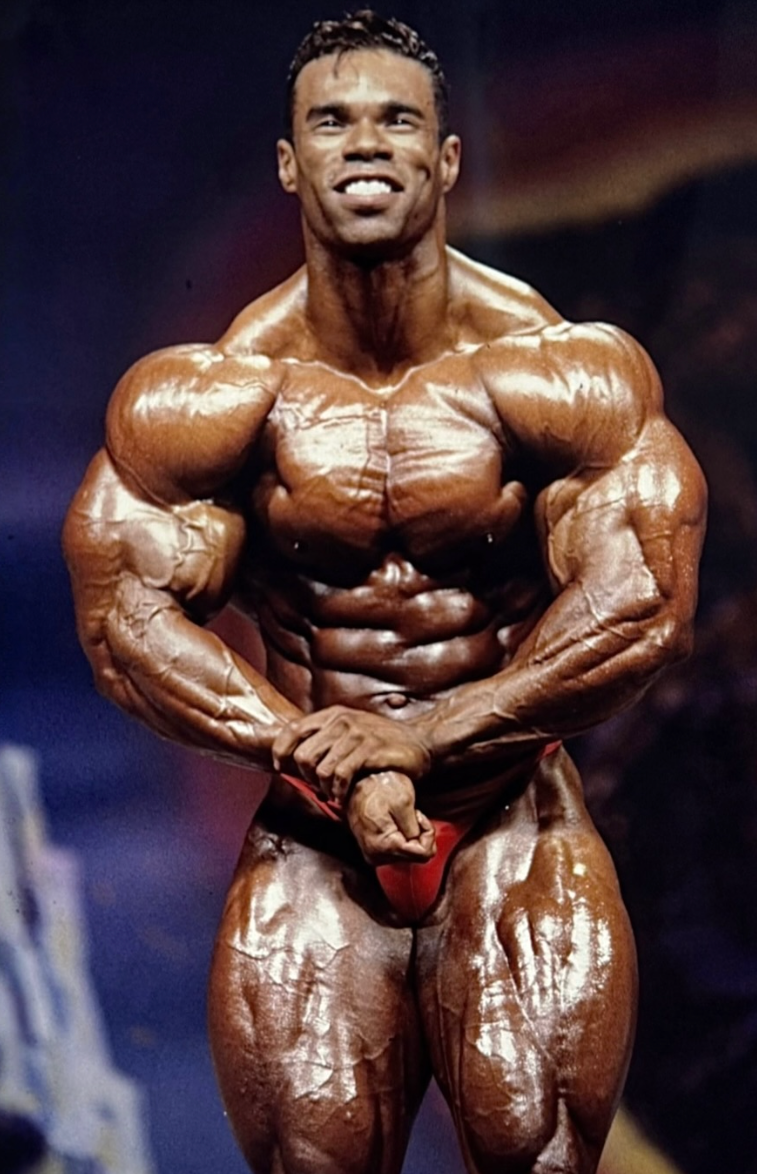
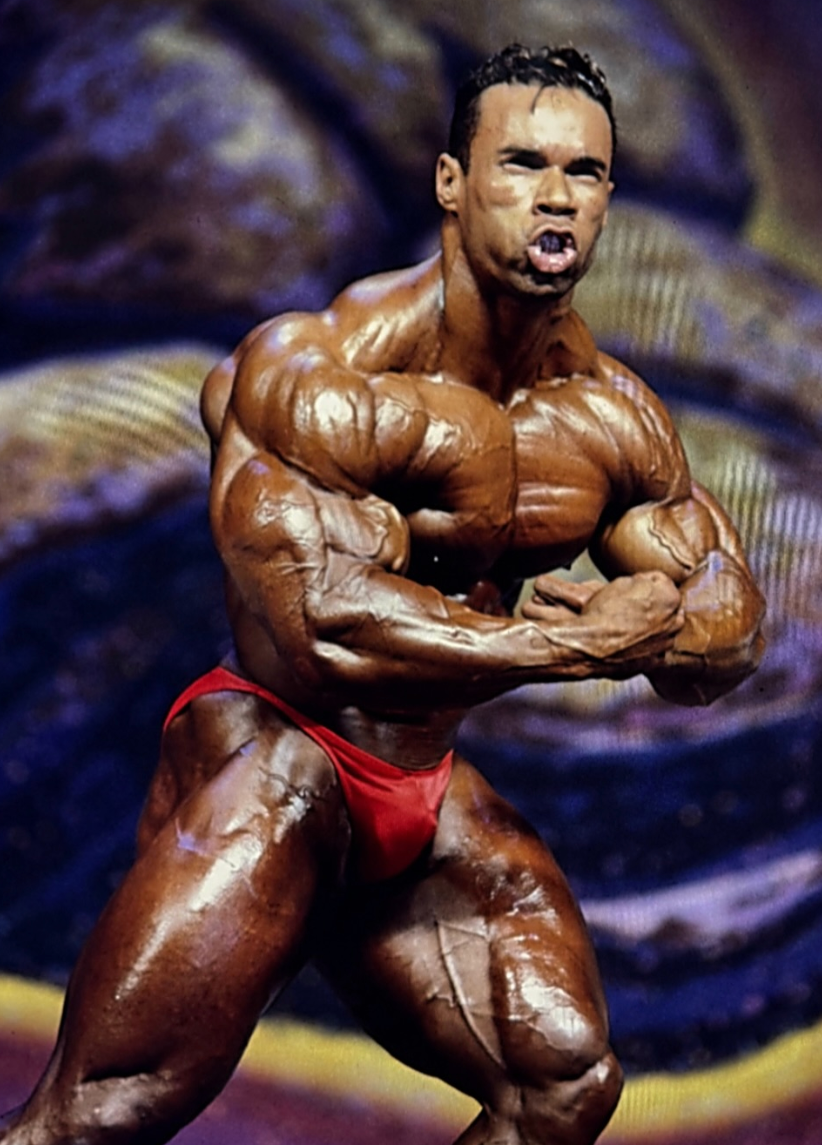
KEVIN LEVRONE believes bodybuilding in the 1990s was more dangerous than it is today – revealing how competitions saw ambulances parked outside and oxygen tanks on site.
The two-time Arnold Classic champion and one of the greatest bodybuilders never to win the Mr Olympia, opened up on the extreme measures athletes used to take in pursuit of conditioning during his era, revealing competitors would collapse backstage, suffer severe cramping and require medical assistance after stepping off stage.
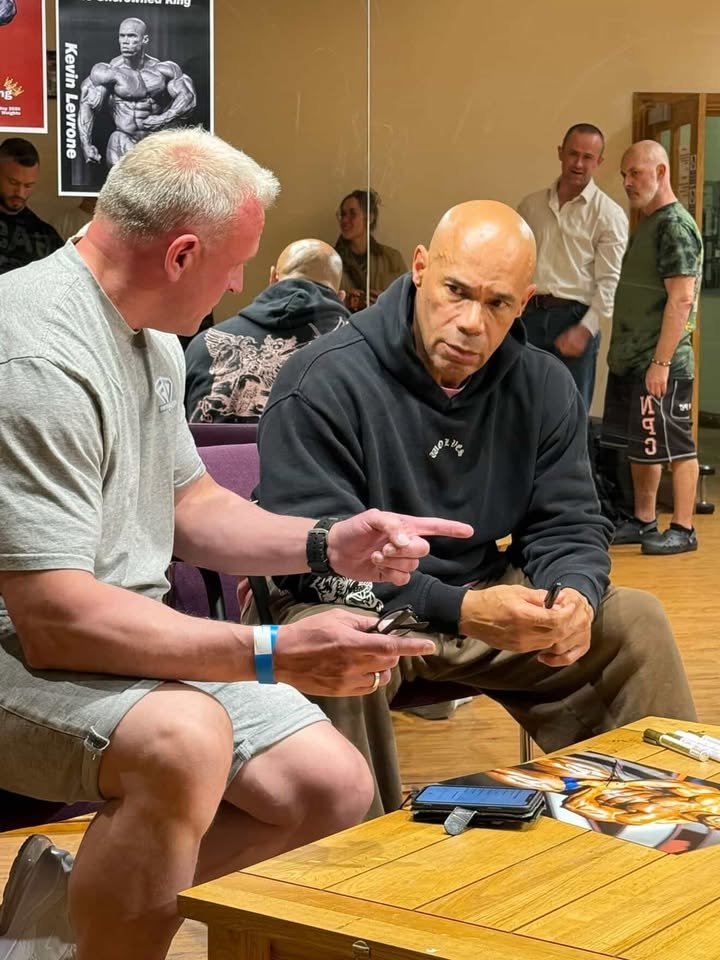
Levrone was speaking at a seminar appearance at Crayford Weights in Kent as part of his UK Together We Rise tour, when asked by FrontDouble about comments by the gym owner Paul Knights that he could still win the Mr Olympia if he competed today.
“When I hear Paul say that [he could probably win the Mr Olympia now], that’s his opinion,” said Levrone. “But when I hear him say that, my brain can’t even process what it would take to be on stage today compared to the guys now.
BRAWN TO BE WILD: Kevin Levrone with FrontDouble editor Gary Chappell during the bodybuilding legend's Together We Rise seminar at Crayford Weights in Kent
“The sport has progressed. The guys are much bigger now. When I was competing at the Olympia, my heaviest was 243 pounds. Today, the average guy is probably walking on stage at 280.”
Yet while modern bodybuilding is often criticised for its emphasis on sheer mass, Levrone believes competitors of his era frequently pushed conditioning to more dangerous extremes.
“If you look at their physiques, I think I was able to walk out on stage at that weight with maybe 2.7 per cent body fat,” he said. “We had more overall conditioning. My face would look like a skeleton – bones sticking out – because all the water was drained out of my body. I only had enough in me to make it through prejudging.”
'We were collapsing backstage'
The American described a backstage environment far removed from what fans see at modern competitions.
“It wasn’t just me,” he said. “The majority of us were pushing ourselves to the absolute edge. We were collapsing on stage, cramping up badly or being carried off backstage. It was borderline dangerous.
“I remember we had meetings where the officials told us: ‘You guys can’t keep coming out here completely ripped and shredded like that'.
“There were ambulances parked outside and oxygen tanks backstage. Medical people were there for us.”
Levrone also reflected on the deaths of competitors who pushed dehydration and conditioning to dangerous levels.
“There were guys who died,” he said. “One competitor tried to beat me so badly – he stopped drinking water for a whole week, only ate apples and sat in the sauna every day. He dried out his organs.
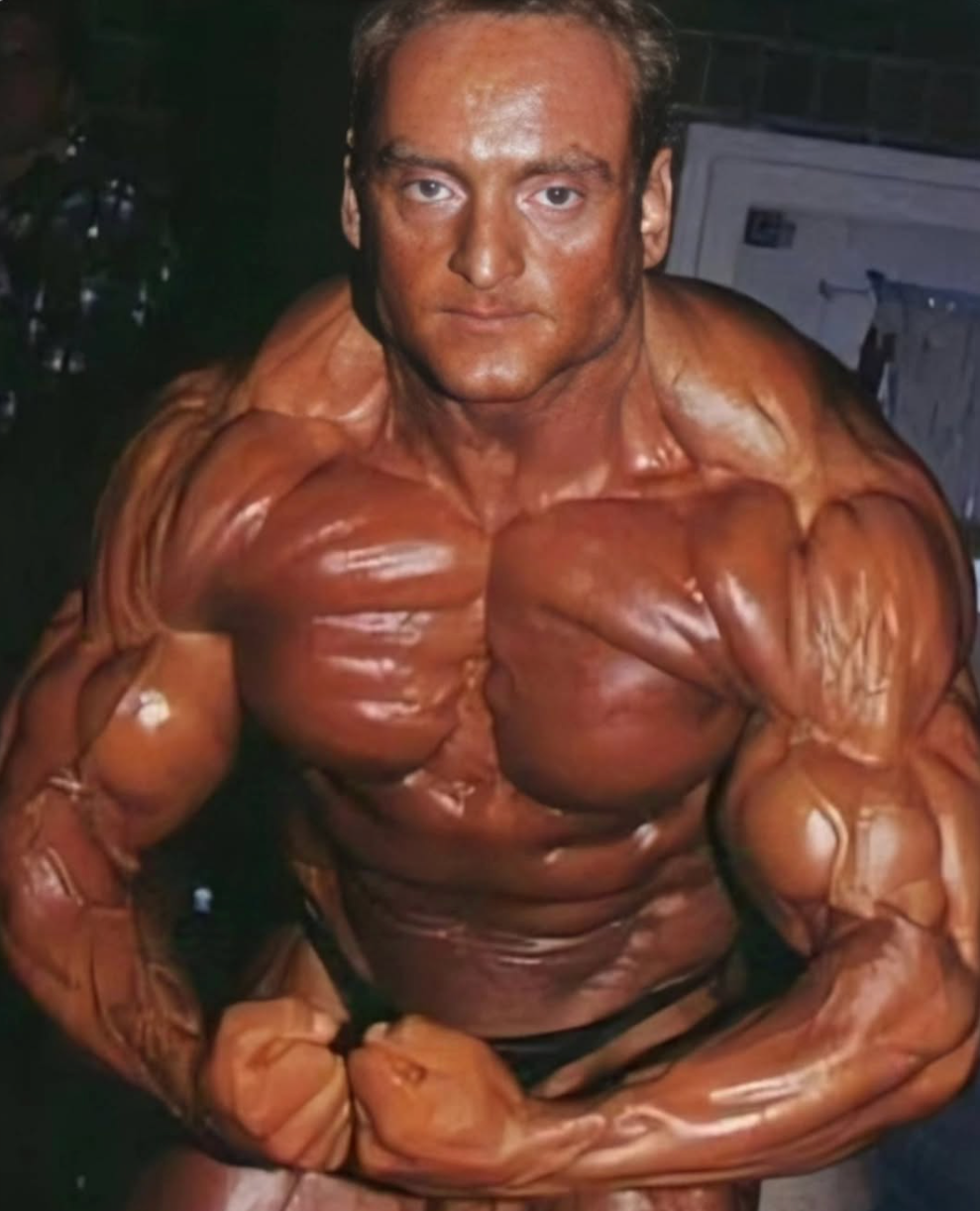
“Andreas Munzer [above] was another. He was so shredded after the Arnold Classic.”
Levrone admitted the physical effects of contest preparation could become frightening.
“My body fat was around 2.7 per cent,” he said. “Sometimes people would talk to me backstage and it would take three or four seconds for my brain to even register what they said. That’s how depleted I was.
“If it wasn’t for Robbie Robinson giving me applesauce, sugar and Coca-Cola backstage, I don’t think I would have made it through.”
Why Kevin Levrone believes bodybuilding is safer today
Despite often being nostalgic about the so-called golden eras of bodybuilding, Levrone believes one major improvement in the modern sport is the reduced emphasis on life-threatening conditioning.
“Thank God that’s not happening today,” he said. “You don’t see guys putting their lives at risk just to win a show. It’s not worth it.
“When I walk backstage these days, the guys are healthy. They’re in a good mood, talking to each other. There are no oxygen tanks or people laid out on the floor.”
The 60-year-old said modern competitors should not feel pressured to sacrifice their long-term health in pursuit of trophies.
“Why kill yourself just for a trophy?” he said. “Let’s be healthy, let’s be happy and let’s make it to the next show.”
The brutal diet that got Kevin Levrone stage ready
Levrone also detailed the brutal approach he personally used during contest preparation at the peak of his career.
“To give you an idea of what I did to get in 100 per cent shape: I’d wake up at 4am and do one-and-a-half to two hours of fasted cardio with nothing in my stomach,” he said.
“For months I’d eat only fish and egg whites – no meat, no chicken. Just fish, rice and broccoli.
“I’d drink only water with lemon for three or four months. Nothing else. Two hours of cardio a day. It was insane.”
He admitted he would never willingly put himself through that level of physical stress again.
“If I had to do today what I did back then, there’s no way in hell I would,” he said. “I was young and a little crazy. I had no son, no real responsibilities, so I didn’t care. Now I think about what’s best for me long-term.”
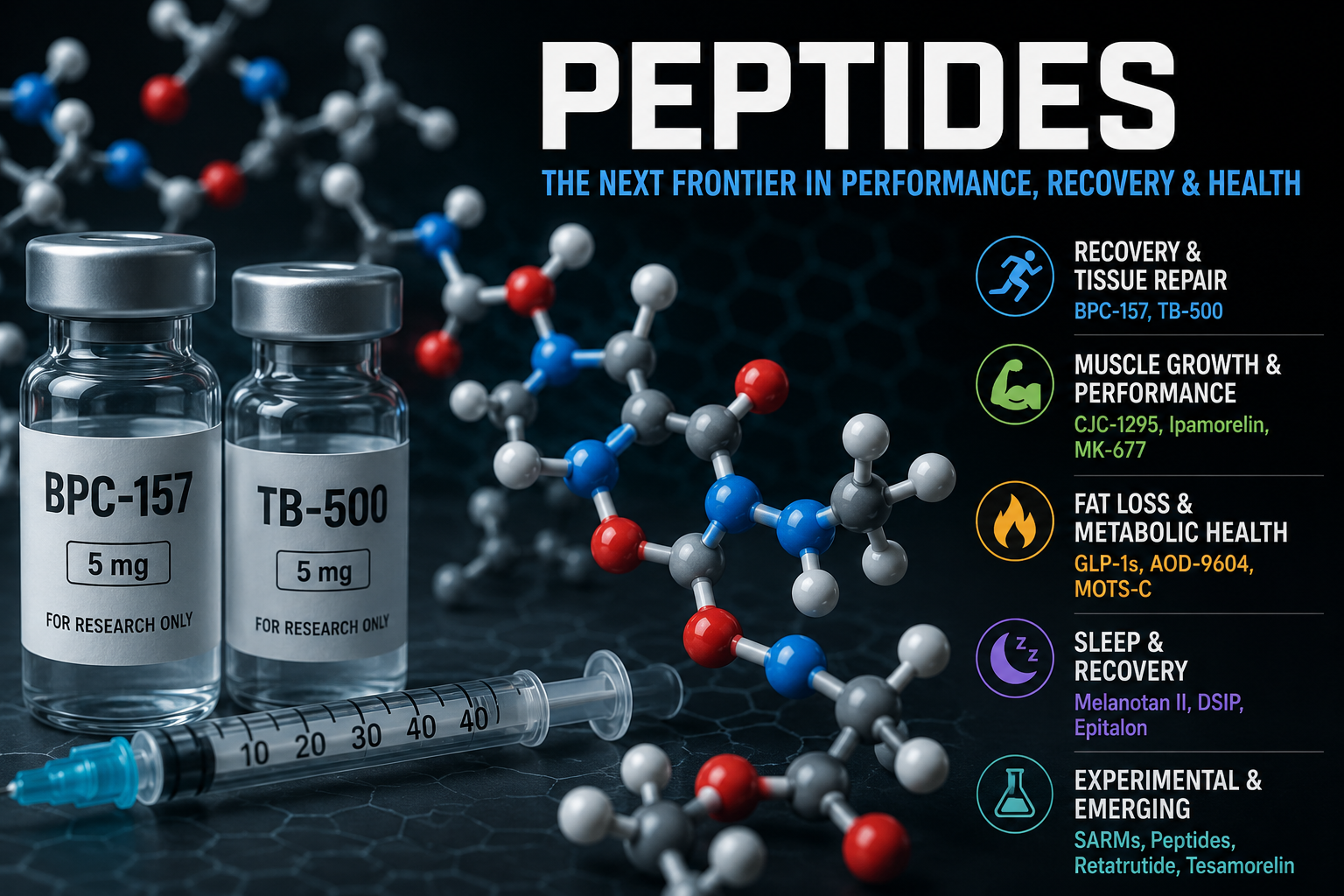
From semaglutide and tirzepatide to BPC-157, MOTS-C and IGF-1 LR3 – why peptides have become one of the most talked-about areas of modern bodybuilding
By Gary Chappell
Peptides in bodybuilding have become one of the most talked-about areas of performance enhancement in recent years. It sometimes feels like no one got shredded or built muscle before they arrived.
Competitors now use them to improve fat loss, recovery, sleep, and overall physique quality, often alongside, or instead of traditional PEDs.
But what exactly are peptides? Do they actually work? And where do newer compounds such as MOTS-C and SLU-PP-332 fit into the picture?
What are peptides?
Peptides are short chains of amino acids that act as signalling molecules in the body. Instead of directly adding hormones like anabolic steroids peptides, depending on the compound, may help stimulate processes linked to:
Release more growth hormone
Repair damaged tissue
Burn fat
Regulate appetite and metabolism
The appeal for bodybuilders to use peptides is clear. Peptides are typically used to:
Boost natural growth hormone (GH) and IGF-1 levels
Enhance fat loss, particularly stubborn and visceral fat
Build and preserve lean muscle through better protein synthesis and recovery
Speed up recovery from workouts and training stress
Improve sleep quality (deeper, more restorative sleep)
Reduce inflammation and joint pain
Strengthen connective tissue
Aid body recomposition (better muscle-to-fat ratio)
Provide anti-aging benefits (skin, hair, energy, and vitality)
Many athletes see peptides as a more targeted option compared to traditional PEDs, particularly for fat loss, recovery and injury management. Human data remains limited and long-term safety profiles are still largely unknown.
The most common peptides in bodybuilding
Fat loss and appetite control peptides
These GLP-1 (and multi-agonist) drugs have transformed contest prep:
Semaglutide (Ozempic / Wegovy)
Tirzepatide (Mounjaro / Zepbound) – dual agonist, very powerful
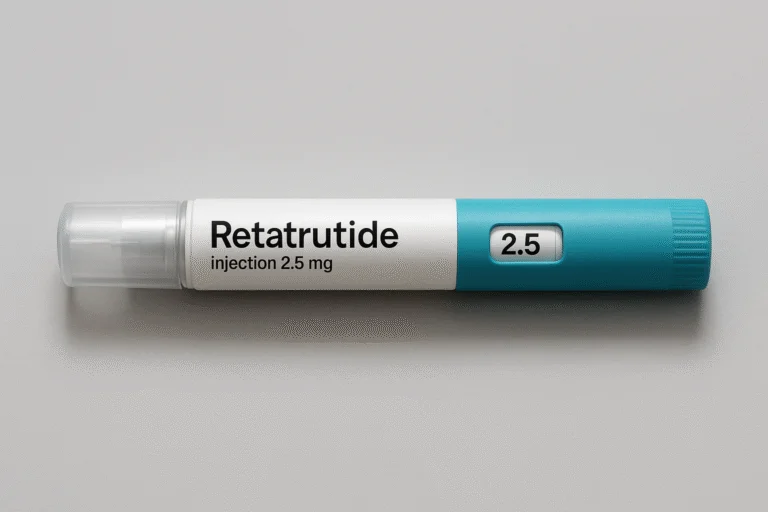
Retatrutide – triple agonist, one of the most potent weight-loss compounds currently in development
These are the most widely used, but several other compounds are also worth mentioning:
AOD-9604 is also worth a mention. This is an HGH fragment designed specifically for fat breakdown with minimal other effects.
HGH Frag 176-191 is a modified fragment of growth hormone designed specifically to target fat loss with fewer GH-like effects.
Benefits of all: Powerful appetite suppression, easier dieting, significant fat loss, and improved insulin sensitivity. Retatrutide also increases energy expenditure. Downsides: Muscle flatness if diet isn’t managed, GI side effects and difficulty with carb loading.
Growth hormone secretagogues and direct growth peptides
These increase your body’s own GH output or act downstream:
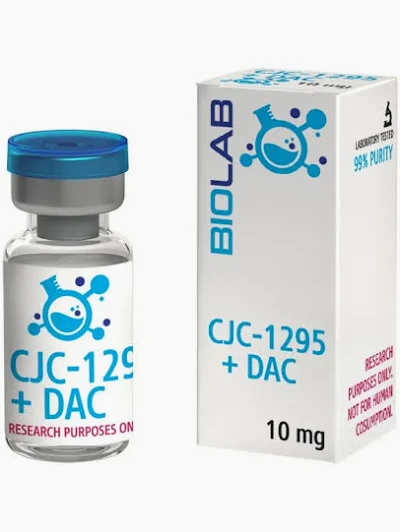
CJC-1295 (with or without DAC) + Ipamorelin – the most popular stack
Sermorelin
Tesamorelin, especially effective for visceral fat
GHRP-2 / GHRP-6
MK-677 (Ibutamoren) – oral GH secretagogue (not a true peptide but commonly grouped)
IGF-1 LR3 – strongly associated with muscle growth and nutrient partitioning
Potential advantages: Improved recovery, better sleep, fat loss, modest muscle gains and overall recomposition. Reality check: Milder and slower than pharmaceutical HGH, but very effective when stacked properly.
Recovery and healing peptides
The go-to compounds for injury prevention and repair:
BPC-157 – gut health, tendon/ligament repair, anti-inflammatory
PEG-MGF (Pegylated Mechano Growth Factor) – associated with muscle repair and localised recovery, though human evidence remains limited.
DSIP (Delta Sleep-Inducing Peptide) – primarily used to improve sleep quality and recovery.
The famous “Wolverine Stack” (BPC-157 + TB-500) is widely praised for getting athletes back to training faster.
Experimental metabolic compounds and exercise mimetics
This is the so-called cutting-edge shift toward metabolic efficiency:
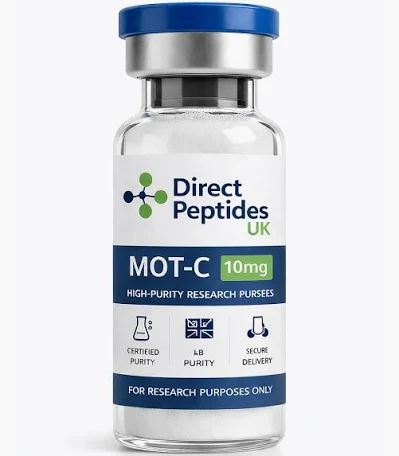
MOTS-C – mitochondrial-derived peptide that improves cellular energy, fat utilisation and endurance
SLU-PP-332 (SLU-PP-2) – exercise mimetic that activates metabolic pathways similar to endurance training
Follistatin-344 is an experimental compound linked to myostatin inhibition and potential muscle growth enhancement. Extremely limited human data exists.
These compounds focus on optimisation and fat oxidation rather than pure size or hunger suppression. Research into these compounds remains in its early stages, particularly regarding long-term human use.
Do peptides actually work?
Results vary hugely depending on the compound, diet, training, genetics and overall PED use. Some peptides, particularly GLP-1 drugs and GH secretagogues, have substantial real-world feedback behind them. Others remain highly experimental and are driven more by anecdotal reports than robust human research.
Remember, peptides are not magic bullets, but they are excellent tools when combined, as mentioned, with solid training, nutrition and recovery.
This guide reflects the current landscape in bodybuilding as of 2026.
None of the compounds mentioned should be considered risk-free and many remain unapproved for bodybuilding use. Athletes should understand the legal, ethical and health implications before considering any performance-enhancing substance.
But full pro league at every area show not happening yet
By Gary Chappell
NABBA has announced four pro shows for next season – but now says a full pro league at every area show will not be happening just yet.
In January, NABBA vice-chairman Tim Rosiek told frontdouble.com that the 2025 campaign would serve as a building block for a full pro league next season. That meant pro cards would be being issued at most area shows to help build a pro army for 2026.
What NABBA vice-chairman Tim Rosiek said earlier this year...
But on Wednesday, November 26, NABBA announced on social media that only four shows would carry a pro show next season. These would be the NABBA British Finals on June 13, 2026, the World Championship on June 21, NABBA England on October 25 and the Universe on November 1.
When questioned by frontdouble.com on the absence of a pro show at every area competition, NABBA president Eddie Ellwood said: "I can’t recall that being promised. However, we would like to eventually do that. That is the goal."
In their social media announcement, the federation added: "NABBA PRO LEAGUE 2026 is locked, loaded and ready to redefine the future of bodybuilding.
"This isn’t just another season — this is a call to the elite, the obsessed, the legendary-in-the-making.
"NABBA is where champions are forged. Where history is written in muscle, discipline, and dominance.
"The sport was BUILT on NABBA greatness. Legends like Steve Reeves, Reg Park, Bill Pearl, Arnold Schwarzenegger, Frank Zane, and Boyer Coe carved the path. Icons like Chris Dickerson, Edward Kawak, Lee Priest and Eddy Ellwood carried the torch. Now it’s YOUR turn to rise.
"The 2026 Pro League Season is shaping up to be the most explosive in NABBA history. The energy is back. The prestige is back. NABBA IS BACK."
Female bodybuilding and motherhood: Can women have it all?
Female bodybuilding demands extreme discipline – from training and nutrition to recovery and routine. But for women who are also mothers, the challenge is even greater. Balancing the demands of family life with the requirements of competitive bodybuilding raises a question that is rarely addressed directly: can female bodybuilders truly have it all?
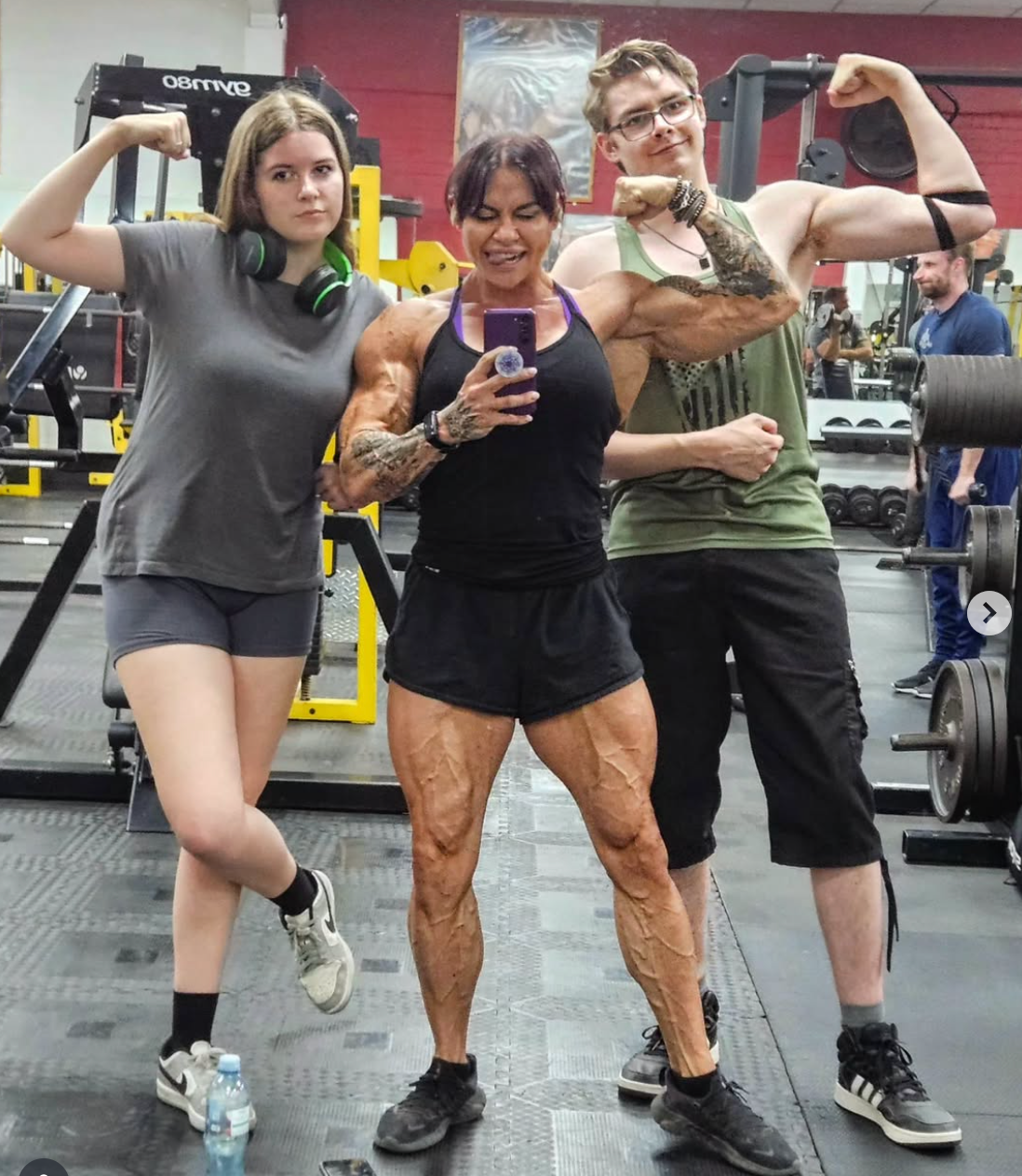
PEOPLE often ask me how I manage to juggle motherhood and bodybuilding, as if I’ve discovered some magical secret. The truth is, I haven’t. There’s no secret, no superpower, no hidden manual. I just get on with it, sometimes gracefully, sometimes like a zombie on caffeine and willpower.
When I first started competing, my kids were still young. I’d drop them at school, hit the gym, prep meals and somehow keep the house standing. There were days when I felt like I was living on autopilot, bouncing between being “mum” and “athlete”, with little room for “Louise” in between. Some people assume that female bodybuilding is all glamour – stage lights, tans, sparkly bikinis. They don’t see the exhaustion, the sacrifices and the mountain of Tupperware that comes with it.
But being a mum has never made me weaker in this sport. If anything, it’s made me tougher. My children have seen me chase goals that required everything I had physically, mentally and emotionally. And along the way, they’ve become part of the journey in ways I’ll never forget.
At home, my son Ben and I have this long-running joke; he keeps count of how many times a day I say, “I’m tired”. My current record, apparently, is 375. Prep fatigue is no joke. When your body fat is scraping the floor and even standing up feels like effort, “tired” becomes your default setting. There have been nights when Ben has actually prepped my evening meal for me because he could see how completely done I was. He’s been incredible, quiet, observant and far more understanding than most adults I know. Watching him grow up around that level of discipline has been amazing.
She starts waving a chocolate-chip muffin under my nose...
Then there’s Charlotte, my constant source of chaos and entertainment. She’s hilarious, full of energy and absolutely destined for the stage. The problem is, she’s a feeder. Any time she’s eating something delicious, she’ll offer me some, completely forgetting that I’m on prep. “Mum, want some?” she says, waving a bit of chocolate-chip muffin under my nose. I can only laugh. She means well, it just doesn’t help when you’re carb-deprived and trying to hold it together.
My kids have been the backbone of my journey. They’ve seen me at my best and my worst, tanned, shredded, emotional and occasionally hangry. They’ve heard every “just one more cardio session” speech and seen me pack meals for family days out like we’re undertaking a military operation. But they’ve also seen what commitment looks like. And that’s something I’ll never apologise for.
One of my 'prep file' memories is from a few years ago, when Charlotte landed one of the lead roles in her school play. I was two weeks out from a show, deep in prep, beyond exhausted and shredded to the bone. The school hall was packed, the plastic chairs were rock hard and I had zero glute fat left to cushion me. I sat there both nights with my meal in a Tupperware box and a two-litre bottle of water, trying to look like a normal parent. I got plenty of stares, I must have looked like something out of a superhero movie, veins and all. But I wouldn’t have missed it for the world.
Moments like that remind me why I do it. Yes, female bodybuilding is selfish at times. It has to be. But it’s also taught my kids about discipline, resilience and chasing goals no matter how hard it gets. They’ve seen me push through when it would’ve been easier to quit and I hope they carry that lesson into their own lives.
I'm often reminded of how I really do have it all
There’s a misconception that women have to choose to be a mother or to chase their ambitions. But I don’t buy that. Being a mum doesn’t make you less capable; it makes you resourceful. You learn to plan, to adapt, to keep moving no matter what’s thrown your way. I may be tired (a record-breaking 375 times a day, apparently), but I’m also fulfilled.
Because when my son hands me a meal I was too exhausted to make, or my daughter cracks a joke that makes me forget how hungry I am, I’m reminded that I really do have it all, just not in the traditional sense. I have love, laughter, purpose and a pair of kids who’ve grown up seeing what strength truly looks like.
So, can women have it all in female bodybuilding? Maybe not all at once. But we can have the things that matter most, a passion that fuels us, a family that supports us and a strength that never fades...


Leave a Reply