Over 40 and dominant: Why Masters bodybuilding is raising the bar
Over 40 bodybuilding is no longer a secondary category. Across the UK, Masters athletes are raising the standard, bringing size, condition and experience that often rivals – and sometimes surpasses – open competitors.
By Gary Chappell
FOR years, Masters bodybuilding was treated as an afterthought. A place for older competitors to dust off the trunks, show they had still “got it” and then quietly make way for the younger lads in the Open. That view is finished. The truth is this: Masters Bodybuilding is now one of the strongest, most competitive divisions in the UK.
Go to any PCA, NABBA or 2Bros show and the evidence is there. The Over-40s are turning up fuller, harder and sharper than many half their age. Far from being a second-tier class, Masters has become the proving ground for dense, mature muscle and serious condition.
Why over 40 bodybuilding is growing
Why? Experience, for one. By 40, the average competitor has spent two decades under the bar. Mistakes have been made, lessons learned and physiques built layer by layer. That maturity shows. Where juniors and first-timers often bring nice lines but lack thickness, Masters physiques carry the granite look only years of training can produce.
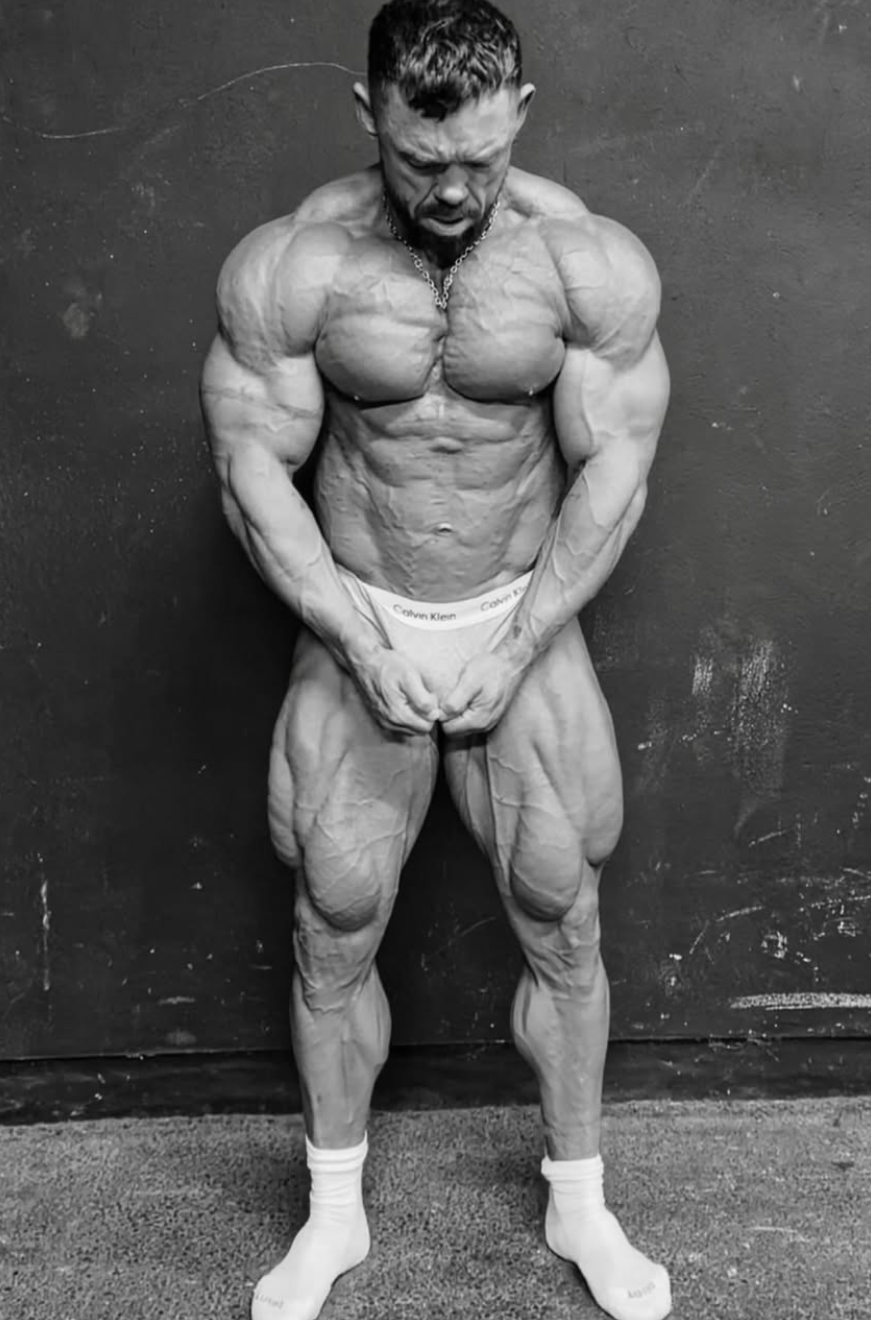
GRANITE: Masters Over 40 and Open boddybuilder Neil Andrews
Take competitors such as Neil Andrews and Jay Davies, both of whom are in their early 40s but who routinely compete and win Open bodybuilding classes. Indeed, Andrews is a PCA Pro, won that federation's Masters Pro British title last season and defends it on Sunday, October 19.
And that is to name just two. You can include in that list the likes of 2025 NABBA Masters Mr Britain Ricky Moore, 2024 NABBA Masters Mr England Nader Zareinoor and 2023 PCA Britain Over 40s winner Alan Carson.
The standard in Masters categories
The simple fact is that many of Over 40 Masters bodybuilding competitors are stepping on stage every bit as ready as the so-called young guns. You can even stretch this to the Over 50s, with Sunday's PCA British Finals having to split that class into Over 50 short and Over 50 tall due to the sheer numbers competing.
And it is not just size. Conditioning is often better in Masters. There is less chasing of social media “fullness” and more attention to detail. Glutes, hamstrings, abs – the cuts are there, the stage presence is polished, the professionalism obvious.
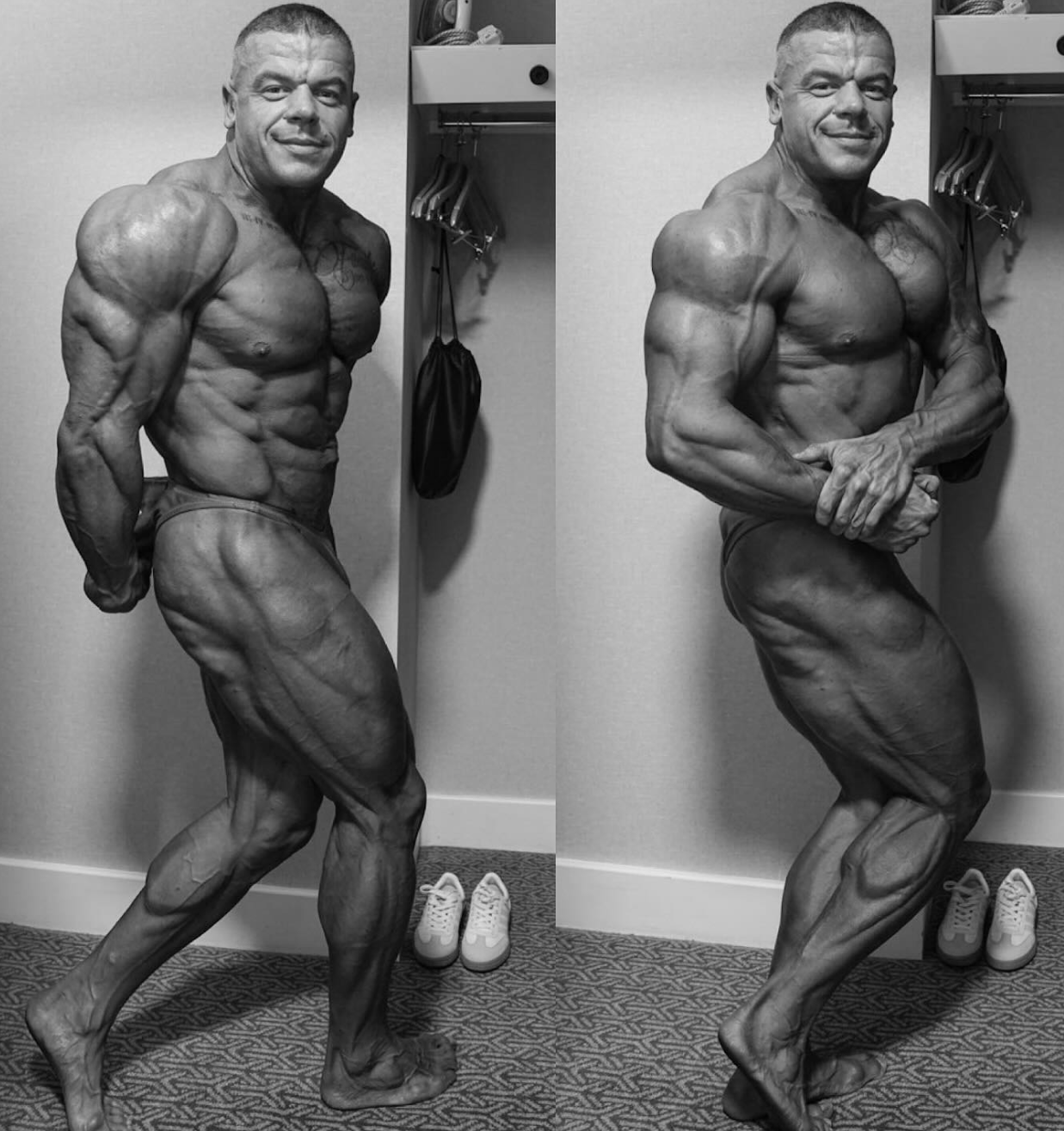
SIMPLY MAGIC: Jay Davies will be heading to Milan for the European Masters in November
This isn’t to say Opens are weak. Far from it. But the stereotype that Masters is the warm-up act simply does not hold any more. Classes are routinely stacked – and stacked with great physiques. You will often find Class 2 bodybuilding categories with far fewer competitors than the Masters. Britain’s bodybuilding backbone is being carried by athletes over 40 who are proving longevity, maturity and discipline still matter.
Federations should take note. If Masters is consistently drawing deep line-ups of high calibre athletes, maybe it deserves more spotlight – not less.
Over 40 is not the end. In UK bodybuilding right now, it is very often the standard.
The debate between volume vs intensity in bodybuilding has been ongoing for decades, with strong arguments on both sides when it comes to building muscle.
DURING anybody's journey through bodybuilding there is likely to be a phrase or two that strikes a chord.
Keep It Simple Stupid [KISS] is one. Another that resonates comes from Lee Priest, never one to mince his words but, in the context of this article, he may have had a point. "Just fucking train," were his wise words.
But countless people in gyms across the country 'just fucking train' and few experience the sort of results that will take them to the stage, let alone win them a competition. So there must be more nuance to training than just those two phrases.
According to 'the science', volume is king for hypertrophy. But then how does one explain the anecdotal evidence from training routines such as DC Training by Dante Trudel [above] [DC = DoggCrapp, which was his website username at the time]?
DC Training, when it was first released, was met with a mixed reception. Some loved it and hailed it as a revelation, while others ridiculed it. How could muscle growth possibly be stimulated with just one exercise per bodypart – and one set?
But it was hardly a revelation. Dorian Yates had been advocating a similar type of training for years. In fact, he wrote as much in his second book, A Warrior's Story.
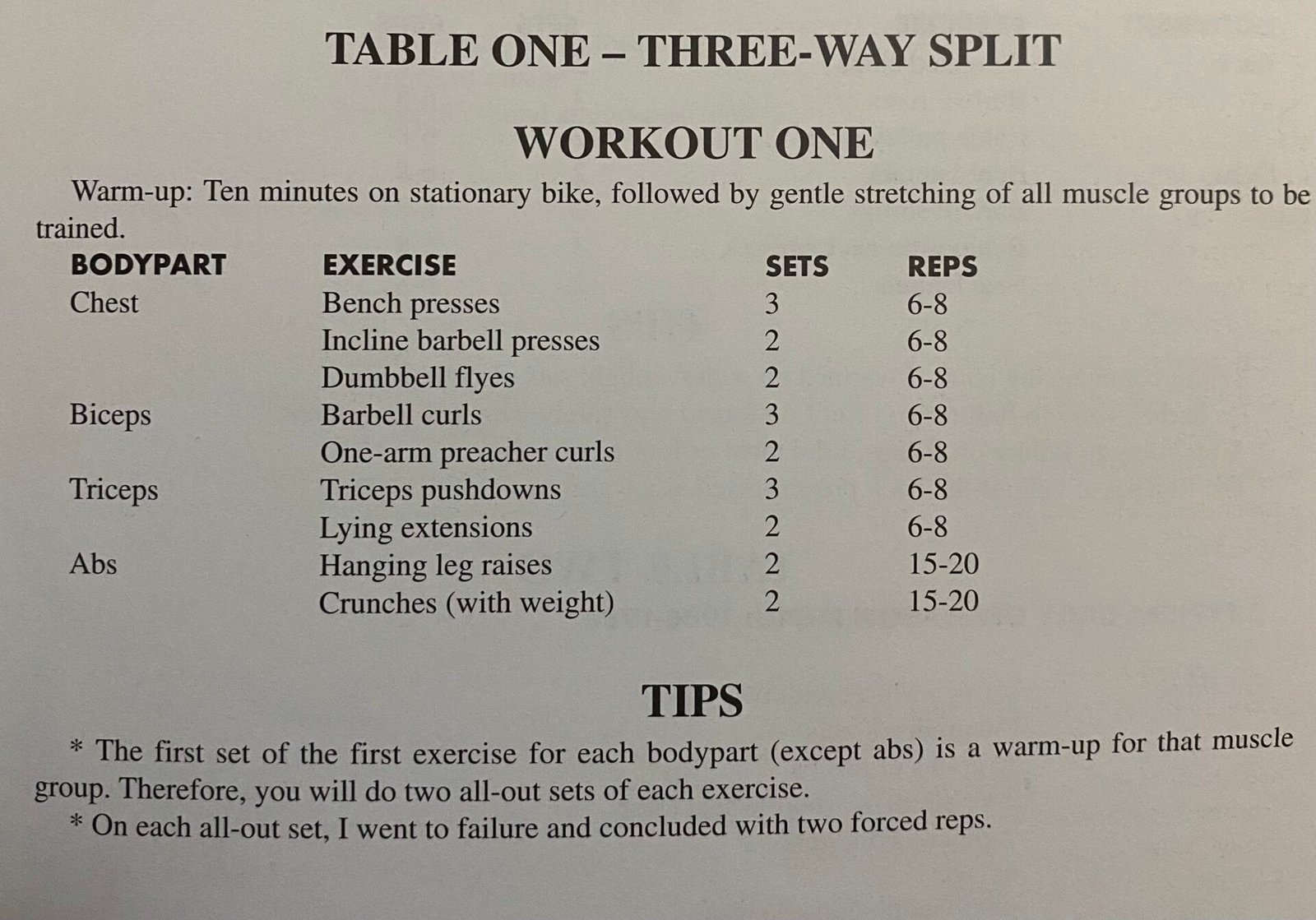
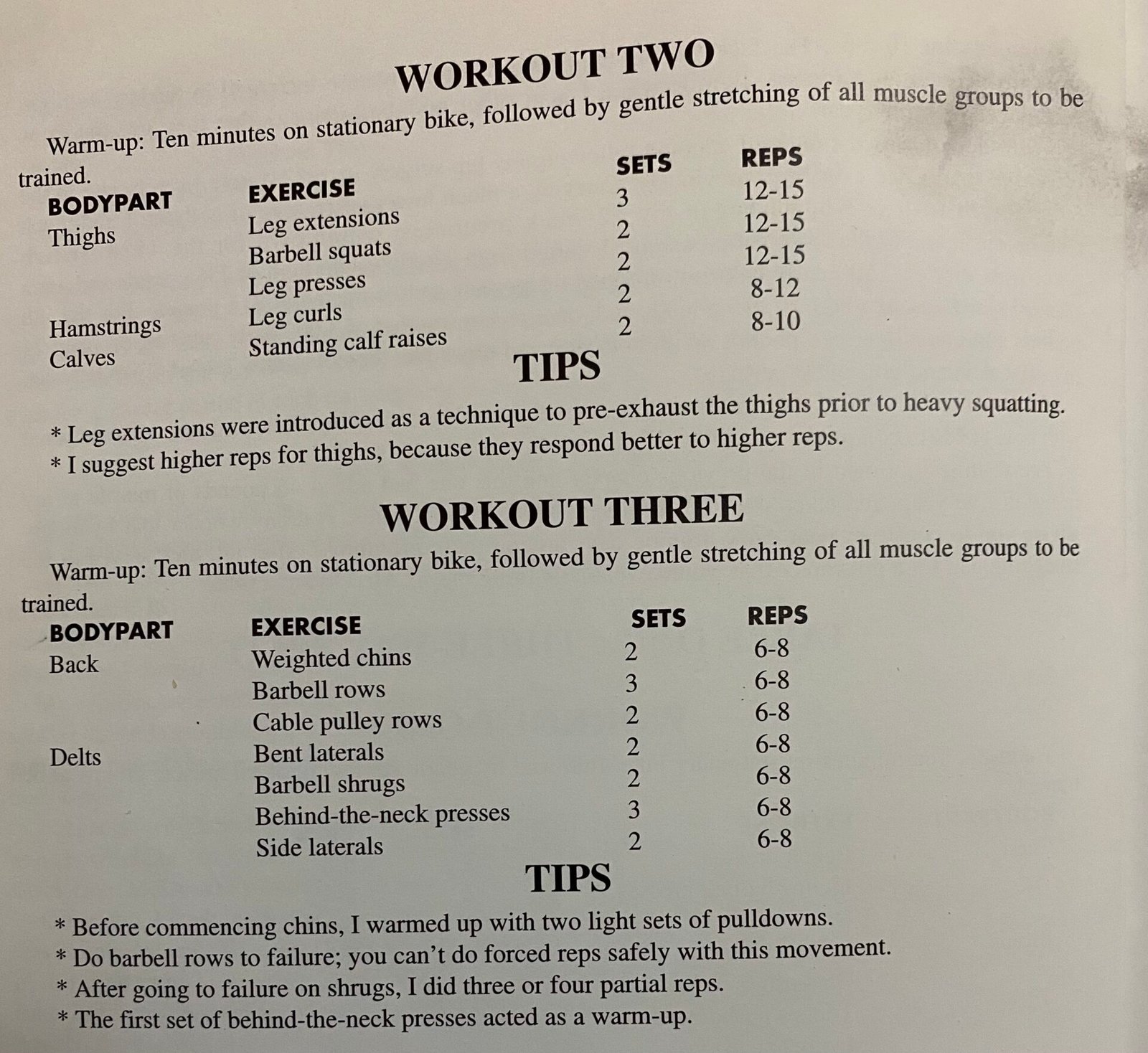
Up until he won the EFBB [now UKBFF] British Championships in 1986, Yates was using a standard upper-lower split. He trained three times a week. The main differences between his split and DC Training is that Yates did two to three sets, whereas DC Training advocates counting just one working set and extreme, weighted stretching for up to one minute. The number of rest-pause sets with DC, however, can be as high as two or three. And with a three-second negative, it attempts to squeeze as much intensity out of each rep as possible.
It was only later in his career that Yates dropped the number of sets he was performing. But even then he would still do more than one exercise per body part. It was here that he moved from three times a week four times [images above].
Volume v Intensity – how does the science compare?
Here’s a comparison of DC Training and high-volume training through the lens of scientific research on hypertrophy:
1. Training Volume and Frequency
High-Volume Training: Science consistently shows a strong relationship between training volume (sets × reps × load) and hypertrophy. Studies indicate that a moderate-to-high training volume with multiple sets per muscle group per week tends to maximize hypertrophy by effectively stimulating muscle protein synthesis and maximizing muscular fatigue. For example, doing 10-20 sets per muscle group weekly is a common guideline for hypertrophy-focused volume training.
DC Training: DC Training, by contrast, is low-volume and high-intensity. Each muscle is typically worked three times over a 14-day period. It includes one to two intense working sets taken to failure using techniques such as rest-pause and loaded stretches. This lower-volume approach relies aims to create similar muscle stimulation to that seen in high-volume programs.
Science Insight: While high-volume training aligns more closely with traditional research favouring higher set counts, DC Training’s emphasis on intensity can still produce hypertrophic gains.
2. Intensity and Failure Training
DC Training: DC relies on pushing each working set to failure and beyond, with techniques such as rest-pause (where short rests allow you to squeeze out extra reps), three to five-second negatives and static holds. Training to failure is known to recruit maximum muscle fibers, which can be beneficial for hypertrophy. However, constant failure training can also increase fatigue and potentially lead to overtraining or injury, particularly without adequate recovery. However, a recovery period, usually after roughly six weeks, is built in to the programme.
High-Volume Training: High-volume programs typically recommend stopping just short of failure on most sets. This allows for more total sets and reps and thereby a greater overall training volume. Stopping short of failure can mitigate fatigue and still lead to hypertrophy, provided that enough volume is reached.
Science Insight: Research shows that training close to failure is effective for hypertrophy but that training to absolute failure every set is not necessary. High-volume training often yields greater cumulative workload without hitting failure as consistently. This aligns with evidence supporting effective hypertrophy without needing maximal fatigue.
3. Frequency and Recovery
DC Training: Muscles are worked frequently, with a typical schedule of training three times a week, with a split akin to upper/lower. Over the course of one year, there are 78 opportunities to stimulate growth. This is much more than the much-heralded 'bro split', where each body part is trained once per week.
High-Volume Training: Generally, high-volume programs encourage training each muscle group just once per week. While there are few opportunities to stimulate growth, it could be argued that there are more opportunities FOR growth. This is because a particular muscle group is given more rest days.
Science Insight: Research suggests that higher frequencies (eg two to three times per week) may support better hypertrophic outcomes. It does this by keeping muscles in a more consistent state of stimulus and recovery.
4. Progressive Overload and Periodisation
DC Training: Progressive overload is central to DC Training, with lifters aiming to increase weight or reps every session. However, the high intensity and failure training may limit long-term progression due to accumulated fatigue.
High-Volume Training: With high-volume training, progressive overload is typically managed through incremental increases in volume or weight over time. It often incorporates periodisation to allow for phases of intensity and volume.
Science Insight: Research supports progressive overload as essential for hypertrophy, but managing fatigue is crucial for sustainability. High-volume training with periodisation often leads to longer-term adherence and growth compared to constantly hitting failure, as in DC Training.
Which Is More Effective?
For maximal hypertrophy, high-volume training aligns more closely with the scientific consensus on optimal hypertrophic outcomes. This is primarily because of its cumulative workload, higher frequency and ability to manage fatigue over time. High-volume training is more adaptable for both beginners and advanced lifters, making it generally more sustainable.
DC Training can be effective for certain advanced lifters, particularly those who respond well to low-volume, high-intensity training and can recover adequately from infrequent, intense sessions. However, it may not be as effective as high-volume approaches for overall hypertrophy, especially over longer periods.
In conclusion, while both low volume and high-volume training can lead to gains in muscle size, high-volume training has a broader base of scientific support and might be more universally effective, especially for consistent, long-term hypertrophy. Having said that, what we know for certain is that no one size ever fits all. And, as usual, it is what works best for you, the individual, that will result in the most progress.
At the beginning of this analysis, we spoke about phrases. Often, when something is working and is, therefore, good, many of us look for better. It is in that process where progress can become derailed. So, finally: "If it ain't broke, don't fix it."
Honorary Life President Jim Charles has defended the federation’s future, insisting it is “not going anywhere” despite growing competition and the increasing role of finance in bodybuilding – but tells his young reps to "calm down" because "it's not all about money"
By Gary Chappell
NABBA'S Honorary Life President Jim Charles has defended his federation saying it is going nowhere – much like the Royal family.
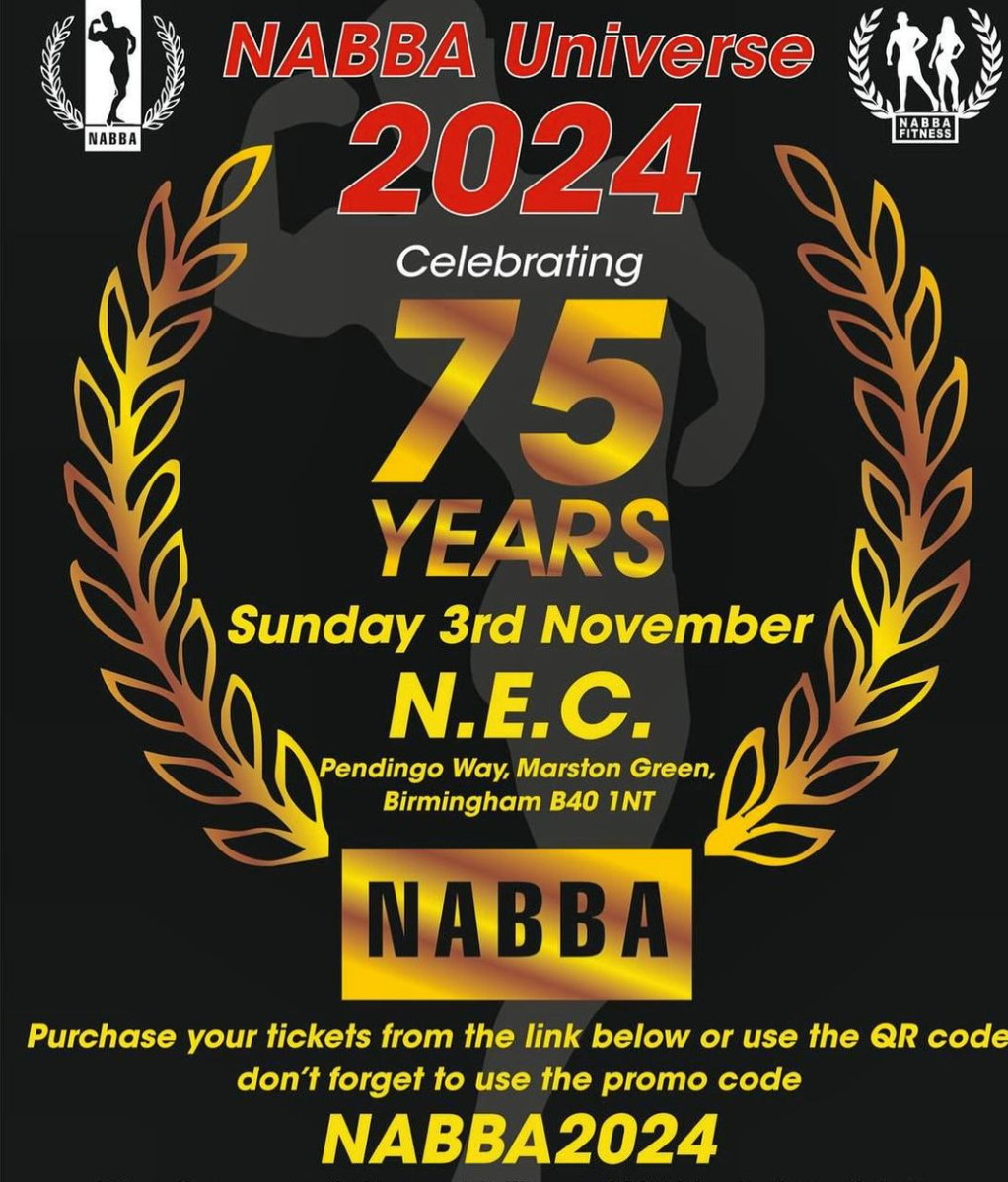
In an exclusive interview with frontdouble.com, Charles – who has been with NABBA for 66 years – believes amateur bodybuilding has become 'all about money'. And ahead of the 75th Anniversary of the Mr Universe on November 3, he has revealed how he has extended an invitation to Arnold Schwarzenegger – saying how the bodybuilding icon and actor still owes him 7 shillings and 6 pence.
This Sunday, October 13, marks the final qualifier for the Mr Universe, with the NABBA England taking place at Brierley Hill in Dudley. Charles described entries as 'going crazy' and believes this will translate to the big one at the Birmingham NEC on November 3.
The history of NABBA bodybuilding
Established in 1948, the NABBA Universe was the first major international bodybuilding competition, setting the stage for what would become the modern era of the sport. Over the decades, it has been synonymous with excellence, attracting the world’s top physiques and producing legends that would inspire generations of bodybuilders.
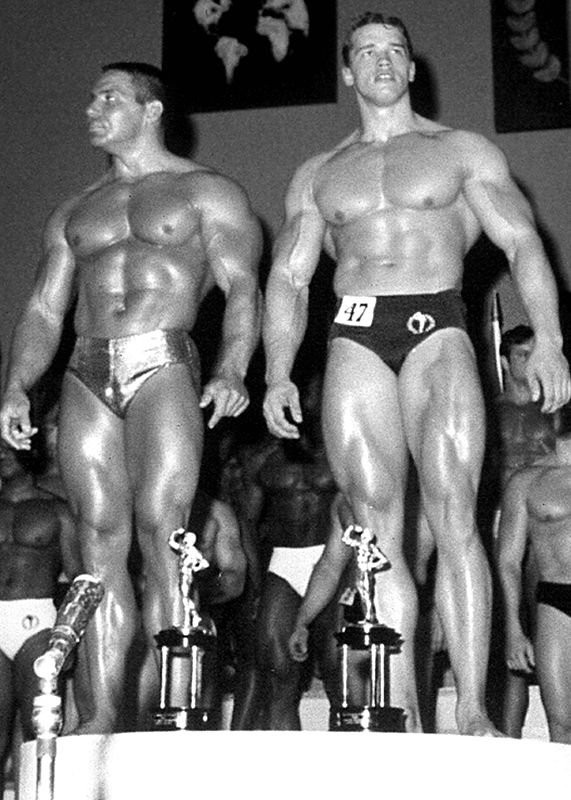
LEGENDS: Arnold and Bill Pearl at the 1967 Mr Universe
The inaugural NABBA Universe competition, held in London, marked the beginning of a tradition that would elevate bodybuilding to new heights. The early years of the competition saw the emergence of iconic figures such as Steve Reeves, Reg Park and Arnold Schwarzenegger. Schwarzenegger’s victories in the late 1960s and early 1970s not only cemented his status as a bodybuilding legend, but also brought unprecedented attention to the sport.
For many, winning the NABBA Universe title was seen as the pinnacle of a bodybuilder’s career. The event was a proving ground for the best of the best, showcasing physiques that combined mass, symmetry and aesthetics in a way that defined the golden era of bodybuilding.
NABBA’s place in modern bodybuilding
But many would argue that NABBA's influence and prestige have waned in recent years. The emergence of other bodybuilding federations has fragmented the sport, offering athletes more choices and opportunities. This has not just affected the federation's flagship competition, but NABBA as a whole.
The resurrection of the pro division at the NABBA Universe this year may give the federation some cause for optimism. Many reps were keen to stress earlier in the season that they "must make NABBA relevant again". But when asked to provide results from their shows, some reps said they were "too busy" to do so. It is akin to shooting themselves in the very foot that has just taken one step forward.
Asked where he sees NABBA's future within an increasingly tough market, Charles (above) said: "Basically, NABBA, how can I put it? It’s a bit like the Royal family. It’s there and it’s not going to go away.
"All these people who have bright ideas – in fact quite a lot of them are cancelling their shows. With the PCA, their attitude was to do it [the federation] as a limited company. Whereas we’re an amateur organisation and happy with that and it's what we want to be.
"Look what happens in football. I’m a real football fanatic. This blasted money is coming into it to such an extent, it’s ridiculous. I support Wolves and I've supported them ever since the 1950s when we were absolutely incredible. All we can do now is build a great team and along comes one of the premier sides and buys this player, then somebody buys that player and this player and that player. Until in the end, we’ve lost all our best players. It’s all about money."
Tradition vs money in the sport
Challenged on the slim chance of amateur bodybuilding becoming so extreme in that financial sense, Charles said: "We’re offering expenses now [as prizes], so we’re modernising. Otherwise if we don't do anything... It’s a case of going forward.
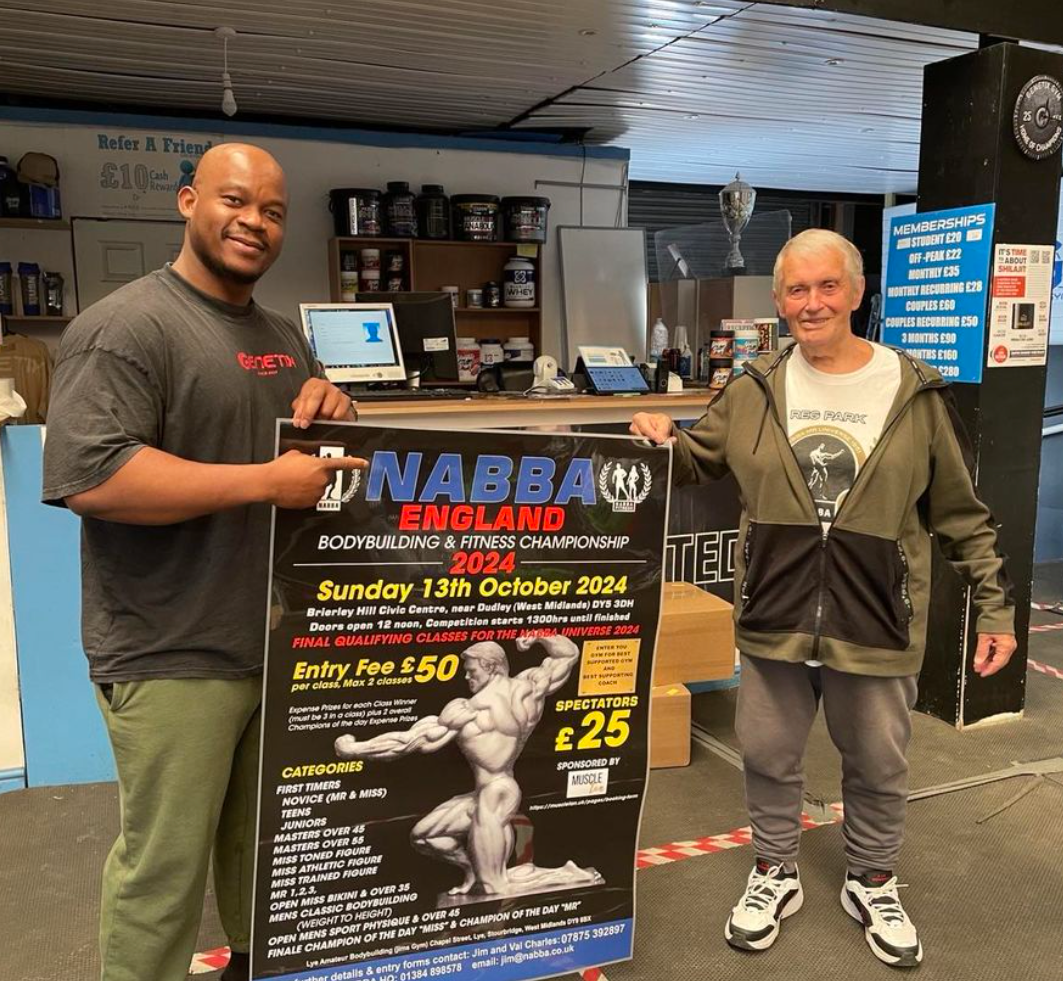
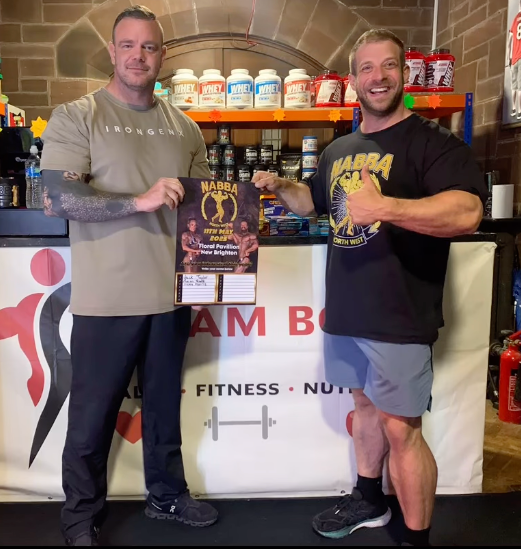
"And we've got some young new councillors [area representatives], who are full of great ideas. So we’re trying to combine it. Even I followed the one councillor and I’m going around the gyms with a huge poster, having pictures taken with the guys who run the gyms [in order to promote shows]. And that was because of that new rep we had from Southport, Tim Rosiek (below right).
"He’s all excitable. I said to him, 'Don’t worry, I’m copying you'. When I go, I take a bigger poster. He was taking the A4 poster that he’s handing out at all the gyms. Well, I take the A4 poster, but I also had a really big poster done, so that when the organiser or the guy at the gym holds it, it could be clearly seen [in photographs].
"I’m doing some of the things that these young people want us [NABBA] to do, but I’m trying to calm them down that it ain’t all about money.
"I mean, I had 150 competitors [at the NABBA England] in 2019 and I was frightened to death. I was thinking, 'where am I going to stack them all'? It was more than we had at the Britain. So we were going in the right direction then and then Covid came along [the Government's response was to implement a national lockdown]. And that really gave us a bending. But we're on the way back."
Some critics would argue that this is not the case and that the federation's lack of a serious social media presence is a marketing disaster. One example is rival federation the PCA, who churn out results of their shows in real time on competition days. They also heavily promote shows on social media, the number of sponsors they have and pay for professional athletes to fly to their World Championships.
But Charles said: "We've got a social media [presence] now. We're doing all that. Tim Rosiek's very excited about taking everything on. So as far as I'm concerned we're going that way."
How will the 75th Anniversary of the NABBA Universe differ?
When asked how this 75th Anniversary of the Universe would be different from previous editions, Charles said: "We've got all the countries coming. It’s been non-stop. It’s going crazy. I've got it at the NEC, which is one of the major vendors in the country. We’re in a situation where all the countries can register at the NEC. And it's also very convenient to come by train and plane. I’m hoping that’s a good move.
"But we’re also involved with Fit X and their exhibition. They are holding their British Finals on the Saturday. And if any of the competitors are really good enough, we’ll invite them to have a go in the Universe. It’s going crazy.
"I’ve also dropped a line to Arnold because he’s been there that many times. And I asked him if he could come [to the NABBA Universe] and take a bow because, without the Universe, he wouldn’t be where he is today. I haven’t asked him to reply or anything, I just wanted him to come. I don’t want to use him in any form or advertise him. My friendship’s too important for that.
"I don’t want to use him as a pawn to sell tickets. I’ve been friendly with him since we met when he was 20 years of age. I still tease him that I took him over to the cafe and ordered him baked beans on toast and a black coffee, which cost me seven and six. No – he hasn't paid me back. Every time we have an interview they say to him, 'Jim Charles has said that you still owe him seven and six'. He said, 'Yeah, tell him I’ll be back'."
Charles also spoke of how he tries to keep a tight reign on those working on the shows in which he is directly in charge. He was keen to stress that Master of Ceremonies Nigel Gordon-Rae will be told exactly what he has to do, after he received criticism for telling some competitors at the NABBA South East show in May that "obviously you have won because you are the only competitor in the class".
"I don't see the point in saying that," said Charles. "They'd have known they were the only ones when they were on stage. At the Universe, even though he has sent me an A4 of all his bright ideas, I will be telling him exactly what he's got to do. He's being paid and the rest of us are doing it because we want to, not about payment. Nigel is a good compare and is a nice guy but sometimes he gets a bit excited.
"Sometimes you give a bit of leeway to some people and they go crazy. I mean, I'm the Honorary Life President – which I've got to die to lose. I'm the chairman, I'm the show manager and I'm the general lackey. People in my gym said, 'you're cleaning the lavatory' and I said, 'yeah? It doesn't clean itself'. If the lavatory is blocked, I unblock it.
"Whoever you are dealing with, it's about trying to get their feet to stay on the ground. A lot of them [NABBA officials] are excited about putting their blazer on and being self important. With this Universe, which is going to be a really hard day, I can tell you now that the new reps and all the other reps will be working hard – otherwise they'll get a real bollocking. I won't be pulling any punches.
"We've got to kick off at 9am because we've got to get all of those categories in by 6pm. At 6pm they [the NEC] pull the plug out [stop the electric]. That's the sort of ruling at the NEC. So I have to condense 23 categories into that time. There will no interval, either. So if they [reps/judges] want something to eat and drink, Val [wife and NABBA secretary] will have to arrange someone to bring it to them. Because they won't be stopping and yakking for 40 minutes and coming back late.
"I'm going to be very popular on the day. But I've got a job to do and it's got to be done. And I'm hoping we will have a terrific show."
NABBA has what many federations do not; a strong and rich history and tradition. But is that enough in modern-day bodybuilding? Only time will tell.
Charles, 85, said: "Since Covid we have been gradually building up and all of a sudden it's gone mad. So yes we are going in the right direction. It's like I told the rest of them [NABBA officials], have a bit of patience."
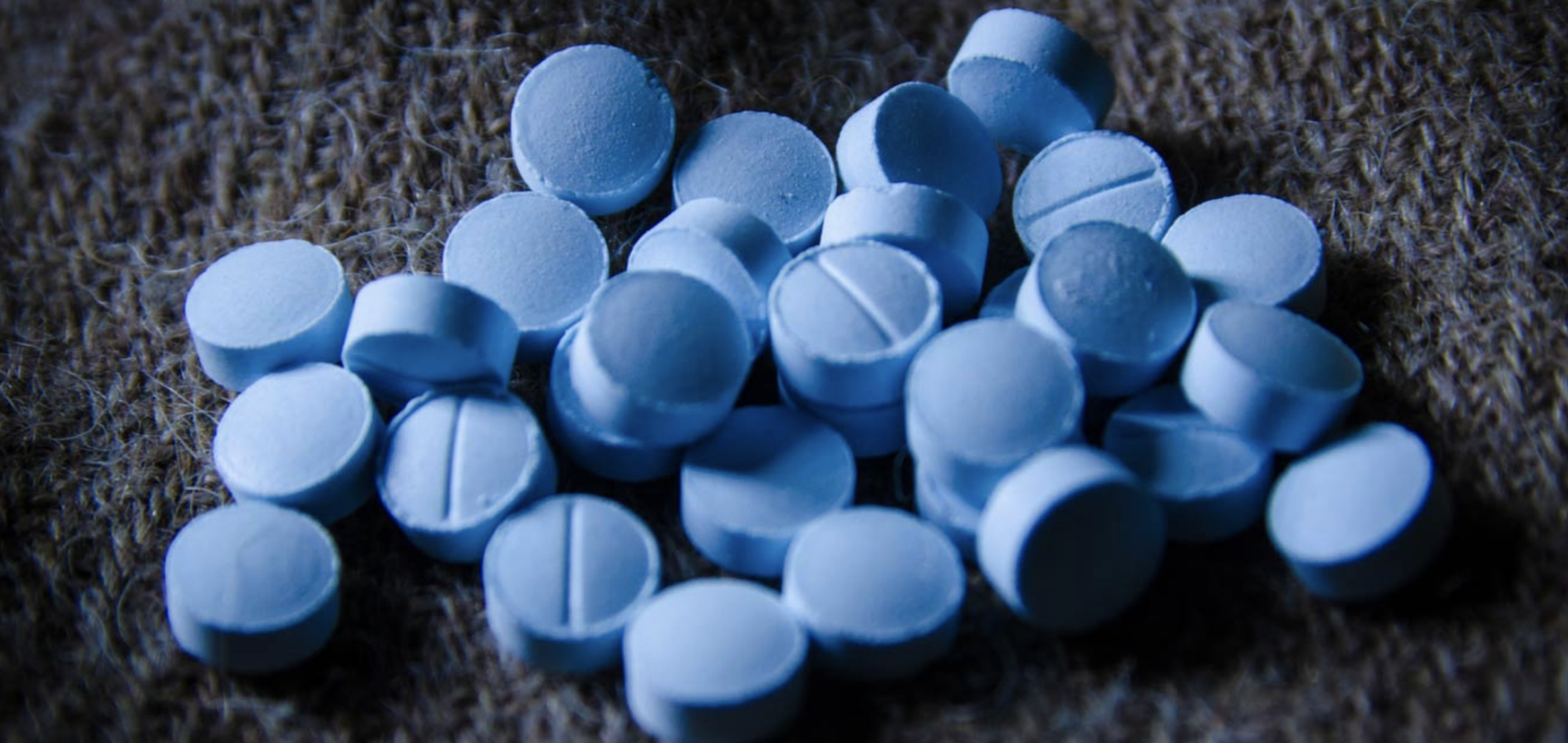
Dianabol (Dbol) was once one of the most widely used anabolic steroids in bodybuilding – with some calling it the breakfast of champions – but its place in modern cycles is often questioned.
By Gary Chappell
DIANABOL remains one of the most well-known anabolic steroids. Back in the late 1970s and 1980s it was considered by some as the "breakfast of champions". But its popularity appears to have waned.
When was the last time you read of someone including dianabol in their cycle? If you excuse the local 'gym bro', who can often be heard saying "can you get me some dianabol?" or "Yeah, just started some dianabol, bro", most serious competitors are using testosterone, primobolan and/or equipoise during their off-season.
But why? Reports of huge gains in muscle in just six or eight weeks, together with big increases in strength, could be heard of from dianabol users.
Developed in the 1950s, the oral steroid became popular among bodybuilders and athletes for its powerful muscle-building effects. Here's an overview of what dianabol is, how it works, its benefits and its risks:
Anabolic Effects: dianabol increases protein synthesis and nitrogen retention in muscle tissue, leading to rapid muscle growth and strength gains.
Androgenic Effects: It also has androgenic properties, which can contribute to masculinising effects such as increased body hair and a deeper voice.
Oral Steroid: Unlike some other anabolic steroids that are injected, dianabol is taken orally in pill form, making it more convenient but also potentially more taxing on the liver.
3. Benefits:
Rapid Muscle Gains: Users often report significant muscle mass and strength increases within a few weeks (though some of this weight gain is more than likely from water retention).
Improved Recovery: Enhanced recovery between workouts due to increased protein synthesis.
Performance Enhancement: Athletes may experience better endurance and overall physical performance.
4. Risks and side effects:
Liver Toxicity: Dianabol is hepatotoxic, meaning it can cause liver damage, especially with prolonged use or high dosages.
Estrogenic Side Effects: It can convert to estrogen in the body, leading to side effects such as gynecomastia (development of breast tissue in men) and water retention.
Cardiovascular Issues: Increased risk of high blood pressure, cholesterol imbalances and heart disease.
Androgenic Side Effects: Acne, hair loss (especially in those genetically predisposed to male pattern baldness) and prostate enlargement.
Suppression of Natural Testosterone: Using dianabol can suppress the body's natural testosterone production, leading to a need for post-cycle therapy (PCT) to restore hormonal balance.
One of the main pitfalls of dianabol is its effect on appetite. The only time someone might use it is in the off-season, because its water retention and estrogenic side effects make it a poor choice for prep. But it is also a pretty poor choice for the off-season too due to its negative effect on appetite, especially if it prevents a person from eating enough. However, that is person dependent and, in some, it could have the opposite effect.
How Dianabol affects hunger
Increased Appetite:
Anabolic Effects: Dianabol’s anabolic properties can stimulate protein synthesis and muscle growth, which may increase the body's demand for nutrients. As a result, users often experience a heightened appetite to support the increased muscle mass and metabolic activity.
Caloric Needs: Since dianabol enhances muscle mass and overall body weight, the body may signal the need for more calories, leading to an increase in hunger.
Insulin Sensitivity:
Carbohydrate Metabolism: Dianabol can affect carbohydrate metabolism and insulin sensitivity. This can lead to fluctuations in blood sugar levels, which might cause hunger pangs or cravings, especially for carbohydrates.
Side Effects and Hunger:
Water Retention: Dianabol is known to cause water retention, which can sometimes mask the feeling of fullness or satiety, making users feel hungrier than they actually are.
Hormonal Influence: The steroid's impact on hormones, including insulin and possibly leptin (a hormone that regulates hunger), can alter appetite and feeding behaviour.
Managing increased hunger
For bodybuilders using dianabol, managing increased hunger is essential to avoid excessive calorie intake, which could lead to unwanted fat gain. Here are some strategies:
Balanced Diet: Focus on a diet rich in lean proteins, healthy fats, and complex carbohydrates to support muscle growth without overconsuming calories.
Portion Control: Even with an increased appetite, controlling portion sizes and avoiding binge eating can help manage body composition.
Hydration: Staying hydrated can help manage hunger, as sometimes thirst is mistaken for hunger.
Here’s why Dianabol could have fallen further out of favour
1. Health Risks:
Liver Toxicity: Dianabol is hepatotoxic, meaning it can cause significant liver damage, especially with prolonged use. Modern bodybuilders are more aware of the long-term health consequences, leading many to avoid substances that can cause serious harm.
Cardiovascular Issues: The steroid can negatively impact cardiovascular health by increasing the risk of high blood pressure, cholesterol imbalances and heart disease. With better access to information, many athletes now prioritise heart health and longevity.
Estrogenic Side Effects: Dianabol can convert to estrogen in the body, leading to unwanted side effects such as gynecomastia (development of breast tissue in men) and water retention. These effects can be difficult to manage and can negatively impact a bodybuilder’s physique.
If you still use dianabol, please let us know in the comments below regarding dosage, timing during the season and the effects you have seen.





Leave a Reply