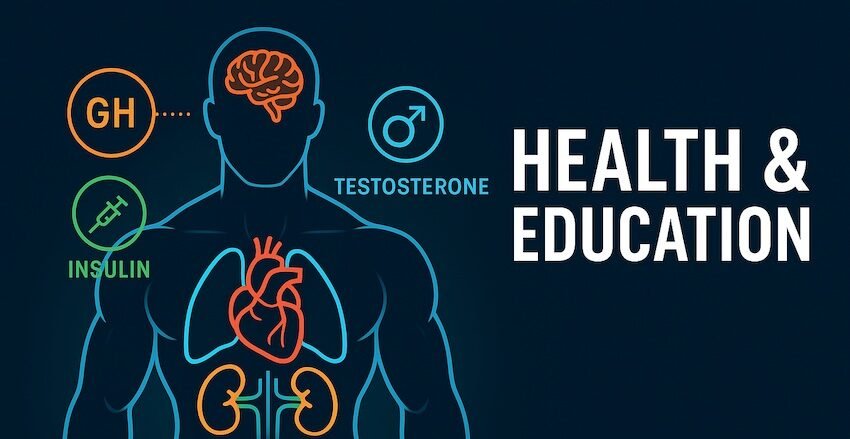
BODYBUILDING is more than lifting heavy weights — it’s about understanding your body, hormones and health. This hub brings together all our health and science resources in one place. Here, you’ll find expert guidance on hormones, PEDs, recovery, sleep, nutrition and medical considerations for bodybuilding health and education.
Each section links to full-length articles for a deeper dive. Use this page as your central reference for bodybuilding health and education and return as new guides are published.
Insulin plays a crucial role in nutrient partitioning, helping muscle cells absorb glucose and amino acids for growth. Misusing it, however, carries risks.
Full Guide →
Growth hormone affects muscle growth, fat loss, and recovery. Learn how much GH bodybuilders need and the safe ways to optimize it.
Full Guide →
Testosterone is central to muscle growth, recovery, and performance. Discover how to optimize natural levels and understand enhanced protocols.
Full Guide →
IGF-1 works alongside GH to stimulate muscle growth, especially locally in the tissues.
COMING SOON
Hormone modulation plays a major role in muscle growth, recovery, and overall health. If you're using or considering DHT-related compounds or other hormonal therapies, it's vital to understand how they affect estrogen levels. Dive into our video: How to Modulate Estrogen with DHT to learn about safe protocols and managing hormonal balance.
Aromatase Inhibitors (AI) & Estrogen Management
Some steroid or hormone cycles increase estrogen through aromatization, which can lead to unwanted side‑effects like water retention, fat gain, or gyno. For a detailed breakdown of when an AI is necessary — and the risks of overuse — check out our full guide on When to Use an AI
Chronic stress and high cortisol can impair recovery and fat loss. Learn techniques to manage cortisol effectively.
COMING SOON
Purpose: Education and harm reduction — not encouragement.
Each of the above will link to detailed guides as they are published.
Contemporary Compounds & Contest Prep
Trends in bodybuilding evolve fast, and novel compounds like retatrutide are reshaping how athletes approach contest prep or body composition conditioning. For a detailed look into risks, protocols, and realistic outcomes, check out our full guide: Retatrutide: Rewriting Contest Prep.
Sleep is the most powerful recovery tool for bodybuilders. Proper sleep boosts hormones, repairs tissue, and enhances performance.
COMING SOON
Prevent overtraining and systemic fatigue with planned deloads.
COMING SOON
Efficient digestion and reduced stress optimize nutrient absorption and recovery.
COMING SOON
The idea of “drying out” before shows — stripping water, sodium, carbs — is a bodybuilding staple. But it often leads to hormonal imbalance, dehydration, and health stress. For a realistic, science‑based look at what happens when you try to dry out, check our full article: Drying Out — Why Bodybuilding’s Favourite Phrase Is Mostly a Myth.

Your kidneys do a huge amount of the “behind‑the‑scenes” work — filtering waste, balancing electrolytes, and keeping you healthy. When you’re training hard, dieting, or using performance enhancers, kidney stress becomes a real concern. Learn how to look after your kidneys and protect them long‑term in our video by Dave Crosland: Kidneys — the Crucial Organ You Must Look After.
Certain compounds and supplements affect liver function. Protecting liver health is essential.
COMING SOON
Sleep & Recovery
Quality sleep is essential for muscle growth, hormone balance, and overall recovery. Sleep disorders like sleep apnea can seriously impact performance and health. For a detailed guide on managing sleep apnea as a bodybuilder, see our article on Sleep Apnea in Bodybuilders.
Heart health should never be ignored — especially with intense training or PED use.
COMING SOON
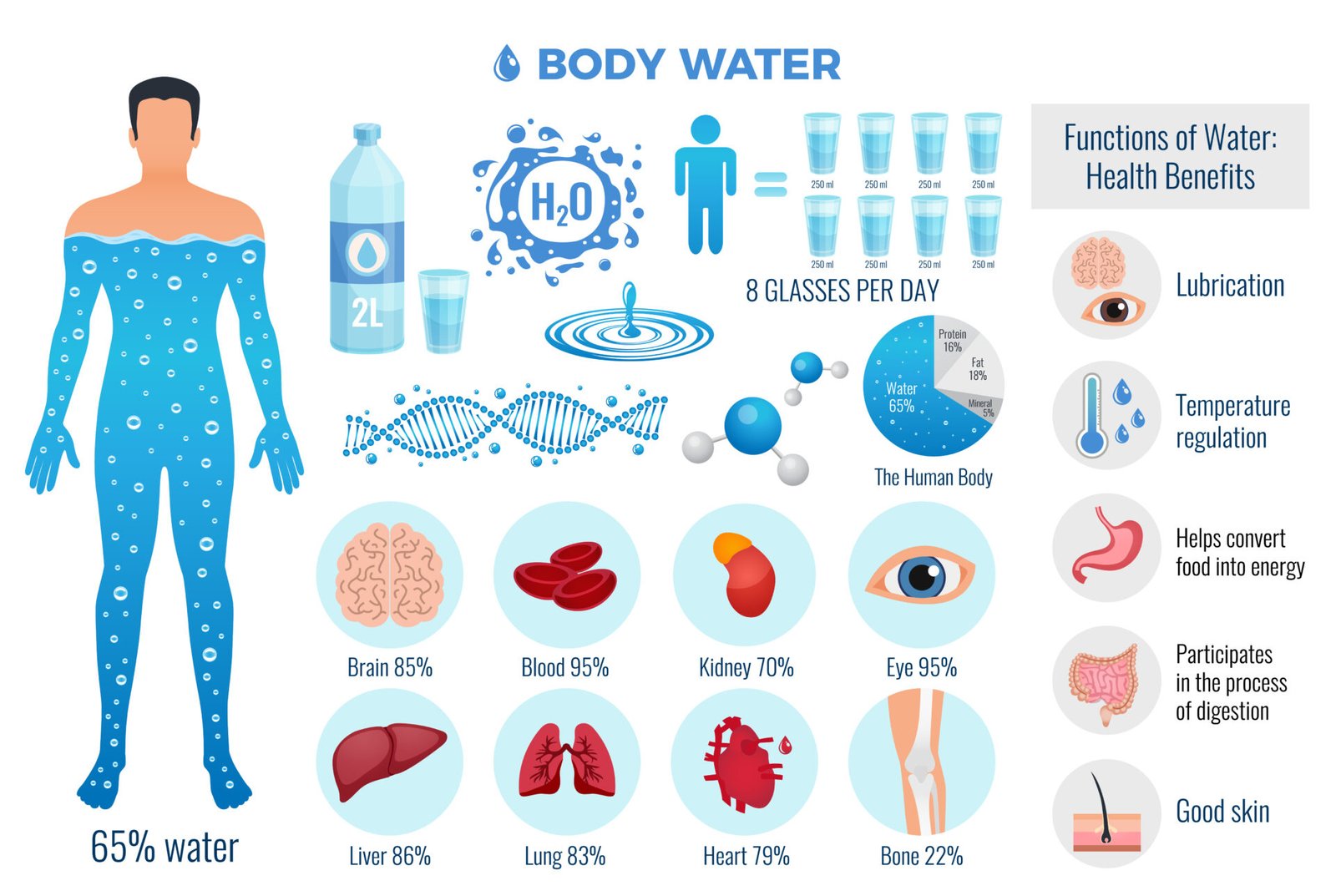
Proper hydration is fundamental for muscle growth, nutrient transport, and overall health, especially under heavy training or dieting. To understand why water intake matters — and how to manage it effectively — check out our full guide: Deep Dive into Water.
High‑intensity training, dieting, and hormonal manipulations can all impact your lipid profile — which affects your risk of plaque, cardiovascular disease, and long‑term health. For a deep look at how to monitor and manage your lipids as a bodybuilder, see our full guide: Checking Lipids: Insight into Plaque Risk.
Regular bloodwork is one of the most powerful tools a bodybuilder has to track internal health — hormones, liver/kidney function, lipid profile, inflammation, iron status and more. Monitoring these markers helps catch imbalances or stress early, so you can adjust training, diet or recovery before problems arise. Dive deeper in our guide: Checking Blood Markers — Why Every Athlete Should Monitor Their Numbers.
Check how high haemoglobin and haematocrit is not a death sentence or ticking time bomb on its own by reading our real medical risks article HERE
Check how chasing 120/80 blood pressure could actually raise your blood pressure... Full article HERE